Last updated: 30 July 2026
Quick answer: the Ezekiel choke — sode guruma jime (袖車絞, “sleeve wheel choke”) in judo — is a strangle applied with the forearms while gripping your own sleeve, most often from inside mount or from bottom guard. It is named after the Brazilian judoka Ezequiel Paraguassú, who is credited with bringing it into Brazilian jiu-jitsu in the late 1980s.
It is also one of the rarest finishes in professional MMA. Across 8,591 UFC bouts from 1994 to March 2026, the Ezekiel choke produced just 5 submission finishes — 0.3% of all 1,659 submissions. The rear naked choke produced 648 in the same period.
One rule explains that gap: the Ezekiel is a fabric technique. The classic version needs a sleeve to grip, which makes it abundant in gi jiu-jitsu and nearly absent from MMA, where there is no sleeve to hold. Everything else on this page follows from that single fact.
Free every Tuesday
The Grappler Brief
The week’s biggest stories from BJJ, judo, wrestling, and submission grappling—curated for people who train.
Sent out weekly.Opt out anytime.
The Ezekiel choke at a glance
| Question | Answer |
|---|---|
| Judo name | Sode guruma jime (袖車絞) — “sleeve wheel choke” |
| Named after | Ezequiel Paraguassú, Brazilian judoka |
| Type | Blood choke (strangle), not an air choke |
| Signature feature | Gripping your own sleeve to close the loop |
| Classic position | Inside mount — and uniquely, from bottom guard |
| UFC finishes 1994–2026 | 5 (0.3% of all submissions) |
| Why so rare in MMA | No sleeve to grip; the no-gi version is far weaker |
| Competition status | Legal in IBJJF competition at all belts, and legal in MMA |
The submission counts come from our classification of every submission finish in the UFC record — the same 8,591-bout dataset behind the UFC statistics study and the UFC BJJ statistics study.
How the Ezekiel choke works
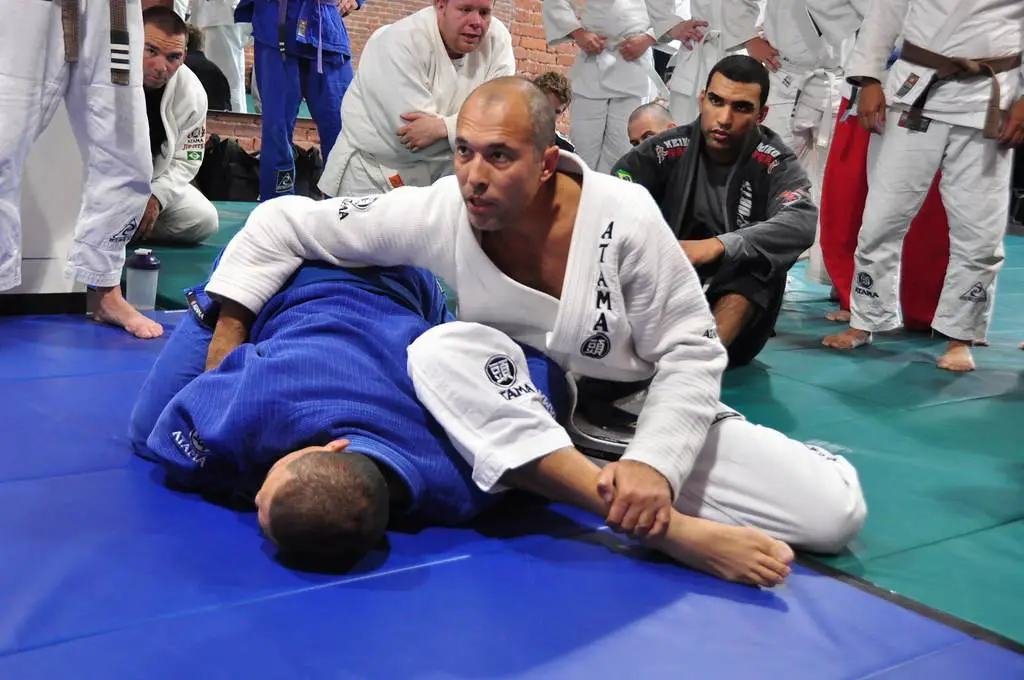
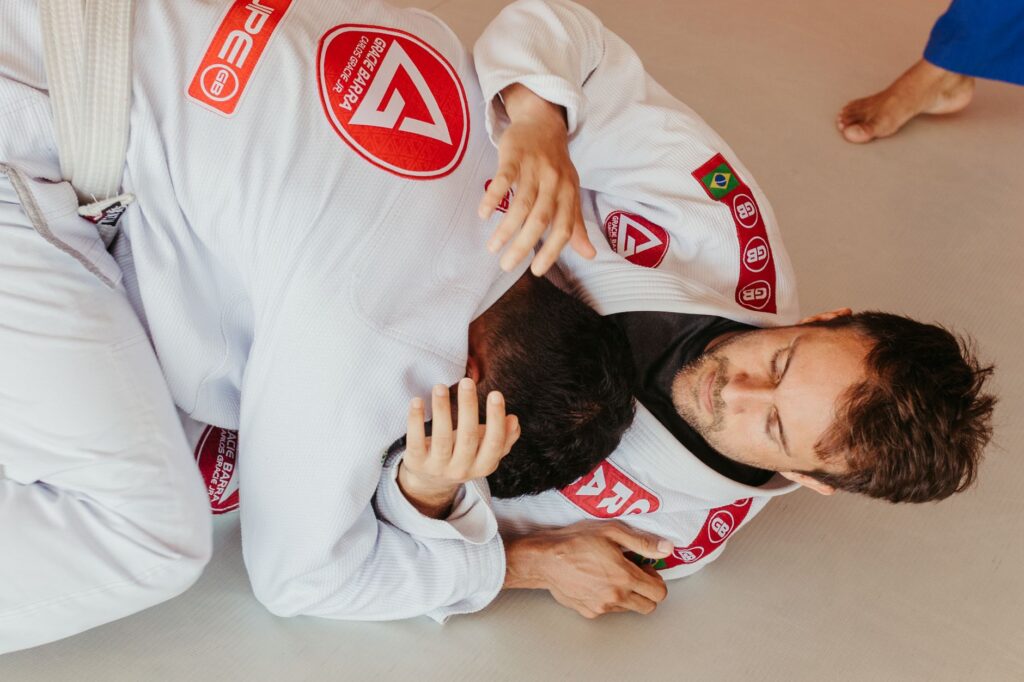
The mechanism is a wheel. One forearm goes behind the opponent’s neck, the other crosses the front of their throat, and the hands connect by gripping the opposite sleeve. Tightening the two forearms toward each other closes the carotid arteries on both sides of the neck.
It is a blood choke, not a windpipe crush. Done correctly it produces no gagging or coughing — pressure lands on the sides of the neck, not the front. A partner who is choking and spluttering is telling you the forearm has drifted onto the trachea, which is both less effective and more unpleasant than a clean strangle.
What separates the Ezekiel from every other strangle is where the power comes from. A rear naked choke needs back control. A triangle needs your legs. The Ezekiel needs neither — only two forearms and a grip — which is precisely why it appears from positions where no other choke is available, including from underneath.
Gi versus no-gi: the rule that explains everything
| Gi | No-gi / MMA | |
|---|---|---|
| What closes the loop | Grip on your own sleeve | Bare wrist or bicep grip |
| Structure | Locked by fabric — does not slip | Relies on grip strength and sweat-free skin |
| Space needed | Very little; works in tight quarters | More; the loop is looser |
| Reliability | High — a staple of gi jiu-jitsu | Low — 5 UFC finishes in 32 years |
| Typical use | Finish from mount, or attack from bottom | Opportunistic, usually against a turtled opponent |
This is the whole story of the technique in one table. The sleeve is not a convenience, it is the structure. Fabric holds the wheel closed without any grip strength, so a gi Ezekiel survives a scramble and a sweaty round. Take the sleeve away and the same movement becomes a strength contest between your grip and their neck — which is why the no-gi variation is a genuine technique but a much less trustworthy one.
It also explains the apparent contradiction between how often you see the Ezekiel in a gi academy and how seldom it appears in the UFC record. Both facts are true, and the ruleset is the reason.
Where the Ezekiel choke comes from
| Position | Why it works from here | Watch for |
|---|---|---|
| Mount | The classic finish; their defensive frames feed you the neck | Posting too high and losing the position |
| Bottom closed guard | The rare choke available from underneath | Opponent stacking to relieve pressure |
| Side control | Short forearm path to the far side of the neck | Losing the near-side pin as you thread |
| Against a turtle | The main no-gi entry; the neck is already exposed | They roll through and take top position |
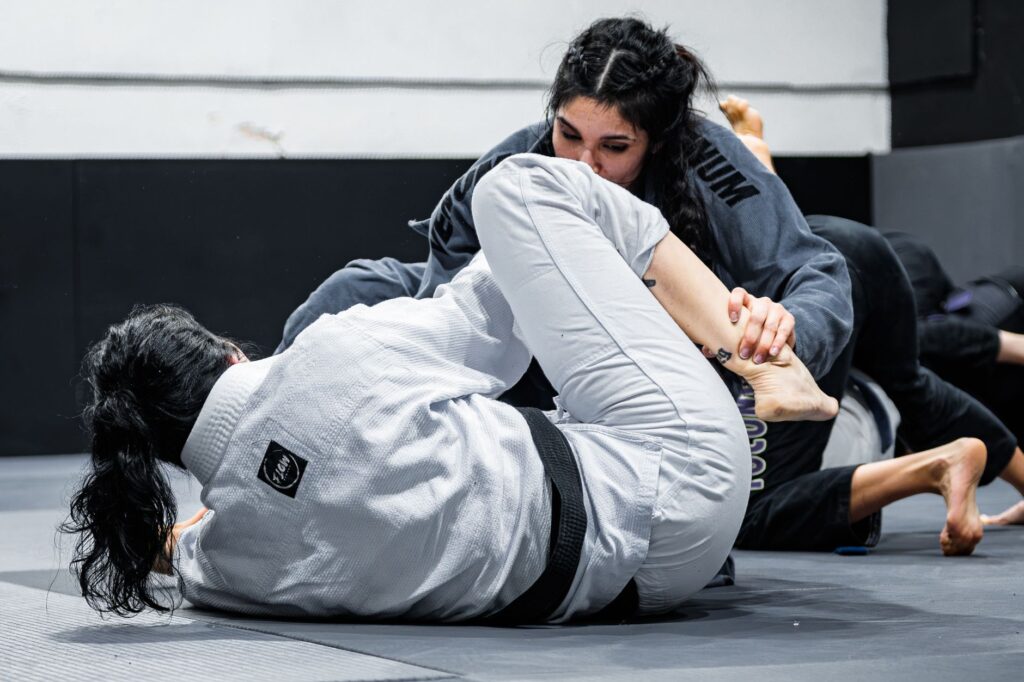
The bottom-guard entry is the one worth learning first, because almost nothing else in the syllabus threatens a strangle from underneath. It punishes an opponent who postures forward to pass and gives the guard player a real finishing threat rather than only sweeps and joint attacks.
How rare is it really?
| Submission | UFC finishes | Share of submissions |
|---|---|---|
| Rear naked choke | 648 | 39.1% |
| Guillotine | 293 | 17.7% |
| Armbar | 195 | 11.8% |
| Triangle choke | 114 | 6.9% |
| Kimura | 43 | 2.6% |
| Ezekiel choke | 5 | 0.3% |
Five finishes in thirty-two years of UFC competition. That is not a verdict on the technique — it is a verdict on the ruleset it was built for. In gi competition the Ezekiel is a reliable, high-percentage finish; strip the fabric and it becomes a situational tool. Rarity here is evidence about equipment, not about quality.
Common mistakes and how to defend
| Mistake | What happens | Fix |
|---|---|---|
| Forearm across the windpipe | Painful, ineffective, and easy to survive | Move the blade of the forearm to the side of the neck |
| Elbows flared wide | The wheel never closes | Drive the elbows toward each other |
| Reaching too deep for the sleeve | You lose the position before the grip lands | Take a short grip; depth is not what finishes it |
| Chasing it in no-gi like a gi choke | Grip slips as soon as they sweat or move | Treat the no-gi version as opportunistic, not primary |
Defence follows the same logic. Get a hand inside the loop before it closes, keep the chin tucked so the forearm cannot slot under the jaw, and turn toward the choking arm rather than away from it. Once the sleeve grip is locked and the elbows are tight, the technique does not require strength and waiting it out is not a plan.
Frequently asked questions
Why is it called an Ezekiel choke?
It is named after the Brazilian judoka Ezequiel Paraguassú, who used it against jiu-jitsu practitioners while cross-training in Brazil in the late 1980s. The technique already existed in judo as sode guruma jime; the Brazilian jiu-jitsu community named it after the man who kept catching them with it. The anglicised spelling “Ezekiel” comes from the Portuguese “Ezequiel”.
Who invented the Ezekiel choke?
Nobody invented it in jiu-jitsu — it was imported. The choke is a long-standing judo technique, sode guruma jime, and Ezequiel Paraguassú is credited with introducing it to Brazilian jiu-jitsu rather than creating it. This is a common pattern in grappling: techniques usually get renamed after whoever brings them into a new ruleset, not after whoever first devised them.
Is the Ezekiel choke legal in the UFC?
Yes. The Ezekiel choke is legal in the UFC and in mixed martial arts generally, and it is legal in IBJJF competition at every belt level. It has been used to finish UFC bouts, though only five times in the promotion’s history — the constraint is practical rather than regulatory, because fighters have no sleeve to grip.
Can you do an Ezekiel choke from the bottom?
Yes, and it is one of the few strangles that genuinely works from underneath. From bottom closed guard, an opponent who postures forward to pass brings their neck within forearm range. This is a large part of the technique’s value — it gives the guard player a finishing threat in a position that otherwise offers mostly sweeps and joint locks.
What are the counters to the Ezekiel choke?
Insert a hand inside the loop before the sleeve grip closes, keep the chin tucked tight to the chest so the forearm cannot slide beneath the jaw, and turn your body toward the choking arm to lengthen the distance it must travel. From mount, bridging to disrupt their base can break the grip before it locks. Once the wheel is closed and the elbows are tight, escapes become unreliable.
What are the different variations of the Ezekiel choke?
The main split is gi versus no-gi. The gi version grips your own sleeve and is the reliable form. The no-gi version substitutes a wrist or bicep grip and depends on grip strength. Beyond that, variations are positional rather than mechanical — from mount, from bottom guard, from side control, and against a turtled opponent — all using the same two-forearm wheel.
Where the Ezekiel fits
The Ezekiel is worth learning for what it teaches as much as for what it finishes. It shows that a strangle needs neither back control nor legs — only two forearms, a closed loop, and pressure on the correct side of the neck. That principle transfers to every other choke in the syllabus.
For a gi player it is a genuine high-percentage finish and one of the only real threats from bottom position. For a no-gi or MMA competitor it is worth knowing and worth defending, but the UFC record is honest about its ceiling: five finishes in more than eight thousand fights.