
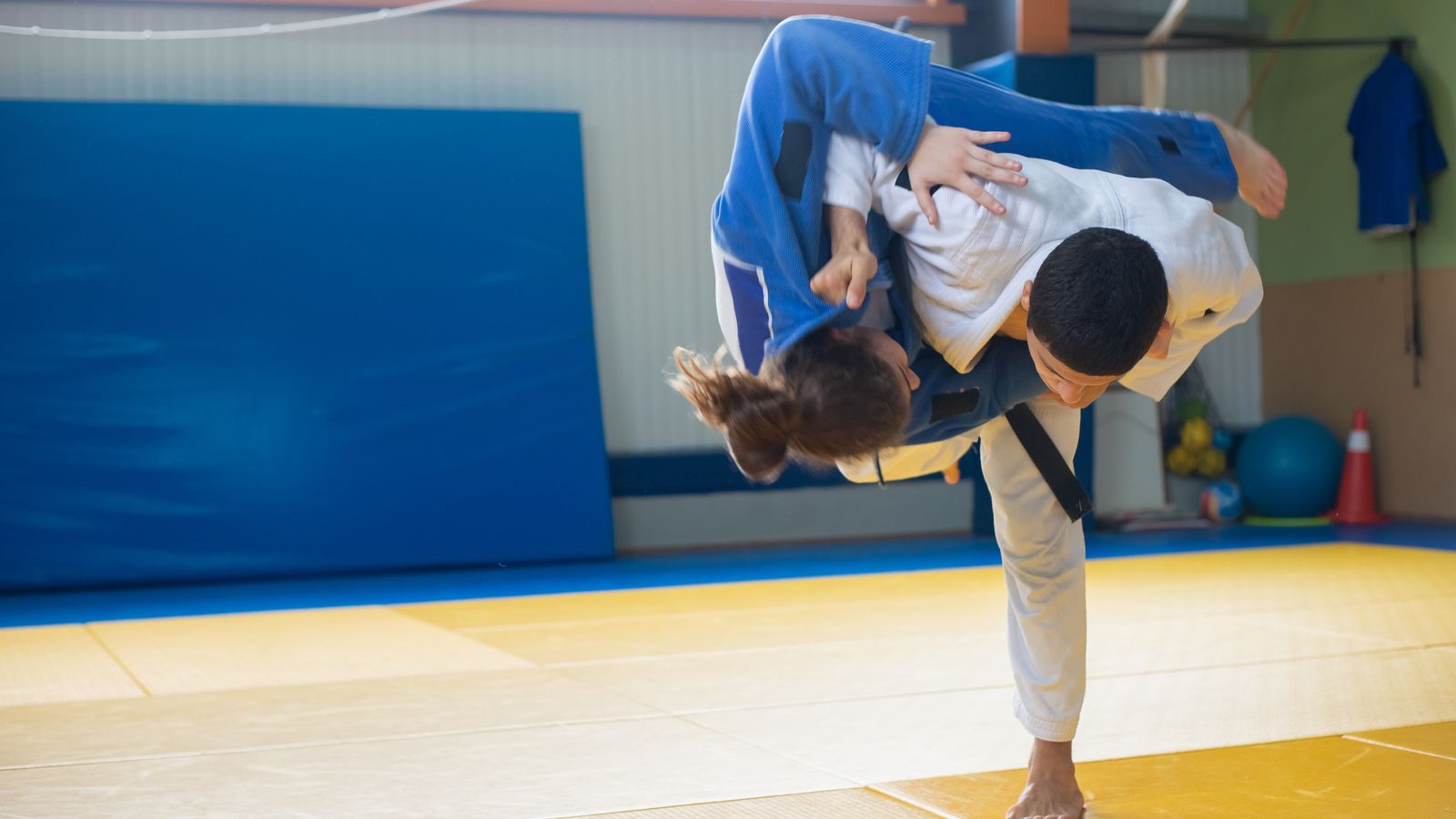
Quick answer: judo is a Japanese grappling art founded by Jigoro Kano in 1882, where you win by throwing your opponent onto their back with control, pinning them for 20 seconds, or forcing a submission with a strangle or armlock. It’s also the direct ancestor of Brazilian Jiu-Jitsu — the two arts share most of their core techniques and split mainly on emphasis: judo is decided standing, BJJ is decided on the ground. This page covers how judo works, the techniques it shares with BJJ, and where to go deeper.
Last updated: 2026-07-10
Grapplers usually arrive at judo with one of three questions: how is it different from BJJ, why do judo black belts adapt to BJJ so quickly, and whether judo throws are worth learning for no-gi or MMA. The confusion is understandable — the two arts wear the same uniform, share a belt system, and use many of the same submissions under different names. The differences are in the rules, and the rules shape everything.
Free every Tuesday
The Grappler Brief
The week’s biggest stories from BJJ, judo, wrestling, and submission grappling—curated for people who train.
Sent out weekly.Opt out anytime.
Judo at a glance
| Judo | |
|---|---|
| Founded | 1882, by Jigoro Kano at the Kodokan in Tokyo (see the IJF’s history of judo) |
| Olympic status | Olympic sport since 1964 |
| Uniform | Gi (judogi), with grips on collar and sleeve central to the game |
| How you win | Ippon: a decisive throw, a 20-second pin, or a submission |
| Legal submissions | Strangles and elbow locks only — no leg locks, no wrist locks |
| Governing body | International Judo Federation (IJF) |
What is judo?
Kano built judo out of older jujutsu systems, keeping the techniques that worked in live training and discarding the rest. That decision — training with full resistance against an unwilling partner — is judo’s real legacy, and it’s the same principle BJJ and wrestling are built on today.
A judo match is decided standing first. Throw your opponent flat on their back with force, speed, and control, and the match ends instantly — that’s ippon, judo’s knockout. Lesser throws score waza-ari, and two waza-ari end the match. If the action hits the ground, you have a short window to work: pin your opponent for 20 seconds, or finish a strangle or armlock, and that’s ippon too. If nobody scores, the referee stands you back up. That time limit on groundwork (newaza) is the single biggest rules difference from BJJ, where the ground is the whole game.
One more modern quirk worth knowing: IJF rules have banned direct grabs of the legs in standing exchanges since the early 2010s. No double legs, no single legs — takedowns must come from throws, trips, and sacrifice techniques. It keeps judo’s identity upright and throw-centered, and it’s why judoka develop grip fighting and off-balancing (kuzushi) to a level most BJJ players never touch.
Judo and BJJ: the shared family tree
BJJ didn’t grow up alongside judo — it grew out of it. Mitsuyo Maeda, the Kodokan judoka who taught Carlos Gracie in Brazil in the 1910s, was teaching judo’s ground-fighting curriculum. The Gracies took the newaza, kept refining it without judo’s time limits, and the result became its own art. The full story is in where did jiu-jitsu originate?, and the modern side-by-side comparison — rules, belts, effectiveness, which to choose — is in our judo vs jiu-jitsu guide, and judo vs wrestling covers the other side of the family feud.
Judo’s influence didn’t stop with BJJ. Sambo, the Soviet grappling system, was also built largely on judo foundations — see sambo vs BJJ for how that branch of the family evolved differently.
Judo techniques that show up in BJJ
Most of BJJ’s fundamental submissions are judo techniques under different names:
| Judo name | BJJ name | GrapplerHQ guide |
|---|---|---|
| Juji-gatame | Armbar | Armbar guide |
| Sankaku-jime | Triangle choke | Triangle choke guide |
| Hadaka-jime | Rear-naked choke | Rear-naked choke guide |
| Sode-guruma-jime | Ezekiel choke | Ezekiel choke guide |
| Ude-garami | Kimura / Americana | Kimura guide |
Standing, the transfer is just as direct. Judo’s clinch throws are the foundation of upper-body takedowns in every jacket-and-no-jacket ruleset — our body-lock takedown guide covers the position judoka and Greco wrestlers both call home.
Judoka who became BJJ legends
Judo black belts have a long record of converting their base into elite BJJ. Brothers Saulo Ribeiro and Xande Ribeiro — both judo black belts — stacked up IBJJF world titles between them and were each inducted into the ADCC Hall of Fame. The pattern repeats at every level: the balance, grip fighting, and top pressure judo builds are exactly the skills BJJ rewards.
FAQ
Is judo good for BJJ?
Yes — arguably the single best complementary art for gi BJJ. Judo fixes the standing game most BJJ players lack, and its pins translate directly into passing pressure. The adjustment runs the other way on the ground: judoka must slow down and learn to work inside a guard rather than around a time limit.
Are chokes legal in judo?
Yes. Strangles (shime-waza) and elbow locks (kansetsu-waza) are both legal in senior competition and can win by ippon. Leg locks and wrist locks are not permitted, and juniors face additional restrictions.
Why did judo ban leg grabs?
The IJF removed direct leg attacks in standing work in stages during the early 2010s, largely to keep judo distinct as an upright throwing art and to stop matches from collapsing into low wrestling-style shots. The techniques still exist in judo’s curriculum — they’re just not legal in IJF competition.
Can you win a judo match on the ground?
Yes. A 20-second pin, a strangle, or an armlock all end the match outright. The difference from BJJ is time: if you’re not making progress on the ground, the referee restarts the match standing.
Bottom line
Judo is BJJ’s parent art and its missing half. It answers the question BJJ mostly skips — how do you get a resisting opponent to the ground? — with the most refined throwing system in grappling, and everything it does on the mat speaks BJJ’s language already. Start with the judo vs jiu-jitsu comparison, then explore the shared techniques in the techniques library. New to the ranks? See the full judo belt order, from white through the red-and-white and red belts. Competing? Check the judo weight classes for men, women, juniors and cadets, and learn the judo throws that score ippon under the judo rules.