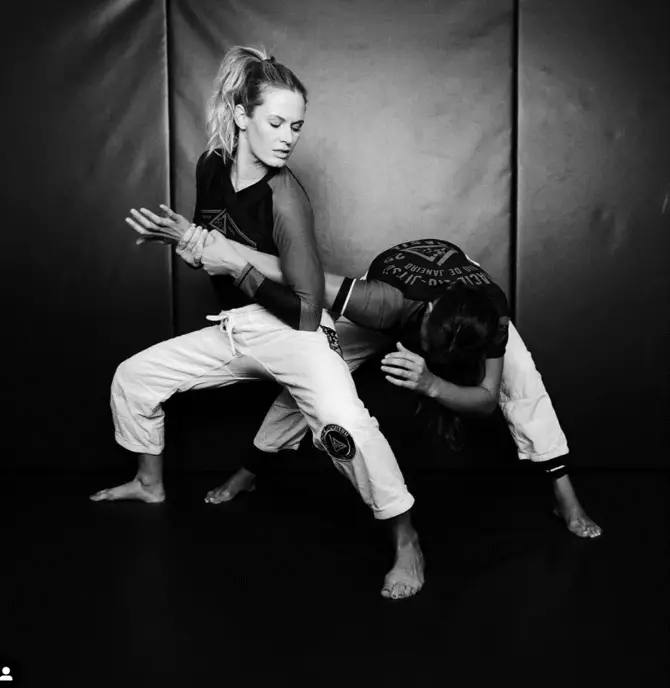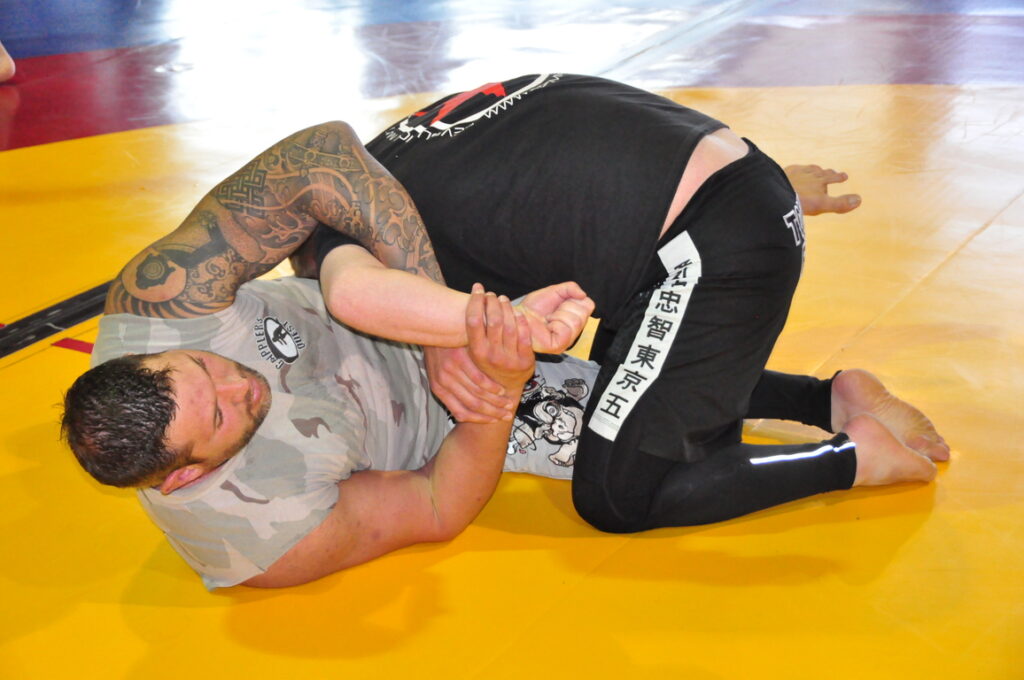
Quick answer: the kimura is a figure-four shoulder lock that rotates the opponent’s arm behind their back, attacking the shoulder and elbow. It is named after the judoka Masahiko Kimura, who broke Hélio Gracie’s arm with it in Rio on 23 October 1951; judo calls it gyaku ude-garami and catch wrestling calls it the double wristlock. Its practical advantage over every other high-percentage submission is legal, not physical: the kimura appears nowhere on the IBJJF’s 26-technique illegal-moves table, so it is available at every adult belt in both gi and no-gi — unlike knee bars and toe holds, which open up only at brown belt.
Last updated: July 29, 2026. Legality below is taken from the official IBJJF rule book and illegal-moves table. Other organisations set their own rules — check your event’s before competing.
Most guides treat the kimura as one submission you hit from side control. That undersells it badly. The kimura is better understood as a grip that happens to finish fights — a control that threatens a submission, a sweep, a back-take and a pass simultaneously, from more positions than any other attack in jiu-jitsu.
Kimura at a glance
| Question | Answer |
|---|---|
| What it attacks | Shoulder rotation, with secondary pressure on the elbow |
| Grip | Figure-four: your hand on their wrist, your other arm under theirs, gripping your own wrist |
| Other names | Gyaku ude-garami (judo), double wristlock (catch wrestling), reverse keylock |
| Named after | Masahiko Kimura, after his 1951 win over Hélio Gracie |
| IBJJF legality | Legal at every adult belt, gi and no-gi — not on the illegal-moves table |
| Best-known positions | Side control, north-south, closed guard, half guard |
| Difficulty | Beginner-friendly to learn, hard to finish on resisting opponents |
Kimura vs americana: the difference in one line
These two are the same figure-four grip rotating the arm in opposite directions, which is why beginners mix them up constantly.
Free every Tuesday
The Grappler Brief
The week’s biggest stories from BJJ, judo, wrestling, and submission grappling—curated for people who train.
Sent out weekly.Opt out anytime.
| Kimura | Americana | |
|---|---|---|
| Arm rotates | Backwards — hand travels toward their hips/behind the back | Forwards — hand travels up toward their head |
| Japanese name | Gyaku ude-garami (reverse) | Ude-garami |
| Typical position | Side control, north-south, guard, half guard | Side control, mount |
| Also a control? | Yes — sweeps, back-takes and passes come off the grip | Rarely — it is mostly a finish |
| Works from bottom? | Yes — a primary guard attack | Almost never |
The practical takeaway: if their hand is going toward their own head, it is an americana. If it is going behind their back, it is a kimura.
The kimura is a position, not just a submission
This is the shift that makes the technique dangerous. Once you own the figure-four grip, you control the opponent’s shoulder — and through it, their posture, their base and their ability to turn. The finish is only one of the things that grip buys you.
- The submission — rotate and finish, when they let you.
- The sweep — from guard, the grip kills their post on one side, so they cannot base out when you off-balance them that way.
- The back-take — defending a kimura usually means turning away from it, which feeds you the back.
- The guard pass — from top, the grip staples an arm to the mat and removes a frame.
- The stall-breaker — against a turtled opponent, the grip forces a choice between defending the shoulder and defending the back.
Systems built around this idea are usually taught as a “kimura trap”: treat the grip as a hub, and take whichever exit the opponent’s defence opens. Defending the submission gives up the back; defending the back gives up the submission.
Where you can attack the kimura
Very few submissions are available from both top and bottom, standing and grounded. This is the kimura’s real claim.
| Position | Entry | What it also threatens |
|---|---|---|
| Side control | Trap the near arm when they frame or push | Mount, north-south transition |
| North-south | Attack the far arm as they turn in | Back-take if they roll away |
| Closed guard | They post a hand on the mat beside your hip | Sweep, guillotine, back-take |
| Half guard (bottom) | Underhook side, as they flatten you out | Sweep to top |
| Mount | They push on your hips or extend an arm | Armbar, back-take |
| Turtle (attacking) | Feed the arm through as they hide it | Back-take, roll-through finish |
| Standing / clinch | Off a whizzer or a failed shot | Takedown, front headlock |
Note how many rows list a back-take. That is not coincidence — it is the structural reason the kimura grip outperforms its finish rate.
How to finish the kimura
Mechanics first, because most failed kimuras fail for the same three reasons.
- Take the wrist with a thumbless grip — four fingers over, like holding a glass. Your thumb adds nothing and costs you grip strength.
- Thread your other arm under their upper arm and grip your own wrist, forming the figure-four.
- Kill the escape route first. Their arm must be bent to roughly 90 degrees and pinned against their body. If they can straighten it, you have a wrestling match, not a submission.
- Trap their far side — a leg over the body from guard, chest pressure from side control — so they cannot roll with the pressure.
- Rotate, do not yank. Drive their hand toward their own hip and lift the elbow. The finish is rotation of the shoulder, not a pull on the arm.
The three common mistakes: not isolating the arm before starting to crank, letting the opponent roll (which relieves all the rotation), and pulling with the arms instead of turning the body. Strong opponents survive the first two indefinitely.
Defending the kimura
- Before the grip: keep your elbows in and stop posting a straight arm on the mat. Nearly every kimura starts with an arm offered.
- Grip fight: grab your own belt, lapel or thigh. Breaking the figure-four is far easier than escaping it once it is locked.
- Turn into it: rotating your body toward the attacking side removes the leverage. Turning away tightens it and feeds your back.
- Roll: if the grip is locked and they have not blocked your far side, rolling forward over the trapped shoulder relieves the rotation.
Where the kimura came from
The hold long predates its name. Judo knows it as gyaku ude-garami — reverse arm entanglement — and English catch wrestling has used the identical lock for well over a century as the double wristlock, typically attacked from top position rather than from guard. Our catch wrestling guide covers that lineage, which ran in parallel to the Japanese one for decades.
The BJJ name comes from a single match. On 23 October 1951 in Rio de Janeiro, the Japanese judoka Masahiko Kimura faced Hélio Gracie, co-founder of Brazilian jiu-jitsu. Kimura caught the reverse arm entanglement and broke Hélio’s arm; Hélio would not submit and his corner threw in the towel. The Gracies named the technique after the man who beat them with it — an unusually gracious piece of naming, and the reason a Japanese judo hold carries a surname in every BJJ gym in the world.
The kimura in MMA
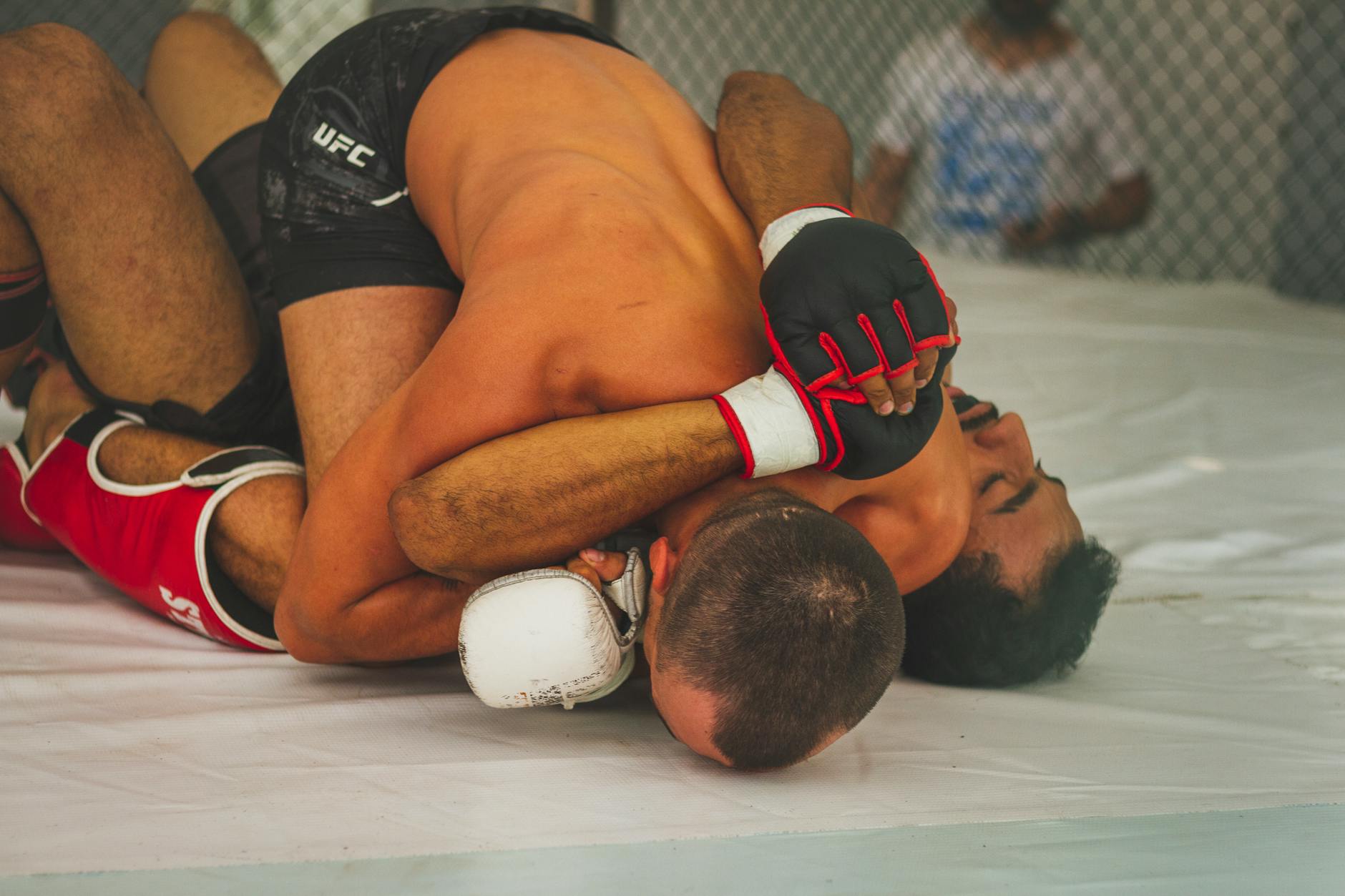
Two finishes define its reputation, and both ended with a broken arm because the loser refused to tap.
- Kazushi Sakuraba vs Renzo Gracie (Pride, 2000) — Sakuraba locked the kimura, Renzo would not submit, and the referee stopped it after the arm broke. Sakuraba came out of the Japanese shoot-style scene and trained under Wigan catch wrestler Billy Robinson: a double wristlock, applied to a Gracie, by a catch wrestler.
- Frank Mir vs Antônio Rodrigo Nogueira (UFC 140, 2011) — Mir finished one of the most durable submission grapplers in heavyweight history with the same hold.
The kimura travels well into MMA for the same reason it works in no-gi: it needs no cloth. Chokes remain the most common finish overall — our UFC statistics study puts the rear naked choke at 39% of all submission finishes — but among arm attacks the kimura is a fixture.
Is the kimura legal?
In IBJJF competition, yes — at every adult belt, in gi and no-gi. The kimura does not appear anywhere on the federation’s 26-technique illegal-moves table, which is a genuinely unusual position for a joint lock. Compare it with the leg attacks:
| Submission | White / blue / purple | Brown & black |
|---|---|---|
| Kimura | Legal | Legal |
| Armbar | Legal | Legal |
| Knee bar / toe hold | Illegal | Legal |
| Heel hook | Illegal | No-gi only |
| Wrist lock | Illegal for white belts | Legal |
That is why the kimura is worth prioritising early: a white belt can build a genuine kimura game on day one and never have to abandon it, whereas a leg-lock game has to wait for brown belt under these rules. Our gi vs no-gi guide sets out exactly which submissions change between the two formats — the kimura is on the short list that does not change at all.
FAQ
What is a kimura in BJJ?
A figure-four shoulder lock that rotates the opponent’s arm behind their back. You grip their wrist with one hand, thread your other arm under theirs and grip your own wrist, then rotate. It attacks the shoulder primarily and the elbow secondarily.
Is a kimura better than an americana?
They are the same grip rotating opposite ways, but the kimura is more versatile: it works from top and bottom, from guard, half guard, side control, north-south and the turtle, and the grip also produces sweeps and back-takes. The americana is largely a finish from side control and mount.
Is the kimura beginner-friendly?
Yes — it is legal at every belt, the grip is simple to learn, and the entries appear constantly at white belt because beginners post straight arms. Finishing it on a resisting opponent is much harder than learning it, which is normal for shoulder locks.
Is the kimura dangerous?
It can be. The shoulder has less warning range than the elbow, so the gap between “uncomfortable” and “injured” is short. Apply it slowly in training and tap early — the two most famous kimura finishes in MMA both ended in broken arms because the athlete refused to submit.
Can you do a kimura from mount?
Yes, usually when the bottom player pushes on your hips or extends an arm to frame. From mount it pairs naturally with the armbar — if they straighten the arm to escape the kimura, the armbar is there.
Why is it called a kimura?
After Masahiko Kimura, who used it to break Hélio Gracie’s arm in Rio on 23 October 1951. Japanese judo calls the hold gyaku ude-garami, and catch wrestling calls it the double wristlock — the BJJ name commemorates that specific match.
Bottom line
Learn the kimura as a grip rather than a finish. It is legal at every belt in both gi and no-gi, available from more positions than any other submission, and every defence to it opens something else — the sweep, the pass or the back. Get the wrist grip, kill the straight arm, block the roll, and rotate. Next, see how the same lock is played in catch wrestling as the double wristlock, or read our BJJ rules and scoring guide for how submissions sit within the wider point system.
Sources
- IBJJF Rule Book and Technical Fouls & Illegal Moves table — submission legality by belt and age category
The two arts reached this lock independently — Lancashire on one side, judo on the other. Our catch wrestling vs BJJ comparison covers that convergence, along with the rule differences that shaped each art’s game.