Quick answer: Mount is the position where you sit astride your opponent’s torso, knees pinching their ribs, with their back flat on the mat. Under IBJJF-style rules it scores 4 points once stabilized, and it feeds some of the highest-percentage submissions in BJJ: the cross-collar choke, the armbar, and the arm triangle. The catch is that mount is easier to reach than to keep — staying mounted on a good opponent is its own skill.
This guide is educational. Drill with qualified coaching, apply pressure gradually, tap early, and release immediately when a partner taps or cannot communicate clearly.
| Detail | Mount summary |
|---|---|
| Technique family | Dominant top position |
| Main variations | Low mount, high mount, technical mount, S-mount |
| IBJJF scoring | 4 points after roughly 3 seconds of control |
| First defensive priority | Elbows tight to the ribs before the mount climbs high |
What is the mount in BJJ?
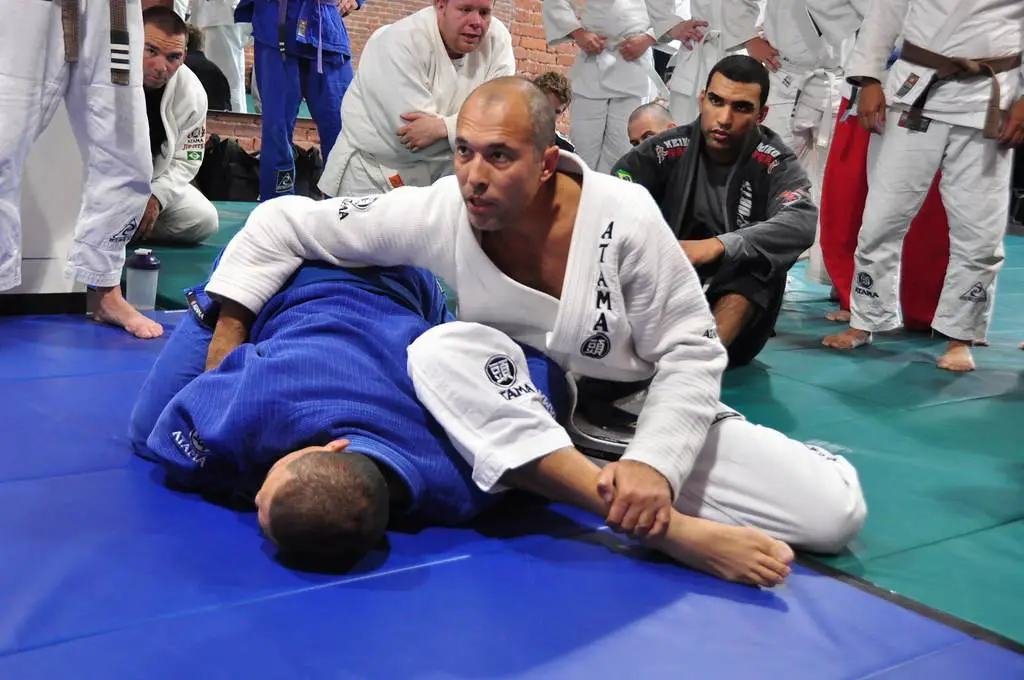
Mount means straddling a supine opponent so your hips sit above theirs and your knees frame their torso. It is one of the most valuable positions in grappling because gravity now works for you: your weight pins them while your hands stay free to attack, and in MMA the same position adds strikes to the equation.
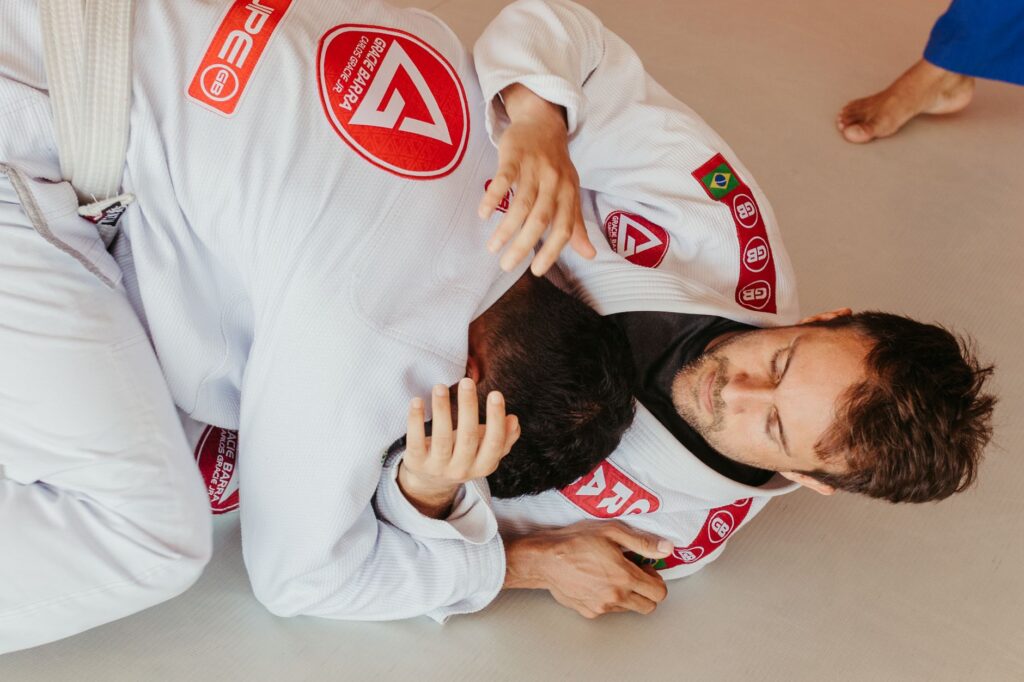
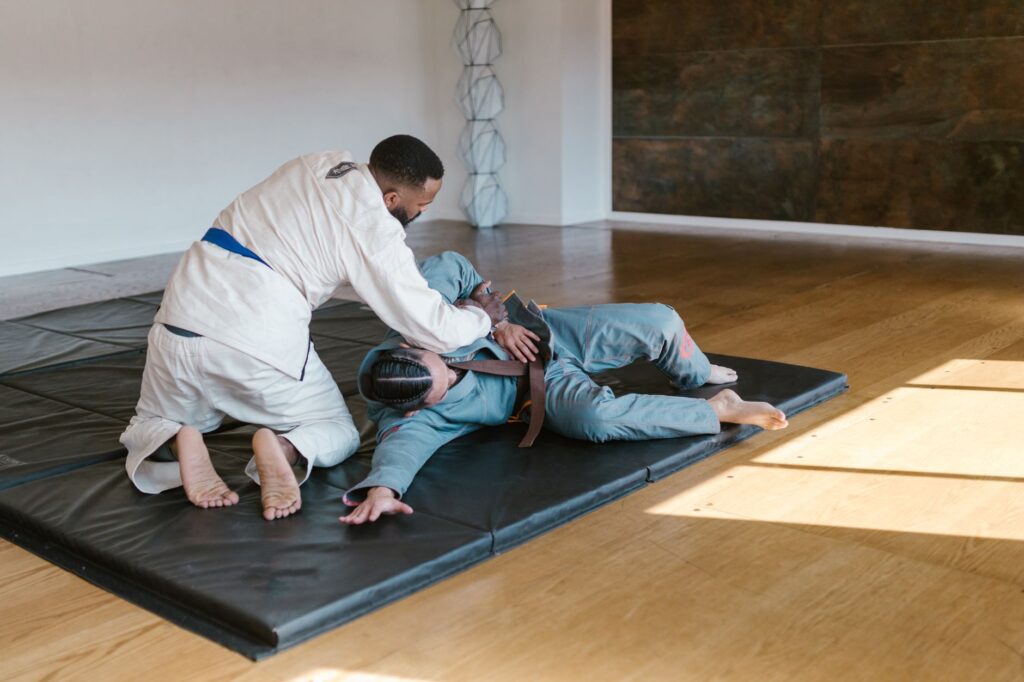
Mount is really four related positions. Low mount sits on the hips, often with the feet hooked under the thighs (grapevines), and prioritizes stability. High mount climbs the knees into the armpits so the defender’s elbows can no longer protect their neck. Technical mount appears when the opponent turns to a side: one foot posts by their hip, the other knee slides behind their head. S-mount tucks one leg under their shoulder to load up armbars. Good mount players flow between these as the defender moves, instead of trying to freeze a single pose.
Free every Tuesday
The Grappler Brief
The week’s biggest stories from BJJ, judo, wrestling, and submission grappling—curated for people who train.
Sent out weekly.Opt out anytime.
How mount control actually works
- Ride the bridge, don’t fight it. When the opponent bumps, let your hips lift and drop back down like a rider, keeping the knees connected. Stiff resistance is what gets people rolled.
- Keep your hips heavier than your chest. If you lean forward and post both hands, you invite the trap-and-roll. Posture stays upright or the hands post wide and briefly.
- Climb on their exhale. Each time the defender turns or breathes out, walk the knees an inch higher. High mount is won gradually, not jumped into.
- Trade grapevines for climbing at the right moment. Grapevines stabilize low mount but anchor you low; release them when it is time to advance toward the attacking positions.
Common entries into mount
Almost every mount is earned somewhere else first. The most reliable entries come from positions where the opponent’s near elbow is already compromised.
- From side control: pin the near arm with a crossface, slide the knee across the belly, and catch mount as the defender frames late. This is the highest-percentage entry for most people.
- From a knee-slide or over-under guard pass: instead of settling into side control, ride the momentum of the pass straight across the hips.
- From knee-on-belly: when the defender pushes the knee, windshield-wipe the shin across to the far hip.
- From technical mount scrambles: when a back-take fails and the opponent falls face-up between your legs, you often land directly in technical mount.
What to attack from mount
Mount attacks work as dilemmas: the defense to one exposes another. The classic chain runs collar choke → armbar. When the defender crosses their arms to block the choke, their elbow leaves the floor and the armbar appears. When they hide the arms, the Ezekiel choke and mounted triangle punish the tucked position. In the gi, the cross-collar choke from mount remains one of the most proven finishes at every level of the sport — Roger Gracie built the most decorated career in modern gi competition finishing elite black belts with exactly this “basic” attack.
Common mistakes
| Mistake | Why it fails | Better cue |
|---|---|---|
| Sitting flat on the hips with no pressure | The defender bridges and shrimps freely underneath you | Drop your weight through their sternum; make them carry you |
| Posting both hands on the mat when bridged | Your arms become the posts for a trap-and-roll reversal | Post wide with one hand, or ride the bridge with your hips |
| Chasing the choke from low mount | Their elbows are still home; you burn grips and lose position | Climb to high mount first, then attack |
| Ignoring the elbow escape while attacking | You finish nothing and end up back in guard | When their elbow wedges under your knee, address it before the submission |
How opponents escape the mount
Knowing the escapes makes your mount better, because you learn what you must shut down first.
- Trap-and-roll (upa): the defender traps an arm and the same-side foot, bridges over the trapped shoulder, and reverses into guard. It works when the mounted player leans forward and posts.
- Elbow escape (shrimping): the defender turns to a side, wedges an elbow and knee inside, and recovers half or full guard piece by piece. It works when the mounted player leaves space at the hips.
- Kipping and heel-drag escapes: more common in no-gi, using leg dexterity to strip grapevines and slip the hips free.
- Early defense beats late defense. All of these get dramatically harder once the mount is high and the elbows are above the defender’s own shoulders — which is exactly why the attacker climbs.
How mount is scored in competition
Under the IBJJF-style points system, mount scores 4 points once it is established and controlled for about 3 seconds. Technical mount scores like regular mount; transitioning from mount to back control can score again as a separate position. In ADCC rules, mount also scores in the points period, and in MMA judging, mount is weighed heavily as a dominant position even without a finish.
Details differ by organization and division — confirm the current rulebook for the event you are actually entering via the BJJ rules and scoring guide or the event page itself.
Safety and training notes
- Mind the ribs. Full-weight mount with driving knees is unpleasant at best and injurious at worst during routine drilling; save maximum pressure for hard rounds with willing partners.
- Give armbar time. Transitions from high mount and S-mount to the armbar move fast; extend the elbow gradually so partners can tap in time.
- Match pressure to partners. Chest pressure that a 90 kg training partner shrugs off can genuinely hurt a much smaller one.
Stop if a partner reports unusual pain, numbness, or trouble breathing beyond normal positional discomfort. This article does not diagnose injuries; seek qualified medical care for concerning or persistent symptoms.
Examples to study
- Roger Gracie’s mount system. Watch how slowly he advances — low mount, crossface, climb, choke — and how rarely he needs a second attack. The control does the work before the submission starts.
- Gordon Ryan’s mount in no-gi. Note how he uses the threat of the back-take to freeze opponents: turning away from mount concedes the back, so defenders hold still and get attacked anyway.
Related GrapplerHQ guides
Sources and further reading
- IBJJF Books and Videos — current rules materials
- ADCC Rules and Regulations
- Injury prevalence among BJJ practitioners — PubMed
FAQ
How many points is mount worth in BJJ?
Under IBJJF-style rules, mount scores 4 points once stabilized for roughly 3 seconds. Check the specific event’s rulebook, as scoring details vary by organization.
What is the difference between mount and high mount?
Regular or low mount sits over the hips for stability; high mount walks the knees into the armpits, taking the defender’s elbows out of the fight and opening chokes and armbars.
What is the best submission from mount?
The highest-percentage attacks are the cross-collar choke (gi), the armbar, the arm triangle, and the mounted triangle. They work best as a chain — each defense feeds the next attack.
What is the first thing to do when mounted?
Get your elbows tight to your ribs before the mount climbs high, then work a bridge or elbow escape. Late defense from high mount is far harder than early defense from low mount.
Bottom line
Mount rewards patience twice: first in the slow climb from stable low mount to attacking high mount, then in choosing the submission the defender’s own reaction hands you. If your mounts keep collapsing, the fix is almost never squeezing harder — it is riding the bridge, keeping your hips heavy, and climbing one inch at a time.