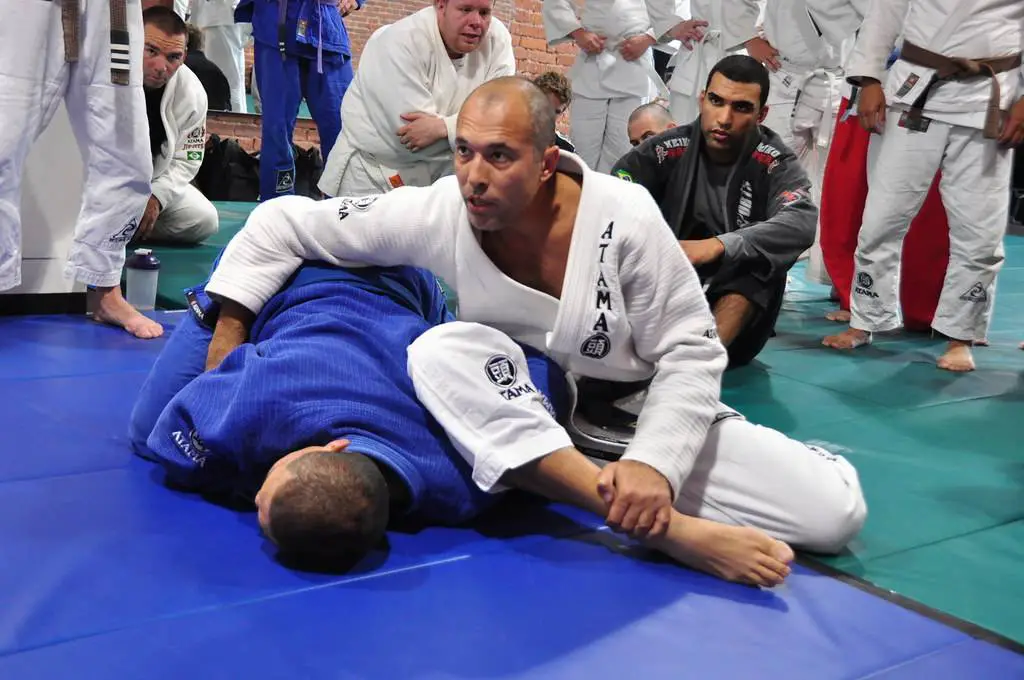
Quick answer: a wrist lock is a submission that isolates the opponent’s hand and forces a sharp bend of the wrist joint — often toward their chest or over a lever such as your forearm. In Roger Gracie’s closed guard demonstration, it appears when the standing partner grabs the lapel: you control the gripping arm, go under the other arm, and bend the hand to the chest while pinning the elbow to your body. The tricky part is rules, not mechanics. The published GrapplerHQ review of the IBJJF table marks wrist locks illegal for white belts and legal for higher belts, so what works in one class or event may be banned in the next.
Last updated: November 11, 2026 (Pacific). Sources checked November 11, 2026 UTC.
This guide is educational. Practice under qualified coaching, apply pressure gradually, tap early, and release immediately when a partner taps or cannot communicate clearly.
Before you experiment on a mat partner, check two things: can you isolate the hand and pin the elbow, and is the exact version of the lock allowed in your class and division?
Free every Tuesday
The Grappler Brief
The week’s biggest stories from BJJ, judo, wrestling, and submission grappling—curated for people who train.
Sent out weekly.Opt out anytime.
Wrist lock at a glance
| Detail | What to know |
|---|---|
| Technique family | Joint lock on the wrist; usually paired with a grip or lapel control |
| What it attacks | The wrist joint via a sharp bend, often with a lever applied to the hand |
| Typical setting | A moment of grip fighting — the partner reaches, grabs the lapel, or frames across the body |
| Worked example | Roger Gracie’s closed guard wrist lock against a standing opponent |
| IBJJF rules note | Per the published GrapplerHQ review of the IBJJF table: illegal for white belts, legal for higher belts; event variations apply |
| Training rule | Build the grip and control without pressure first; club rules may be stricter than competition rules |
What is a wrist lock?
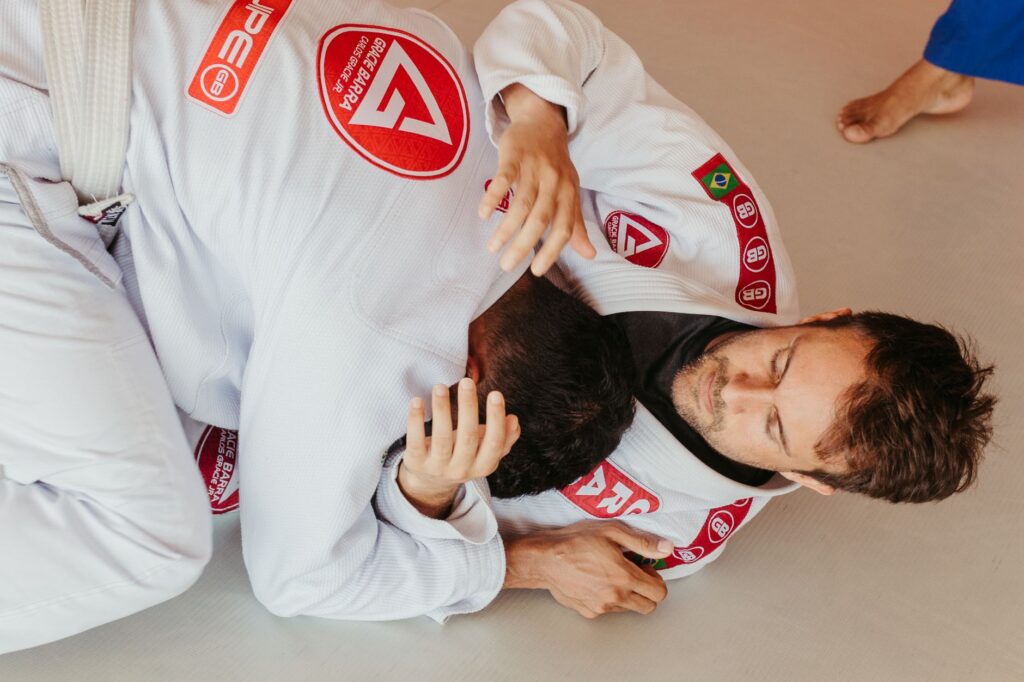
A wrist lock is a submission that isolates one hand and bends the wrist past its normal range, usually by forcing the palm toward the forearm with a lever or by pinning the hand against your body. Because the wrist joint has a smaller warning range than bigger joints, the gap between “uncomfortable” and “injured” can be short.
It is not the same as a shoulder lock. The kimura, for example, uses a figure-four grip that rotates the whole arm behind the back and loads the shoulder. A wrist lock stays smaller: you isolate the hand and bend it. That distinction matters for both training and rules, because the two submissions sit in different places on the IBJJF table.
Wrist locks show up wherever hands are exposed — grip fighting, guard breaks, framing from side control, and transitions. A coach who trains them can point to the same trigger every time: the partner’s hand is committed to a grip or a frame, and the arm is not yet connected to their body’s support.
How a wrist lock works
Roger Gracie’s demonstration is a clean example because the trigger is common. He works from the closed guard when the partner tries to stand up and grabs the lapel. That lapel grab commits one arm and opens the wrist.
- Control the committed arm first. Once the partner grabs, that arm is busy supporting the grip. You control it rather than chasing the hand blindly.
- Go under the other arm. Gracie’s cue is “go under, don’t go over,” because going over lets the partner push your arm away. Going under keeps his elbow and his own arm between you and his escape.
- Bring the hand to your chest. He describes the finish as bending the hand toward the chest and pulling the partner close to your body, instead of trying to out-pull a stronger opponent from a distance.
- Pin the elbow, then bend. He stresses keeping the partner’s elbow touching his own body and using body position and a little rotation rather than a hard arm pull. This is the control detail that turns a wrist grab into a submission.
As with most techniques, the movement is a control problem before it is a strength problem. If the hand stays close to your body and the elbow is pinned, the finishing bend takes less force and the partner’s escape routes shrink.
Common entries and positions
| Position | Common trigger | What to watch |
|---|---|---|
| Closed guard (as shown) | The partner stands and grabs the lapel | Control the gripping arm, go under, pin the elbow, bend the hand |
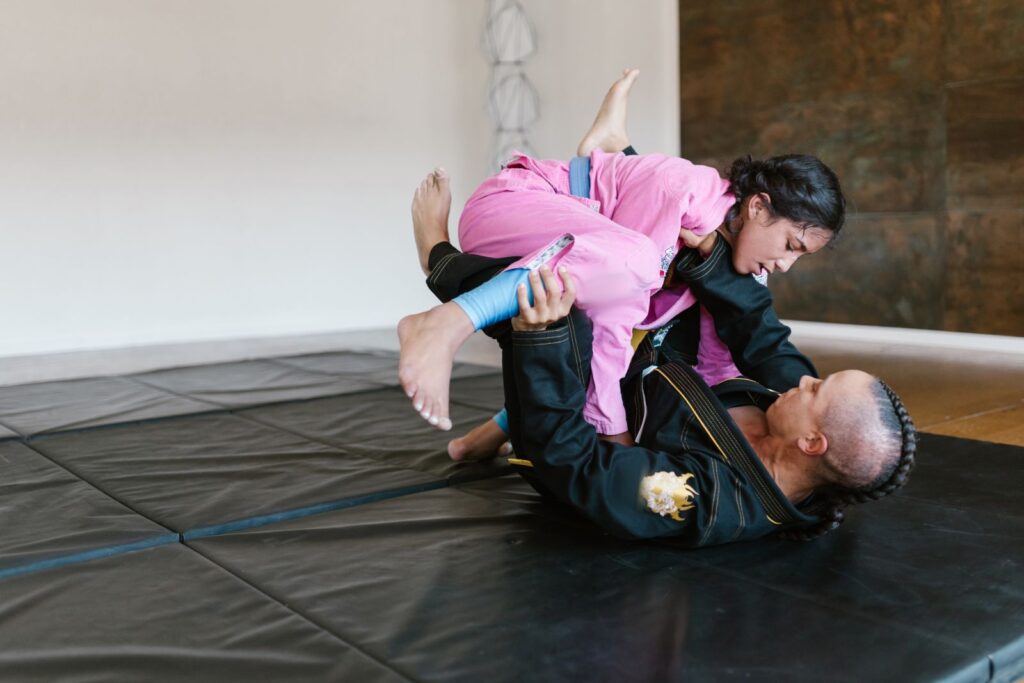
| Guard-to-sweep exchanges | The partner posts or grabs while you rip into a sweep | The exposed wrist is a finish or a threat used to open the sweep |
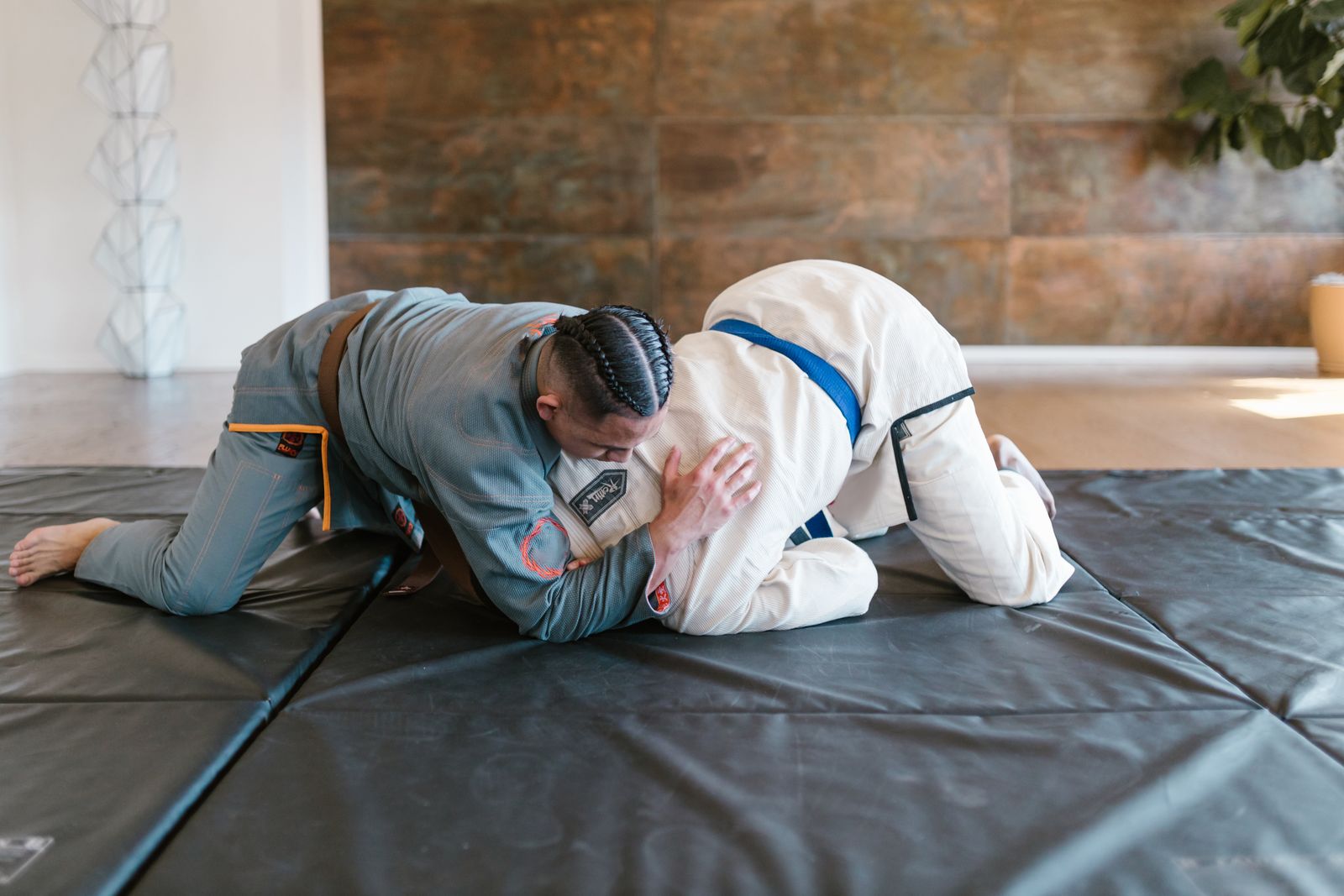
| Side control and mount | The bottom player frames across you or grabs your collar | The locked-in hand is isolated; the rest of the body is already controlled |
| Grip fighting | Any time a grip is established before the pass | Treat it as a counter or a break, not a primary plan |
Notice that none of these are “get to the wrist lock first” scenarios. The submission appears because the partner’s hands are already busy. That is why forcing the move rarely works the way reacting to an offered hand does.
Common mistakes
| Mistake | Why it causes trouble | Better cue |
|---|---|---|
| Chasing the hand before controlling the arm | The partner simply pulls the hand back, so there is nothing to attack | Control the committed arm and pin the elbow first |
| Going over the other arm | The partner pushes your arm away and escapes | Use the “go under, don’t go over” cue |
| Trying to out-pull a stronger opponent | Arm strength replaces position and control | Bring the hand to your body, pin the elbow, use small rotation |
| Applying full pressure to the wrist | The joint’s warning range is small; injury risk is high | Add pressure gradually and stop at the tap, every time |
| Assuming it is legal everywhere | Belt, age, format and event can all change the answer | Check the exact rules for your division |
Defensive priorities
Defend the wrist lock the way you defend any hand attack: keep your arms connected to your body so the hand is never isolated.
- Keep your elbows in. A hand floating away from your body is easy to isolate; an elbow pinned to your ribs is much harder to attack.
- Do not over-commit a single grip. Gracie’s entry needs the partner to grab the lapel. The less you commit one hand, the fewer standing-grip openers you offer.
- Free the isolated hand, or release the grip. If the wrist is being bent and a grip is what is holding it there, releasing that grip is often the fastest escape.
- Tap early. Wrist joints do not give the same warning as an elbow or shoulder. If you feel the bend fast, tap and reset rather than trying to survive the pressure.
Is the wrist lock legal in BJJ?
Rules here are the reason to read past the technique. The wrist lock sits on a different line of the IBJJF table than the kimura, and it is not available at every belt.
IBJJF
The IBJJF June 2024 rulebook lists “Wrist lock” among the items on its Technical Fouls – Illegal Moves table (the table on page 29 of the rulebook, item 10 in the listed order). The published GrapplerHQ guide to the kimura — which cites the IBJJF rulebook and illegal-moves table — records the wrist-lock row as “Illegal for white belts / Legal.” In plain terms, that points to the wrist lock being banned for adult white belts (and younger age bands) and permitted from blue belt up in the gi.
Two caveats, both of which matter:
- No-gi and other events vary. The exact permission, especially in no-gi and non-IBJJF promotions, is not settled by the kimura article’s summary alone. Check your event page.
- Cell-level details need a visual check. The age-band and format rows of the official poster should be confirmed against the current poster by a human reviewer, because the summary line does not capture every column. Do not treat the kimura article as the final authority for your exact division.
The setup and pressure direction matter too. Even where a lock is named as legal, related rules (for example, how the arm and elbow are positioned) can classify a specific movement differently. Ask a referee before the event if you are unsure how your exact variation will be called.
Other rulesets
Beyond IBJJF, treat wrist locks as event-specific. Some no-gi and submission-only events allow them widely; some beginner divisions restrict them alongside other small-joint attacks. The position-dependent line between a legal finish and an illegal one is a familiar theme across submissions — the same discussion applies to techniques like the heel hook, where legality shifts by belt, format and event. The safe habit is the same for all of them: check the current document for your exact division and format before competing.
Training the wrist lock with control
- Drill the control without pressure. Practice isolating the hand and pinning the elbow. The partner should be able to speak and tap freely.
- Separate the grip from the finish. Get comfortable finding the “go under” arm position from closed guard before adding the wrist bend.
- Add the finish slowly. Bring the hand to your chest, pin the elbow, and use a small rotation. Add pressure a little at a time and stop at the tap.
- Follow club rules. Many gyms restrict wrist locks at white belt even where a tournament allows them. The instructor sets the boundary for class, not the other way round.
Wrist lock FAQs
Is a wrist lock the same as a kimura?
No. The kimura uses a figure-four grip that rotates the whole arm and loads the shoulder (and is legal at every adult IBJJF belt). A wrist lock isolates the hand and bends the wrist, and it is listed separately on the IBJJF table as illegal for white belts.
Can white belts use wrist locks in IBJJF competition?
Under the published GrapplerHQ reading of the IBJJF table, no — the wrist lock is marked illegal for white belts. A coach may still teach the concepts in a suitable class, but that is separate from tournament permission.
Is a wrist lock legal in no-gi?
It depends on the event. The kimura article’s summary reflects the IBJJF table, and no-gi and other promotions set their own rules. Check the current rulebook and the event page for your exact division.
Are wrist locks dangerous?
They can be. The wrist joint has a small range and gives less warning than bigger joints, so pressure can go from uncomfortable to injuring quickly. Apply the bend slowly under coaching and tap early.
Bottom line
Treat the wrist lock as a reaction to a committed hand, not a primary plan. Roger Gracie’s closed guard example is a good template: control the arm, go under, pin the elbow, and bend the hand toward your body. Before you use it in competition, confirm the exact rules for your belt, age, format and event.
Sources
- Wrist Lock by Roger Gracie, BJJ Fanatics official channel — teaching demonstration; video and auto-captions inspected November 11, 2026 (see
sources/teaching-verification.mdfor timestamps and limits). - IBJJF Books and Videos — June 2024 rulebook, page 29 lists “Wrist lock” among its Technical Fouls – Illegal Moves items; table and poster saved in
sources/. Cell-level column confirmation requires human visual review of the current poster. - GrapplerHQ Kimura guide — cites the IBJJF illegal-moves table and records the wrist-lock row as “Illegal for white belts / Legal.”