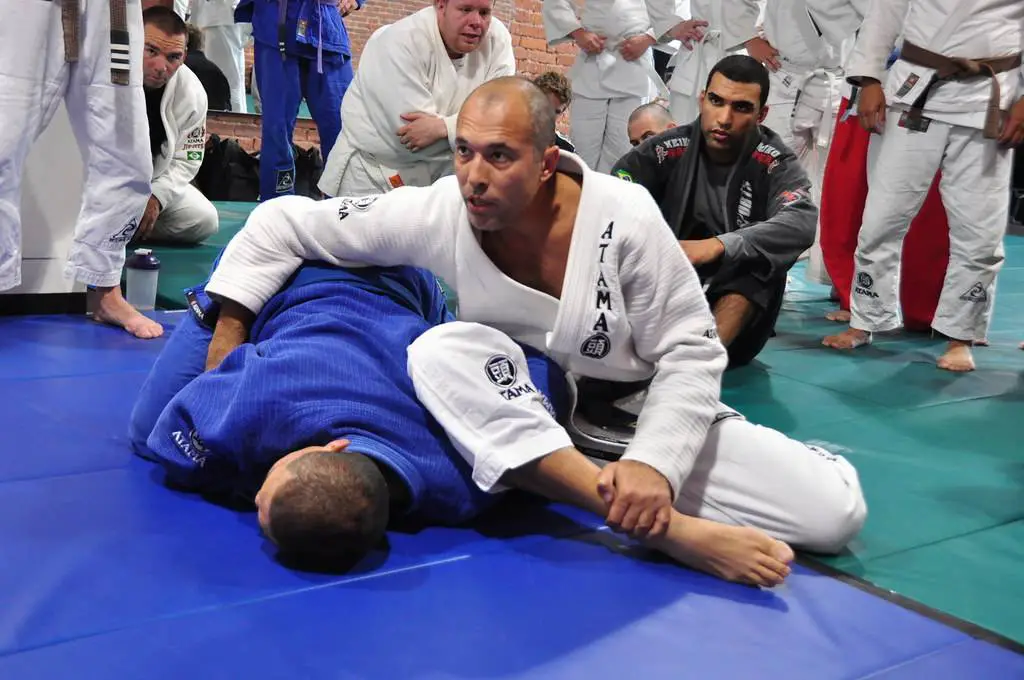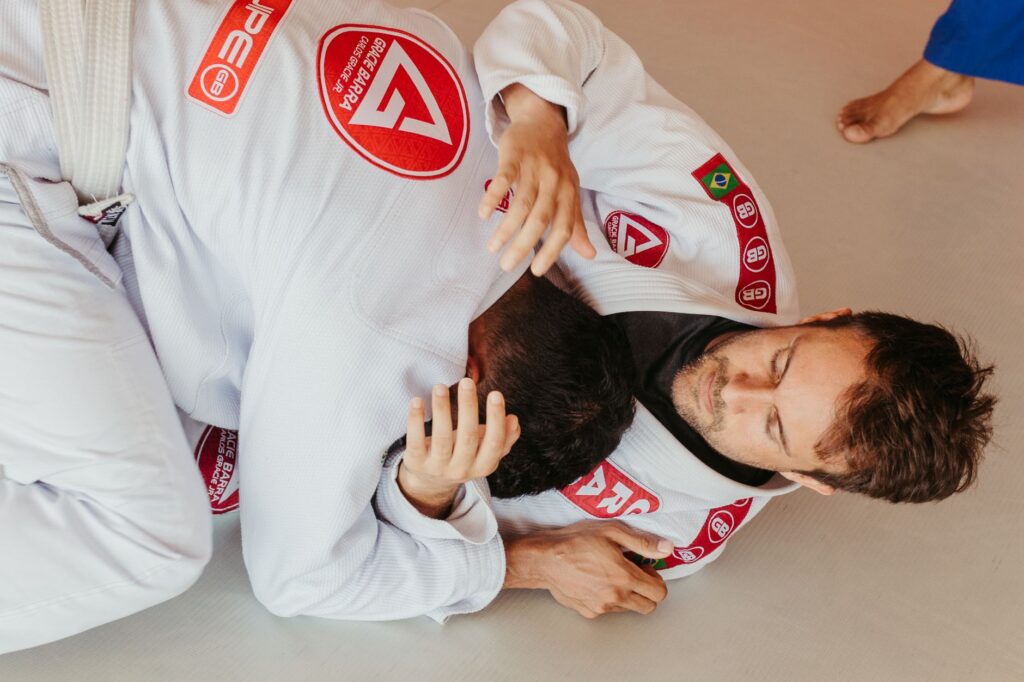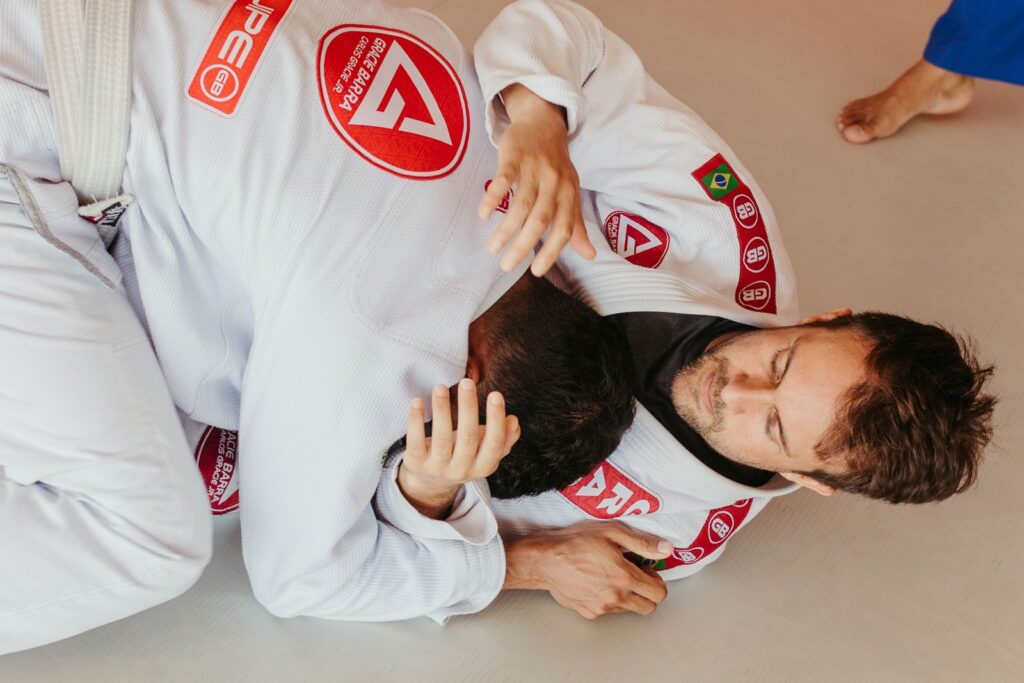
Quick answer: the worm guard is a gi-only open guard that uses the opponent’s own lapel as its main control point. You thread the lapel under your leg so that pulling it turns the opponent’s whole posture instead of just tugging an arm, and the connection is hard to break: they generally cannot pass until they free the lapel. It is a mid-to-advanced system, so learn your basic open guards first; it will not save a weak De La Riva or lasso foundation.
Last updated: November 11, 2026 (Pacific). Teaching demonstrations checked November 11, 2026 UTC.
This guide is educational. Practice under qualified coaching, apply pressure gradually, and drill without force until both partners understand the weave and the release points.
Worm guard at a glance
| Detail | What to know |
|---|---|
| Technique family | Open guard — a gi-specific lapel guard |
| Uniform requirement | Gi with an intact lapel; no-gi has no cloth to weave, so the guard cannot be set up as taught |
| First control priority | A lapel run under your leg and passed to the other hand, so a single pull rotates their spine |
| Main influence | Keenan Cornelius, who created and popularized the worm in the mid-2010s |
| Typical entries | From De La Riva or spider/lasso-style grips; awkward from closed guard |
| Main attacks | Sweeps and back-take (name the finish you learned; do not improvise the sweep under resistance) |
| Difficulty | Advanced. Ranked above standard open guards for coordination and grip economy |
What is the worm guard?
The worm guard is a lapel guard: instead of gripping the collar or sleeve like a normal open-guard game, the bottom player weaves the opponent’s loose lapel around their own leg. The name describes how the lapel is worked into the position — Keenan Cornelius, the grappler most associated with it, runs through the exact weave in his Worm Guard 101.
Free every Tuesday
The Grappler Brief
The week’s biggest stories from BJJ, judo, wrestling, and submission grappling—curated for people who train.
Sent out weekly.Opt out anytime.
It is part of the family of lapel guards that spread through high-level gi coaching in the 2010s. Our lasso guard guide covers one cousin, and the De La Riva guard is the usual foundation it builds on. What separates the worm is not the hooks — it is what the lapel does to the opponent’s body.
Why the lapel beats a sleeve or collar grip
Keenan’s opening point is the reason the guard exists: the lapel multiplies a small pull into a whole-body turn. A collar grip holds the opponent in place, and a sleeve grip gives tension they can stall against. The loose lapel is different — run it behind their back and pull, and it wraps around the far shoulder and rotates their posture. The upper body turns, the hips follow, and that rotation is what creates the sweeps and back-takes.
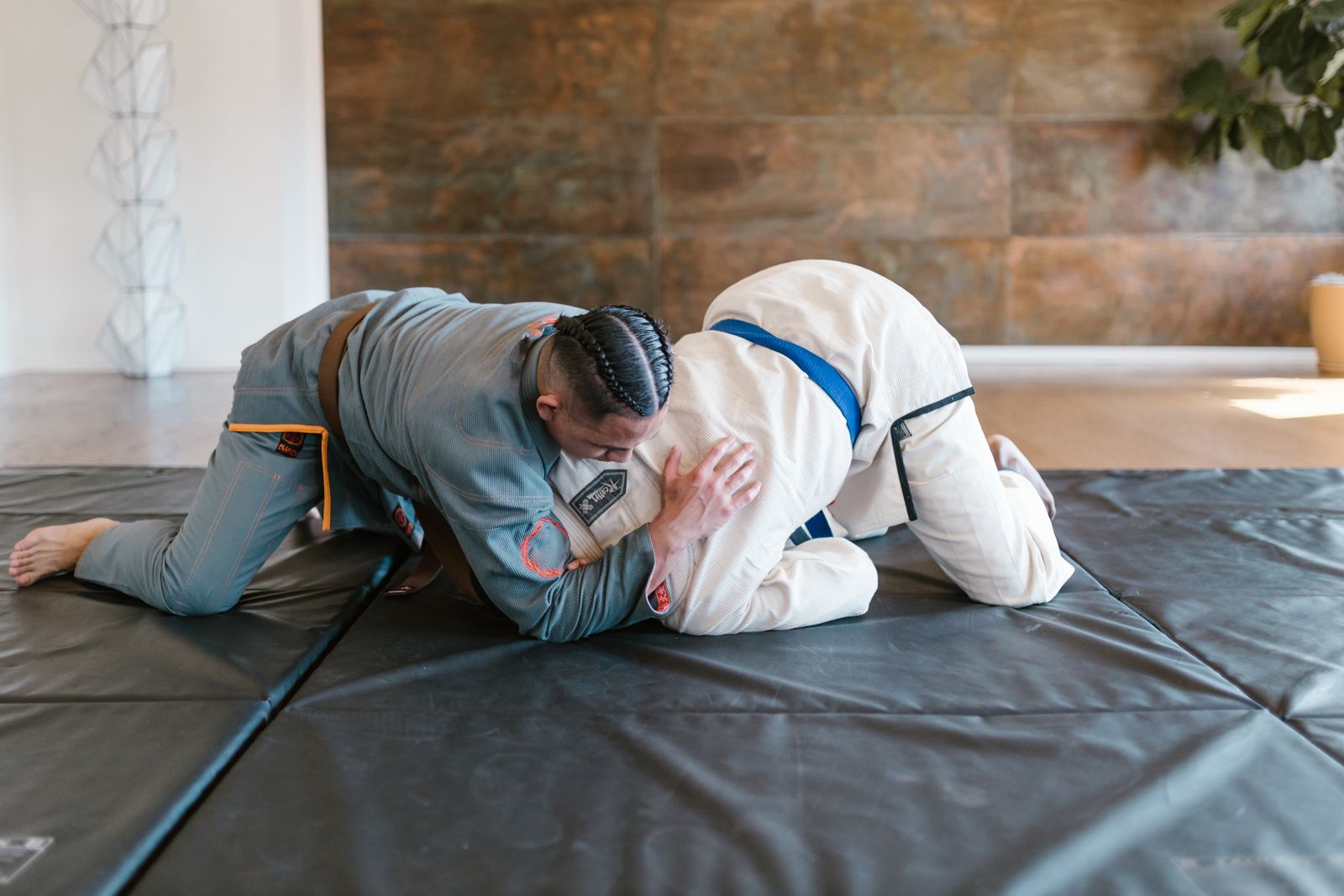
That is also why the worm resists passing. The opponent cannot pass until they break the lapel grip, which is hard because the cloth is controlled on both sides of your leg. Keenan notes that an opponent driving a knee in to relieve pressure does not undo the guard — the lapel control keeps the posture broken.
Grips and the basic weave
The core grip sequence, from Keenan’s Worm Guard 101:
- Set the lapel. Hold their same-side lapel with the same hand — near their collar, palm in. Keenan notes that either lapel can work; the demonstration just uses one side consistently.
- Enter an open guard first. You are not ready to weave until you have space. He shows entering guard by sitting directly down and creating distance rather than swinging a leg over the hip.
- Hook or grip, then thread. With a De La Riva hook on their leg, run the lapel from the outside of your ankle. Drive the same-side leg up and over their leg, then grab the knee with the free hand.
- Transfer the lapel. Pull the lapel tight under your leg and switch it to the other hand so the cloth runs across you and is anchored on the far side.
- Keep the leg on the hip. Keenan is explicit: if you just hand the lapel across without threading it under your leg, you have a sit-up guard, not a worm guard. The foot on the hip is part of the position, not decoration.
That final position is the setup: their lapel is trapped against your leg, your foot controls their hip, and a pull turns their whole spine. The sweeps, back-take, and named variations are all built on that one control point.
Entries: where the worm comes from
The worm is usually entered from positions where you already own open-guard grips:
- De La Riva. Keenan presents this as the cleanest path in the 101 video — the hook and the lapel weave are compatible, and the hook buys you the extra second to thread the cloth.
- Spider and lasso. Spider grips give you sleeve control while you free the near hand for the lapel. Our lasso guide explains when the lasso is the stronger choice.
- Not closed guard. Keenan says closed guard is the one place the setup is not convenient — you lack the distance to thread the lapel.
Your De La Riva techniques will carry the entry better than raw lapel grabbing. If your De La Riva hook is getting flattened, the worm entry will feel like arm wrestling; fix the guard first.
Sweeps and attacks from the worm
The sweep uses the same mechanism as the control: pull the lapel to rotate the opponent’s shoulders, and a person whose spine faces away cannot base on that side. The classic options are the lapel sweep — pull the woven lapel across yourself while your legs drive — and the back-take when the opponent turns to escape the rotation.
Keenan also shows a worm sweep from deep half guard in a KeenanOnline clip — the finish is precise, so drill it with a coach. Rule for the guard: if you are not using lapel tension to move their hips, you are holding a fancy collar grip — reset and re-engage.
How to pass the worm guard
The counter-perspective comes from a named Grapplearts demonstration of four-time world champion Rodolfo Vieira passing the worm guard. His sequence is a useful framework because he explains why each step exists:
- Keep your passing knee open. Do not let your knee close down on their gripping hand, or you give them the tension they want.
- Put their foot between your legs. Vieira grabs the collar and traps their far foot between his own legs while he works.
- Pin the near knee under your armpit. Then take their belt or pants with the free hand.
- Smash the hand, not the cloth. Press on the gripping hand with the knee until the lapel comes free — do not pry fabric from their fist.
- Leave the guard. Once released, switch to a triceps grip and go to mount or the 100 kilos pass.
Vieira’s two most useful passer rules: keep both knees up for base (one knee down lets the guard player sit up or sweep), and do not attack the grip while your base is poor. He also warns these lapel guards are complex to pass because you get stuck — the honest version of the position’s reputation. Our BJJ guard passing guide covers the wider concepts behind his framework.
Common mistakes and better cues
| Mistake | Why it fails | Better cue |
|---|---|---|
| Handing the lapel across without threading it under your leg | You now have a sit-up guard with no body rotation | Keep the cloth running under your leg until the foot reaches the far side |
| Dropping the foot off the hip | The weave loses its anchor and the opponent can posture up | Foot on hip is part of the position; reset if it slips |
| Entering by swinging the leg over their hip | Commits your path mid-air and lets the passer push your knee and step past | Sit down directly, create distance, then hook |
| Weeving into a broken De La Riva | The hook must hold for the lapel work to follow | Fix the foundation guard; drill hooks separately |
| Passer: leaving one knee down | Gives the guard player the sit-up or the sweep | Base on both knees before attacking grips |
| Passer: prying the fabric instead of the hand | Wastes energy against a strong fist | Smash the gripping hand with your knee |
Defensive priorities
For the guard player, defense is mostly about not getting flattened and not getting passed while you weave:
- Win the grip before they settle. Once the passer is heavy and pinning, the lapel is wasted. Get an open-guard grip before the weave.
- Keep the pass on the far side. Because the lapel rotates their spine, they will pass where your rotation doesn’t cover; protect that side with the free hand.
- Do not chase the submission. The control first. Only pull the lapel for the sweep or back-take when your hips are under the opponent.
- For the passer: the best early defense is not letting the weave finish. Hand-fight the near hand and keep the knee open, as Vieira shows — once the lapel is threaded under their leg, you are in a slower fight.
The gi requirement and complexity caveat
The worm guard requires a gi. There is no lapel in no-gi, and the entire mechanic depends on weaving cloth. Our gi vs no-gi guide explains the wider gap between the two games. You can use the general idea — control the far side through a grip — but the worm guard itself is not a no-gi strategy.
It is also not a first guard. Keenan’s lesson bridges De La Riva and spider, and if those are weak the worm will amplify the holes. The weave wraps cloth around your own legs, so careless drilling makes you slow to escape and easy to pin before you know the release points. Learn it in drills with a patient partner, and keep your basic guard game current.
Worm guard FAQs
Is the worm guard legal in BJJ competition?
Lapel guards use clothing grips, not joint twisting, and are legal in gi jiu-jitsu. Grip use and what a referee counts as “guarding” can still vary, so check your event’s current rules before competing.
Can you use the worm guard without a gi?
No. Its control comes from weaving the opponent’s lapel around your leg, and no-gi has no lapel, so the guard cannot be set up as taught.
Is the worm guard good for beginners?
Not as a first guard. It sits in the mid-to-advanced lapel-guard tier; build De La Riva, spider/lasso, and basic guard retention first, and the worm becomes an option rather than a crutch.
What is the difference between the worm guard and the lasso?
Both are lapel guards, but they grip opposite things. In the lasso, you wrap the opponent’s lapel around their upper arm and through their armpit so you can control that arm and pull their posture down. In the worm, you weave the lapel under your own leg to rotate the whole body. They are cousins with different control points.
Bottom line
The worm guard is a lapel guard whose entire value is that a small pull turns the opponent’s whole spine. Learn the weave and the entry from Keenan’s demonstration, keep the foot on the hip, and resist the temptation to skip the De La Riva and lasso foundations it sits on. If you face it, use Vieira’s passing framework: knee open, both knees down for base, and break the hand, not the cloth.
Sources
- Keenan Cornelius — Worm Guard 101 (KeenanOnline) — lapel mechanics, grip sequence, and basic setup; video inspected November 11, 2026.
- Grapplearts — How to Pass the Worm Guard by Rodolfo Vieira — passing framework and defensive cues; video inspected November 11, 2026.
- Keenan Cornelius — Super Strong Sweep from Deep Half Guard (KeenanOnline) — named sweep demonstration; integrity-checked with audio and frame analysis November 11, 2026.
- GrapplerHQ — Keenan Cornelius profile — identity, rank, and origin context.