
BJJ Leg Locks: Types, Positions & Competition Rules
Quick answer: a BJJ leg lock is a submission directed at the lower limb. A straight ankle lock, heel hook, kneebar, toe hold and calf slicer are different attacks; ashi garami, outside ashi, 50/50 and saddle are names for controlling positions. A position name does not tell you whether an attack is legal. Check the submission, the ruleset and your exact age/belt or experience category together.
Last updated: (Pacific).
Rules and references checked October 26, 2026. This is a type-and-rules reference, not a finishing tutorial. Learn the technical details under qualified supervision; do not use a written glossary to test how much force a training partner’s joint can tolerate.
Start with three separate questions
What is controlling the leg?
Ashi, outside ashi, 50/50, saddle
Which attack is being attempted?
Ankle lock, heel hook, kneebar, toe hold, calf slicer
Which event and category apply?
Age, belt, gi/no-gi or experience division
These questions solve different problems. You can recognize a leg entanglement without identifying the final attack. You can recognize a heel-hook grip without knowing whether the division permits it. Keeping the three layers separate makes a coach’s explanation and a tournament’s restrictions easier to follow.
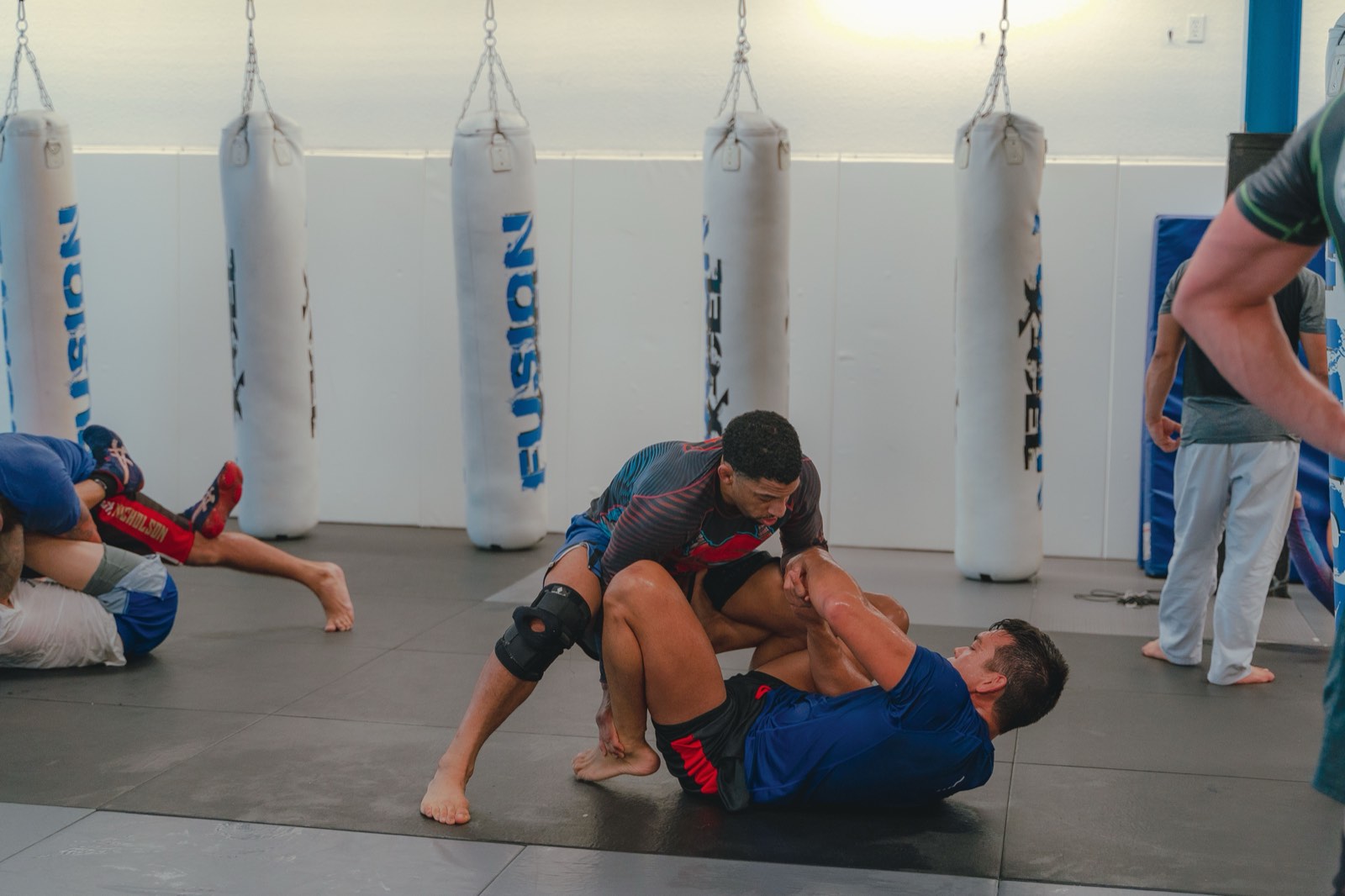
The main types of BJJ leg locks
| Submission | What distinguishes the name | Existing focused guide |
|---|---|---|
| Straight ankle lock | A straight foot/ankle submission; rules distinguish it from twisting attacks | Straight ankle lock |
| Heel hook | A rotational attack using heel control; distinct from a straight foot lock | Heel hook |
| Kneebar | A knee-extension submission | Overview in this reference |
| Toe hold | A distinct rotational foot submission | Overview in this reference |
| Calf slicer | A compression submission rather than a straight foot lock | Calf slicer |
The names are a useful starting vocabulary, but they do not describe every variation. Rules may distinguish a straight foot lock from an attack that twists the knee. Calling something an “ankle lock” does not settle how a referee will classify the actual mechanics.
Follow our straight ankle-lock guide, heel-hook guide or calf-slicer guide for their focused technical discussions. Use the type table here to distinguish the names before moving into those details.
Leg-lock positions: a glossary rather than one universal naming system
| Name you may hear | Reference meaning | What to clarify |
|---|---|---|
| Standard ashi / ashi garami | A basic leg-control position in the Biernacki/Kesting reference | Which configuration the coach uses; do not equate every single-leg-X use with it |
| Outside ashi | Another leg-entanglement configuration | Identify the position separately from the attempted submission |
| 50/50 | A reciprocal leg-entanglement position | Both athletes can have attacking options; the label is not permission |
| 411 / saddle / inside sankaku | Overlapping names used for an inside leg-entanglement family | Nomenclature varies; consult the instructor’s actual demonstration |
Terminology varies between coaches. The position reference by Rob Biernacki and Stephan Kesting treats standard ashi as superficially similar to single-leg X, rather than declaring every use of those labels identical. In your own training, ask the instructor to identify the actual leg configuration they mean.
For a visual reference, use the original teaching material and its labeled examples. A glossary can orient you, but it cannot replace seeing the configuration, learning the controlling details and understanding the opponent’s escape options. The source is useful for terminology; its 2017 publication date makes it unsuitable as an authority for current tournament legality.
IBJJF leg-lock rules: adult belt and format checks
The following table is limited to IBJJF adult divisions. It summarizes the selected submissions, not every possible foul or variation. The actual linked illegal-moves poster identifies version 4.0; the linked rulebook identifies version 6.1, June 2024, although the download index calls it v 6.0. Those are the checked documents, not newly issued “2026 rules.”
| Submission | Adult white/blue/purple, gi or no-gi | Adult brown/black gi | Adult brown/black no-gi |
|---|---|---|---|
| Straight foot lock | Permitted, subject to application restrictions | Permitted, subject to application restrictions | Permitted, subject to application restrictions |
| Kneebar | Prohibited | Permitted | Permitted |
| Toe hold | Prohibited | Permitted, subject to twisting-direction restrictions | Permitted |
| Calf slicer | Prohibited | Permitted | Permitted |
| Heel hook | Prohibited | Prohibited | Permitted |
“Permitted” does not remove the rules governing the setup or application. Knee reaping and knee-twisting attacks have separate restrictions. A straight-foot-lock label therefore cannot be used to bypass a prohibited position or movement.
Masters warning: the adult brown/black no-gi exception is not a blanket permission for all brown/black belts. The poster separates that adult category from the other brown/black age and format categories. Check the complete official rulebook and illegal-moves poster for your category; youth restrictions also need their own check.
ADCC heel hooks: championship permission is not every category’s permission
The ADCC championship regulations permit leg locks and ankle locks. The separate category restrictions prohibit heel hooks for beginner and advanced/intermediate competitors. Masters professional competitors are mapped to advanced/intermediate restrictions.
| Category | Heel hooks | Source mapping |
|---|---|---|
| Championship / professional, subject to masters exception | Permitted | Championship legal-technique list |
| Advanced / intermediate | Prohibited | Category table |
| Beginner and kids | Prohibited | Beginner column; kids mapped to it |
| Masters beginner | Prohibited | Beginner restrictions |
| Masters advanced / intermediate / professional | Prohibited | Advanced/intermediate restrictions |
Beginners also have additional restrictions, including kneebars, toe holds and calf-pressure locks. This small heel-hook table does not replace the full category chart. Use the division named in your event registration rather than assuming that any tournament with ADCC branding permits the same attacks as Worlds.
Two examples of checking the right row
Example 1: adult purple belt in IBJJF no-gi. The adult white/blue/purple row does not permit heel hooks. Seeing adult brown/black athletes use them in no-gi does not change the purple-belt restriction. The adult straight-foot-lock allowance is a different entry with its own application rules.
Example 2: masters professional in the ADCC category chart. Read the masters mapping as well as the professional column. The published masters-professional mapping uses advanced/intermediate restrictions, which prohibit heel hooks. The word “professional” alone is an incomplete rules check.
For another promotion, repeat the same process from its own current chart. Do not transplant the IBJJF belt matrix into JJWL, NAGA or a submission-only event. Our IBJJF no-gi overview provides wider scoring and uniform context.
How to use this hub in training
Start by naming the position and intended submission before discussing whether the finish is allowed in the session. A club may restrict an attack even when a competition division permits it. Training permission and tournament permission are separate checks.
Use technical lessons to learn recognition and controlled practice, not an online legality table as a reason to apply an unfamiliar attack. If you do not recognize what is controlling your leg, pause and ask your coach to identify it before continuing. This reference offers no injury-treatment advice or guarantee that any submission is safe.
After identifying the control position, continue with the relevant technique or guard resource. Our single-leg-X guide concerns a narrower guard task; the rule documents determine whether the particular attack is allowed.
Leg-lock FAQs
Is ashi garami a submission?
No. It is a position name used for leg entanglement and control. The submission applied from that position is a separate technique.
Is a heel hook the same as an ankle lock?
No. They are distinct submission categories. Rules that allow a straight foot lock can still prohibit heel hooks or knee-twisting attacks.
Are heel hooks legal in IBJJF no-gi?
The checked poster permits them in adult brown/black no-gi. That exception does not apply to every belt or masters category.
Are heel hooks legal at every ADCC level?
No. Championship rules permit them, but the separate beginner/intermediate chart prohibits them for several categories, including its mapped masters-professional category.
Is single-leg X always the same as ashi garami?
Terminology varies between teachers. The Biernacki/Kesting reference describes standard ashi as superficially similar to single-leg X. Ask your instructor to identify the actual configuration rather than relying on a name alone.
Sources and limits
- IBJJF download index: linked rulebook and visually checked illegal-moves poster.
- ADCC championship rules and category restrictions: separate documents with explicit masters mappings.
- Biernacki/Kesting position reference: terminology and position-versus-submission distinction, not current rules.
Free every Tuesday
The Grappler Brief
The week’s biggest stories from BJJ, judo, wrestling, and submission grappling—curated for people who train.
Sent out weekly.Opt out anytime.