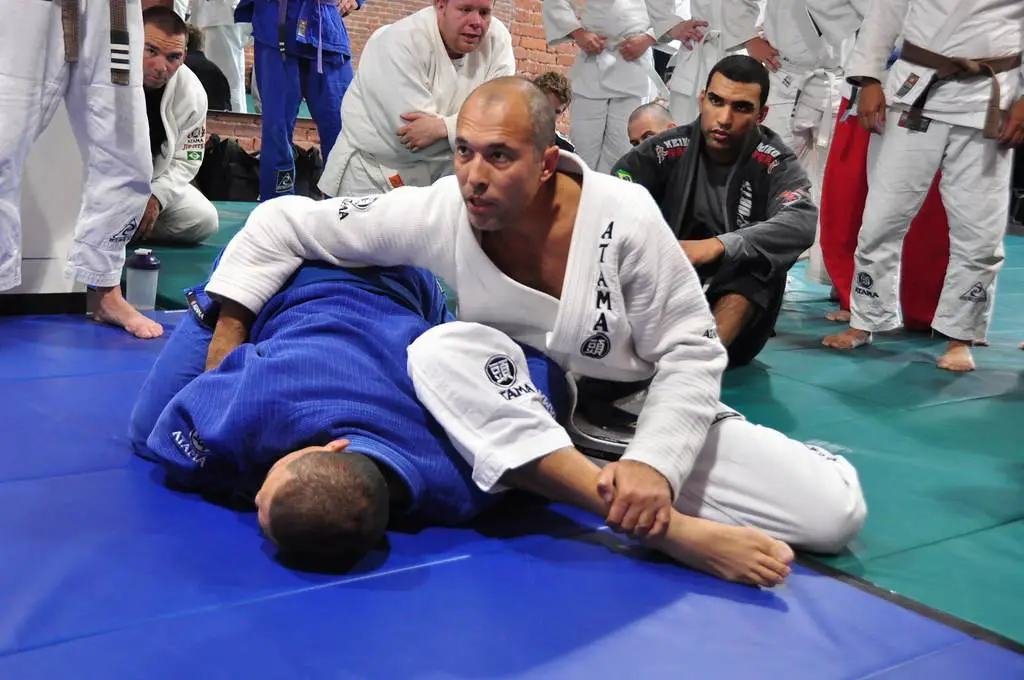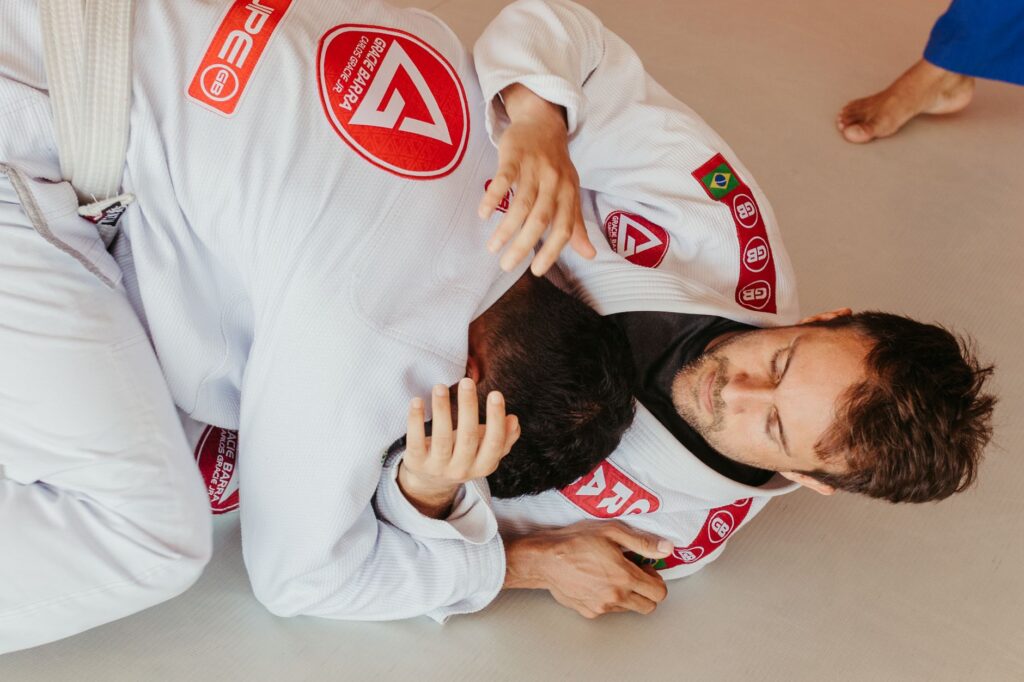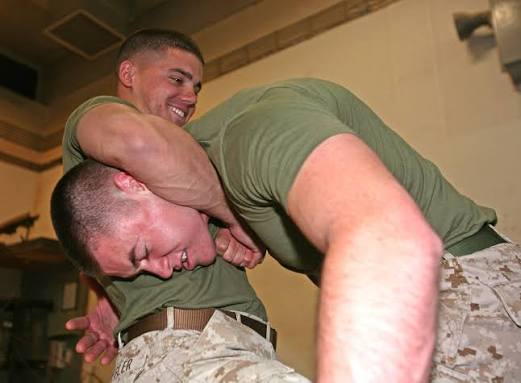
Quick answer: the guillotine is a front headlock choke — you wrap an arm under the opponent’s chin while their head is low, lock your hands, and squeeze while extending. Judo calls it mae hadaka jime, “front naked choke,” because it is the mirror image of the rear naked choke, applied from the front. It is the second most common submission in UFC history: 293 of 1,659 submission finishes (17.7%) across our dataset of 8,591 UFC bouts. Done well it is a blood choke; done badly it becomes a painful, escapable crush on the windpipe.
Last updated: July 29, 2026. UFC figures come from our own analysis of 8,591 bouts (1994–2026) — methodology in the UFC statistics study. Legality is from the official IBJJF rule book and illegal-moves table.
Train chokes only under qualified supervision. Apply gradually, tap early, and release the moment your partner taps or stops responding.
The guillotine is the submission you will catch by accident before you ever learn it properly — every badly-shot takedown hands you the head. That is exactly why it is worth understanding the mechanics: the difference between the version that finishes and the version that gets your guard passed is a few centimetres of elbow height.
Free every Tuesday
The Grappler Brief
The week’s biggest stories from BJJ, judo, wrestling, and submission grappling—curated for people who train.
Sent out weekly.Opt out anytime.
Guillotine choke at a glance
| Question | Answer |
|---|---|
| Family | Front headlock submission |
| Japanese name | Mae hadaka jime — “front naked choke” |
| UFC finishes | 293 — 17.7% of all UFC submissions, 2nd most common |
| Blood or air? | Both exist — the blood-choke versions are far more reliable |
| Where from | Guard, standing, sprawl, front headlock, scrambles |
| IBJJF legality | Legal at every belt, gi and no-gi |
| Biggest risk | Holding it too long after your guard is passed — see the Von Flue |
The guillotine is the front naked choke
The most useful thing to know about the guillotine is buried in its Japanese name. Hadaka-jime means “naked strangle” — the rear naked choke. Mae hadaka jime is the same idea from the front.
That framing fixes most people’s guillotine immediately. If you think of it as “squeezing a neck,” you crush the windpipe and get a slow, painful, survivable choke. If you think of it as a front-facing rear naked choke, you look for the same thing you look for from the back: the arteries on the sides of the neck, with the forearm bone under the chin rather than mashed across the throat.
Between them, the front and rear naked chokes account for 56.7% of every submission in UFC history — 941 of 1,659 finishes. More than half of all submissions in the sport are one of these two techniques.
How common is the guillotine? UFC data
| Rank | Submission | UFC finishes | Share |
|---|---|---|---|
| 1 | Rear-naked choke | 648 | 39.1% |
| 2 | Guillotine choke | 293 | 17.7% |
| 3 | Armbar | 195 | 11.8% |
| 4 | Arm-triangle choke | 126 | 7.6% |
| 5 | Triangle choke | 114 | 6.9% |
The guillotine’s ranking is remarkable for one reason: unlike the rear naked choke, it does not require a dominant position. It is available from guard, from standing, from a sprawl, and from the scramble after a failed takedown — which is why it produces so many finishes despite being defensible.
The variations, and which ones actually choke
| Variation | Mechanism | Reliability |
|---|---|---|
| High-elbow | Choking elbow lifted high over the shoulder; closes the arteries | Highest — the modern standard |
| Arm-in | One of their arms trapped inside; their own shoulder helps compress | High — very tight when locked |
| Standard (arm-out, low elbow) | Forearm across the front of the throat | Lower — drifts toward an air choke |
| Standing | Snap the head down, lock, and extend upward | Situational; strong in MMA |
| Jumping / flying | Guard jumped on to add bodyweight | High risk — gives up position if it fails |
The arm-in version confuses people because it seems like trapping an arm should reduce the pressure. It does the opposite: their trapped shoulder is driven into one side of their own neck, closing that carotid, while your forearm closes the other. It is the same principle that makes the triangle choke work.
Finishing the guillotine
- Get the forearm bone under the chin, not across the throat. Blade of the wrist to the side of the neck.
- Lift the elbow high. The single biggest upgrade to most people’s guillotine. A high elbow turns a throat-crush into an artery choke.
- Close the space at the shoulder. Their head pops out through the gap between your arm and your shoulder — cover it.
- Control the far side. From guard, a leg over the back or a hip escape to the angle stops them stacking and passing.
- Finish by extending, not curling. Arch and drive your hips forward while pulling the lock into your chest.
The Von Flue trap: know when to let go
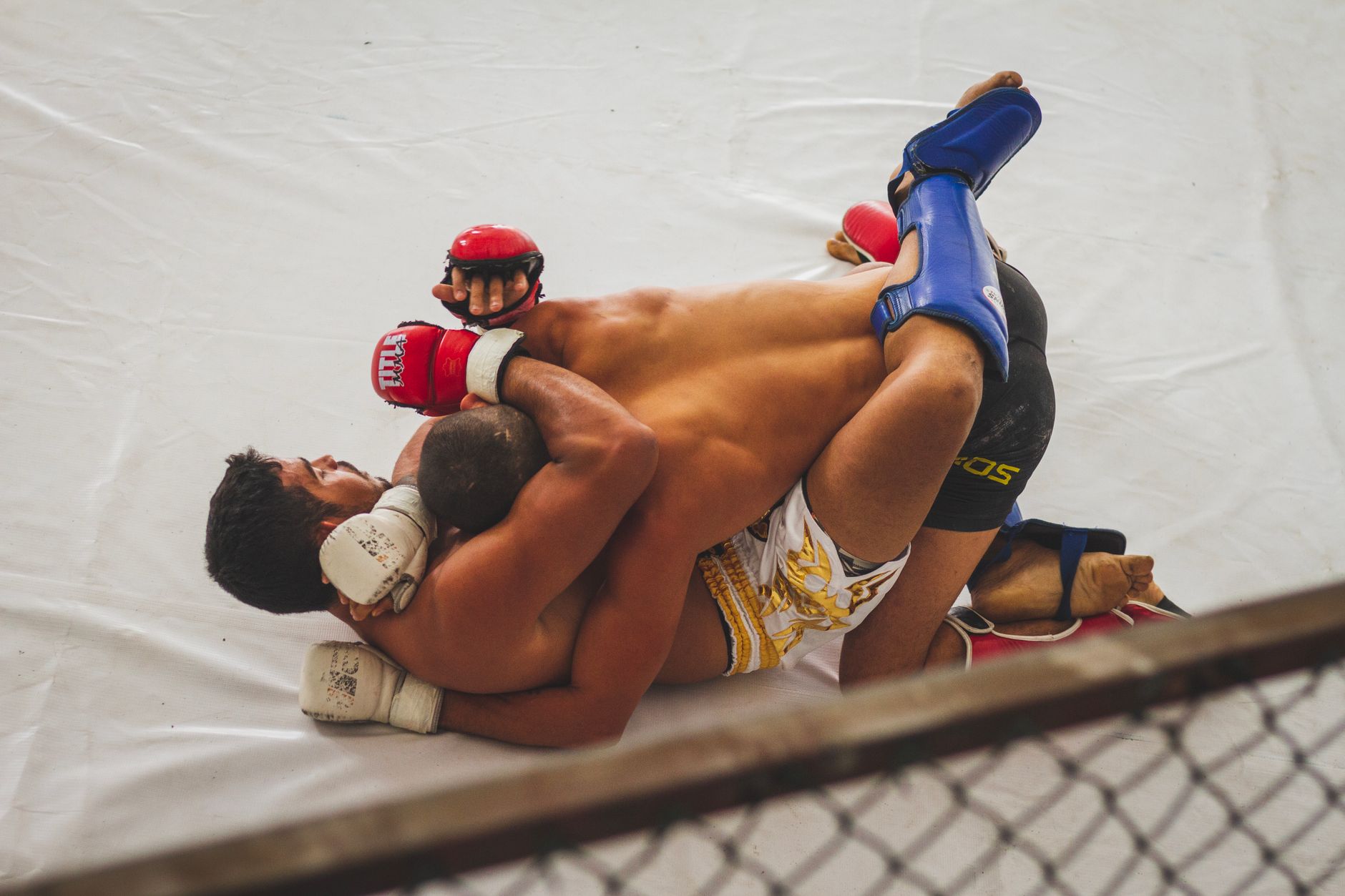
This is the guillotine’s unique danger and the reason it is worth a section of its own. If you hold a guillotine from guard and your opponent passes to side control, your own arm is now around their neck while they are on top — and shoulder pressure into that trapped arm becomes the Von Flue choke, which will finish you.
The rule is simple: when the guard is passed, release the guillotine. Stubbornly holding a choke that has already failed is how a submission attempt turns into a submission loss. Very few techniques punish over-commitment this directly.
Common mistakes
| Mistake | Why it fails | Fix |
|---|---|---|
| Elbow low, forearm across the throat | Becomes an air choke they can survive | Lift the elbow; blade under the chin |
| Head slips out at the shoulder | Gap between your arm and shoulder | Close the shoulder gap before squeezing |
| Squeezing with the arms alone | Not enough force; arms tire fast | Extend the hips and arch |
| Holding on after the guard is passed | Invites the Von Flue choke | Let go and recover position |
| Jumping guillotine as a first option | Hands them top position if it misses | Earn the head position first |
Defending the guillotine
- Prevent it: keep your head up when shooting. Almost every guillotine is handed over by a low, head-down takedown attempt.
- Early: get your shoulder into their chest and your hands fighting the lock before it closes.
- Side-out: move to the side of the choking arm, which removes the angle the lock needs.
- Pass and punish: pass toward the choking-arm side into side control. If they keep hold of the neck, the Von Flue is available.
FAQ
Is the guillotine choke effective?
Very. It is the second most common submission in UFC history — 293 finishes, 17.7% of all submissions in our 8,591-bout dataset. What makes it unusual is that it does not need a dominant position: it is available from guard, standing and scrambles.
Is the guillotine choke legal in the UFC and in BJJ?
Yes to both. It is legal in MMA and, under IBJJF rules, legal at every adult belt in gi and no-gi — it does not appear on the illegal-moves table. Take care that a guillotine does not become a spinal crank, which is a different and prohibited action.
Is the guillotine a blood choke or an air choke?
It can be either, which is why technique matters so much. The high-elbow and arm-in versions close the carotid arteries and are fast and reliable. A low elbow with the forearm across the windpipe is an air choke — painful, slower and much easier to survive.
Why is my guillotine slipping off?
Almost always a gap at the shoulder or an elbow that is too low. The head escapes through the space between your choking arm and your shoulder. Lift the elbow, close that gap, and finish by extending your hips rather than curling up.
What is the counter to a guillotine?
Passing toward the choking-arm side into side control, and then — if they refuse to let go — the Von Flue choke, which uses your shoulder against their trapped arm. It is the reason you should release a guillotine once your guard has been passed.
Why is it called a guillotine?
The arm position resembles the blade of the execution device dropping across the neck. Judo’s name is more descriptive and more useful: mae hadaka jime, front naked choke — the same strangle as the rear naked choke, applied from the front.
Bottom line
Treat the guillotine as a front-facing rear naked choke and everything improves: elbow high, forearm bone under the chin, arteries rather than windpipe. It is the second most common submission in the UFC precisely because it needs no dominant position — and the one submission that punishes you for holding on too long, via the Von Flue. Get the head, close the shoulder gap, extend, and let go the moment your guard is passed. Next, read the rear naked choke guide for the version from behind.
Sources
- GrapplerHQ UFC submissions dataset — 8,591 bouts (1994-03-11 to 2026-03-28), 1,659 submission finishes classified by technique. Methodology in our UFC statistics study.
- IBJJF Rule Book and Technical Fouls & Illegal Moves table — submission legality by belt