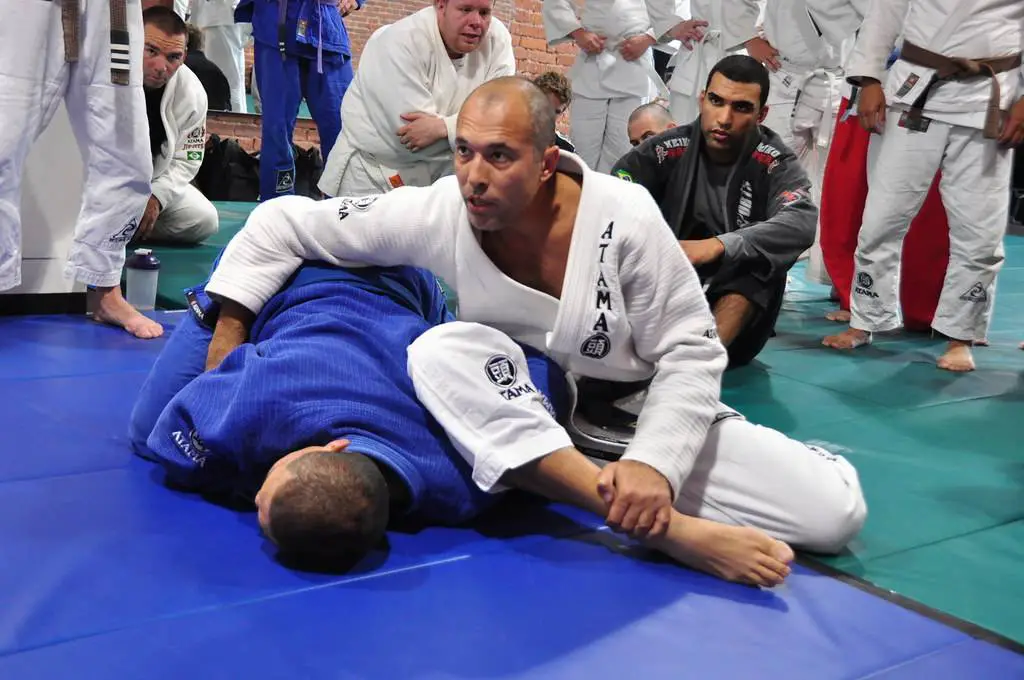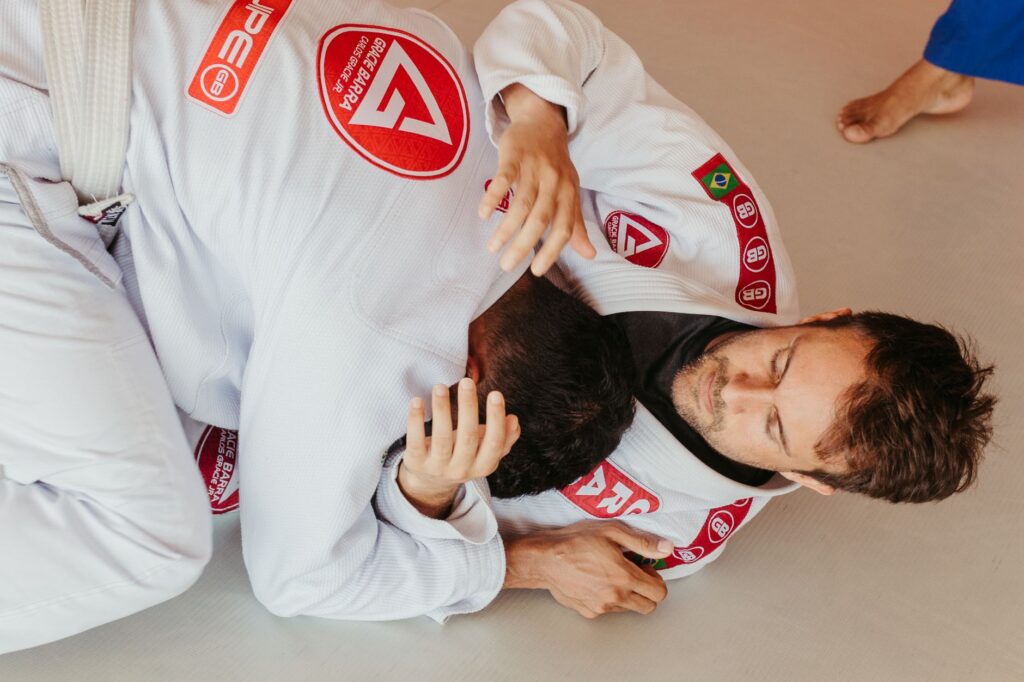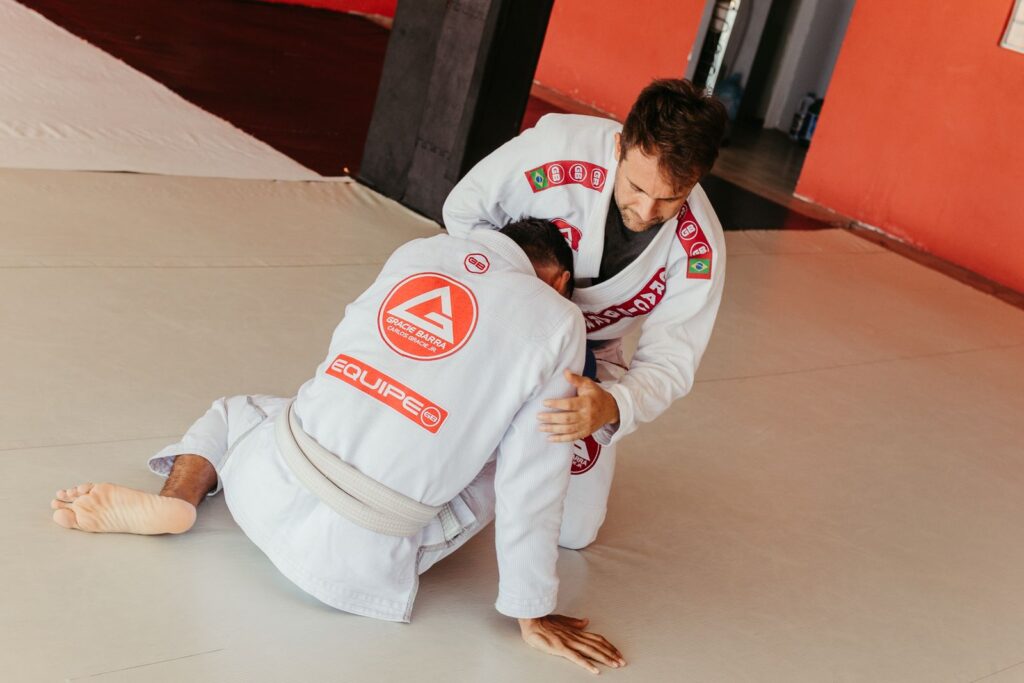
Quick answer: a kneebar is a submission that hyperextends the opponent’s knee by straightening it against the pressure of your hips, chest and grip. In Rob Biernacki’s high-level example, he traps the leg, grips the kneecap, blocks the knee-thread escape, and finishes with lateral pressure that strikes the knee faster than straight extension. Under the IBJJF illegal-moves poster checked for this guide, the kneebar is illegal for white, blue and purple belts and all juveniles, but permitted for adult brown and black belts in gi and no-gi. Under ADCC rules, beginners are explicitly prohibited from using it.
Last updated: November 10, 2026 (Pacific). Sources checked November 11, 2026 UTC.
This guide is educational. Practice under qualified coaching, apply pressure gradually, tap early, and release immediately when a partner taps or cannot communicate clearly.
The kneebar does not belong with toe holds and heel hooks, even though all three get lumped together as “foot locks.” The toe hold rotates the foot, the heel hook twists the knee, and the kneebar straightens it — which changes what you control, what you defend, and what the rulebook allows.
Free every Tuesday
The Grappler Brief
The week’s biggest stories from BJJ, judo, wrestling, and submission grappling—curated for people who train.
Sent out weekly.Opt out anytime.
Kneebar at a glance
| Detail | What to know |
|---|---|
| Technique family | Knee hyperextension submission (a straight knee lock) |
| What it attacks | The knee joint, by forcing extension past its natural range |
| Finishing mechanism | Hips, chest and grip pressure along the trapped leg, not a pull on the foot |
| Key control | The knee line and the wedged leg, so the opponent cannot slip the knee out |
| Verified example | Rob Biernacki’s unorthodox kneebar at IBJJF No-Gi Worlds, broken down by Stephan Kesting |
| IBJJF adult baseline | Illegal for white, blue and purple belts; legal for adult brown and black, gi and no-gi |
| Training rule | Club rules are often stricter than tournament rules; check your gym and your division |
What is a kneebar?
A kneebar locks the lower leg against your torso and extends the knee while the thigh is held still — the same motion as a leg extension machine taken further than the joint allows, which is why it is sometimes called a straight knee lock.
It is a different attack from a toe hold (rotation through the foot), a heel hook (twisting the knee), or a straight ankle lock (pressure on the ankle). The rules treat them differently too — our BJJ leg-lock reference keeps the labels separate for that reason.
How the kneebar works
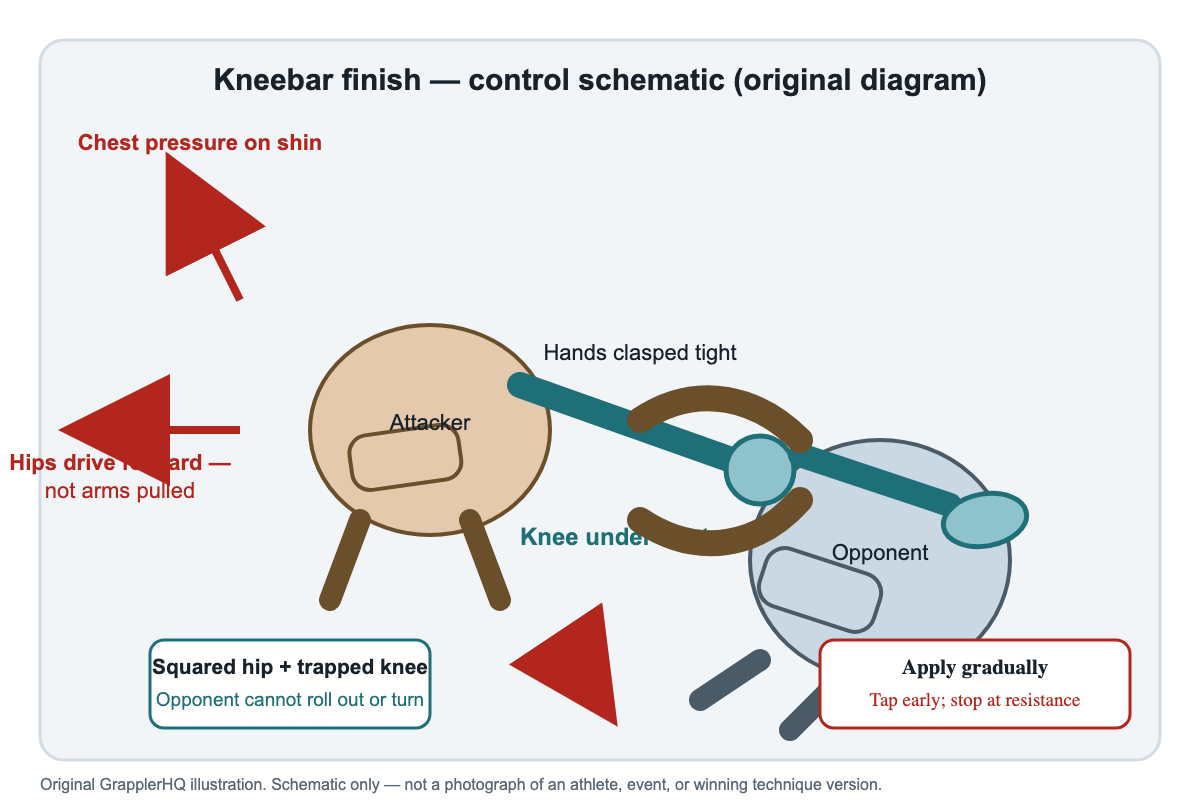
The finish is not a foot pull; it is body pressure aligned with the leg. Four controls make the difference between a submission and a scramble.
- Capture the leg and deny the knee-thread escape. The opponent’s main out is slipping the straightening knee back between your bodies; control the whole leg so it cannot weave through.
- Hug the thigh, not the shin. Grip and chest work on the upper leg so the thigh cannot roll free while your hips extend the lower leg.
- Square your hips to the knee. Your hips act as the fulcrum. A clean line from hips to knee makes extension fast; off-line hips leak pressure and let the knee bend safely.
- Extend the leg and the body together. Straighten your own leg and push the hips forward in one line — the way Biernacki describes driving through the leg rather than cranking an isolated foot.
The knee gives less warning than the elbow, and lateral pressure can injure the MCL before the defender can react. The point of the grip and hip control is a clean submission with time to tap — not a sudden crank.
One high-level kneebar, broken down: Biernacki at No-Gi Worlds
Rob Biernacki used an unusual kneebar to finish a reigning champion at IBJJF No-Gi Worlds, and Stephan Kesting’s breakdown on the Grapplearts channel walks through what made it work (video 4gTwzDHiLzw, February 5, 2024).
The position. Coming up on top after a sweep, Biernacki landed in an X-guard-style entanglement, with the opponent — the reigning champion from a weight class above — pursuing a back-take or leg-through.
The surprising control. Most grapplers feel safe in that entanglement because the butterfly hook’s extension usually lets the knee slip back through. His variant grips the kneecap itself, a wedge that blocks the “leg press” escape — pressing the leg out does nothing because the knee is already controlled.
The finish direction. His hips point at the side of the knee, producing lateral pressure rather than straight pressure. He contrasts a straight kneebar, which gives the defender “so much warning you can eat it for a while,” with the lateral version, which he says can take the MCL quickly. He credits the “Leg Spaghetti” drilling method from his own leg-lock material for that live familiarity. The article also notes the finish caused an injury, and Biernacki says he does not want to injure anybody — treat the version as a high-level escape-line read, not a move to practice fast.
Common entries and position changes
The kneebar matters from positions where one leg is already isolated and the knee can be pulled across your body:
- From the top after a sweep or guard pass. Hips low, the far leg pinned, the near leg drawn up and across.
- From 50/50. The legs are already crossed; one entry frees one knee and makes it available, as in the kneebar curriculum outline on Submeta.
- From outside ashi. The entanglement exposes the near leg; switch from the heel-hook threat to the kneebar when the opponent straightens.
- From the turtle. Attacking over the turtle, pull the far leg out and finish before the opponent regains guard.
- The dogbar. A modern variation from top positions that rotates the hip line through the far leg.
Each entry shares one decision point: the moment a leg becomes isolated without the second leg covering it, the kneebar becomes possible.
Common mistakes and better cues
| Mistake | Why it causes trouble | Better cue |
|---|---|---|
| Pulling the foot toward you | A foot pull loads the ankle and straightens your own posture, leaking all the pressure | Control the upper leg and drive hips forward through the knee line |
| Letting the knee slip back through | The opponent can bend the knee and return to a safe position, or attack your leg lock | Wedge the leg and grip the kneecap so extension cannot free the knee |
| Hips turned off-line | Pressure bends sideways instead of extending the joint, giving the defender time | Square the hips to the knee, as Biernacki describes pointing his hips at the side of the knee |
| Treating it like an ankle lock | Wrong grip and wrong pressure line; defender escapes both | Learn the knee-line control first, then add pressure |
| Finishing fast to “test” it | Knee structures react before they warn; lateral pressure can injure quickly | Apply gradually, coach-supervised, and stop at the tap |
Defensive priorities
Defend the kneebar before the grip is settled, and keep the knee joint protected while you work.
- Knee-thread before it is trapped. The earlier you slip the knee back toward your body, the less pressure there is to fight.
- Fight the grip, not the finish. Hand-fighting both hands off the far leg is easier than surviving once the wedge is set.
- Turn your hip in with the attack. Rolling your hip toward your own knee removes the straight line and lets the joint bend.
- Do not panic-spin late. Once knee extension is fully loaded, spinning against the pressure is how knees get hurt. Tap early and ask a coach to show the escape on the ground.
Is the kneebar legal in BJJ?
Legality depends on the organization, belt, age, and gi/no-gi format. Use the current event documents, not a general sentence.
IBJJF adult divisions
The checked IBJJF illegal-moves poster is labelled v4.0, and the same table appears in the linked June 2024 rulebook (the index calls it v6.0; the cover and headers say v6.1; the final page also carries “VERSION 6.2”). The table below is limited to the poster’s adult columns.
| Adult division | Kneebar |
|---|---|
| White, blue and purple belts | Prohibited (same in gi and no-gi) |
| Brown and black belts, gi | Permitted |
| Brown and black belts, no-gi | Permitted |
Separate rows on the same poster prohibit “locks twisting the knees” and heel hooks in more divisions, so do not guess from a generic leg-lock name. Knee reaping and other positional rules still apply — if unsure how a referee will classify the exact movement, ask before the event.
ADCC category regulations
The ADCC championship regulations list any leg lock or ankle lock as legal for professionals. The category regulations are more restrictive at the bottom of the ladder: beginners are explicitly prohibited from using kneebars (the page also bans toe holds, heel hooks and foot locks that twist the knee). Advanced and intermediate competitors are not given a named kneebar prohibition, but are still barred from heel hooks and any foot locks that twist the knee, so the exact mechanics matter.
Kids and masters beginners use the beginner restrictions; masters advanced, intermediate and professional use the advanced/intermediate rules. Read our ADCC rules guide for the wider picture, and check the division on your registration rather than assuming every ADCC-branded event runs the professional list.
How to train the kneebar with control
- Train the position without the finish. Hold the trapped leg, keep the hips square, and practice keeping the opponent’s knee from threading out.
- Add the kneecap grip as a control. Use it to wedge the knee the way Biernacki demonstrates, and drill what the “leg press” defense does to the grip.
- Add pressure slowly under coaching. Extend, feel the knee line, stop early — the tap should always come before resistance becomes a fight.
- Defend first, attack second. Practice slipping the knee back through, fighting the grip, turning the hip in, and tapping before full extension.
- Follow club rules. Many gyms restrict leg locks at white and blue belt even when a tournament would allow them.
Kneebar FAQs
Is a kneebar the same as a heel hook?
No. A kneebar hyperextends the knee in a straight line; a heel hook twists it. The rules treat them very differently — under the checked IBJJF poster, the kneebar is legal for adult brown and black belts in gi and no-gi, while heel hooks face broader restrictions.
Can white belts use a kneebar in IBJJF competition?
No. The checked poster prohibits kneebars for adult white belts, and the same adult restriction covers blue and purple belts. A coach may introduce the concepts in class, but that is separate from tournament permission.
Is a kneebar legal in no-gi?
Under the checked IBJJF poster it is permitted for adult brown and black belts in no-gi, and the same applies in the gi. Lower belts and juveniles keep the restriction, and masters need their own column in the poster — check your exact division rather than extrapolating from the adult no-gi answer.
Why did Biernacki’s kneebar cause an injury?
His own breakdown says the finish produced a “nasty pop,” and he states he does not want to injure anyone. The kneecap grip and lateral pressure remove most of the warning time a straight kneebar gives — why kneebars belong in the “apply slowly, tap early” category.
Bottom line
The kneebar is a straight knee lock won by controlling the knee line and driving the hips through the trapped leg, not by yanking a foot. Practice it the way Biernacki’s breakdown teaches it — as a position read and a wedged grip — with the knee and the MCL as your safety boundary, and check your exact division’s rules before competition.
Sources
- Stephan Kesting / Grapplearts — Competition Kneebar Breakdown (February 5, 2024) and the linked video — Biernacki’s No-Gi Worlds finish and kneebar mechanics; video inspected November 11, 2026.
- Lachlan Giles — Kneebar course, Submeta — public curriculum outline (entries from the top, 50/50, outside ashi, turtle, dogbar; finishing range). Paid content was not watched.
- IBJJF Books and Videos — linked June 2024 rulebook and illegal-moves poster v4.0; poster visually inspected November 11, 2026.
- ADCC championship regulations and category regulations — professional, advanced/intermediate, beginner and masters distinctions; checked November 11, 2026.