Quick answer: a toe hold is a rotational foot submission built around a figure-four-style grip. In Dean Lister’s De La Riva example, he stops the sit-up and controls the second leg before using small wrist-and-forearm movements. The IBJJF documents checked for this guide permit toe holds for adult brown and black belts, but mark outward pressure on the foot illegal in gi. Check the rules for your exact division and event.
Last updated: November 10, 2026 (Pacific). Sources checked November 11, 2026 UTC.
This guide is educational. Practice under qualified coaching, apply pressure gradually, tap early, and release immediately when a partner taps or cannot communicate clearly.
Before the grip or entry, check two things: can you stop your partner turning or sitting up, and is the exact attack allowed in your division?
Free every Tuesday
The Grappler Brief
The week’s biggest stories from BJJ, judo, wrestling, and submission grappling—curated for people who train.
Sent out weekly.Opt out anytime.
Toe hold at a glance
| Detail | What to know |
|---|---|
| Technique family | Rotational foot submission, not a controlling position by itself |
| Typical grip | A figure-four-style grip controlling the foot; Lister uses a thumbless finish in the demonstrated entry |
| First control priority | Limit turning and sitting up; in this example, control the second leg as well as the attacked foot |
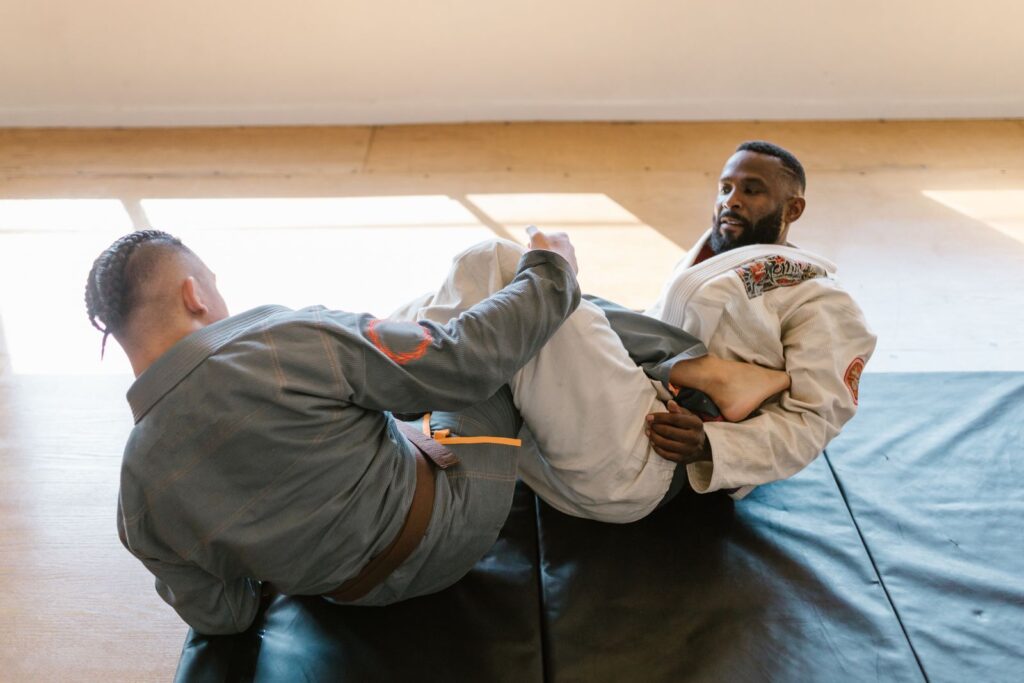
| Worked entry | A rolling attack against De La Riva guard, shown by Dean Lister |
| IBJJF adult baseline | Prohibited for white, blue and purple belts; permitted for brown and black belts with format- and direction-specific restrictions |
| Training rule | Learn the position and grip without pressure first; club rules may be stricter than tournament rules |
What is a toe hold?
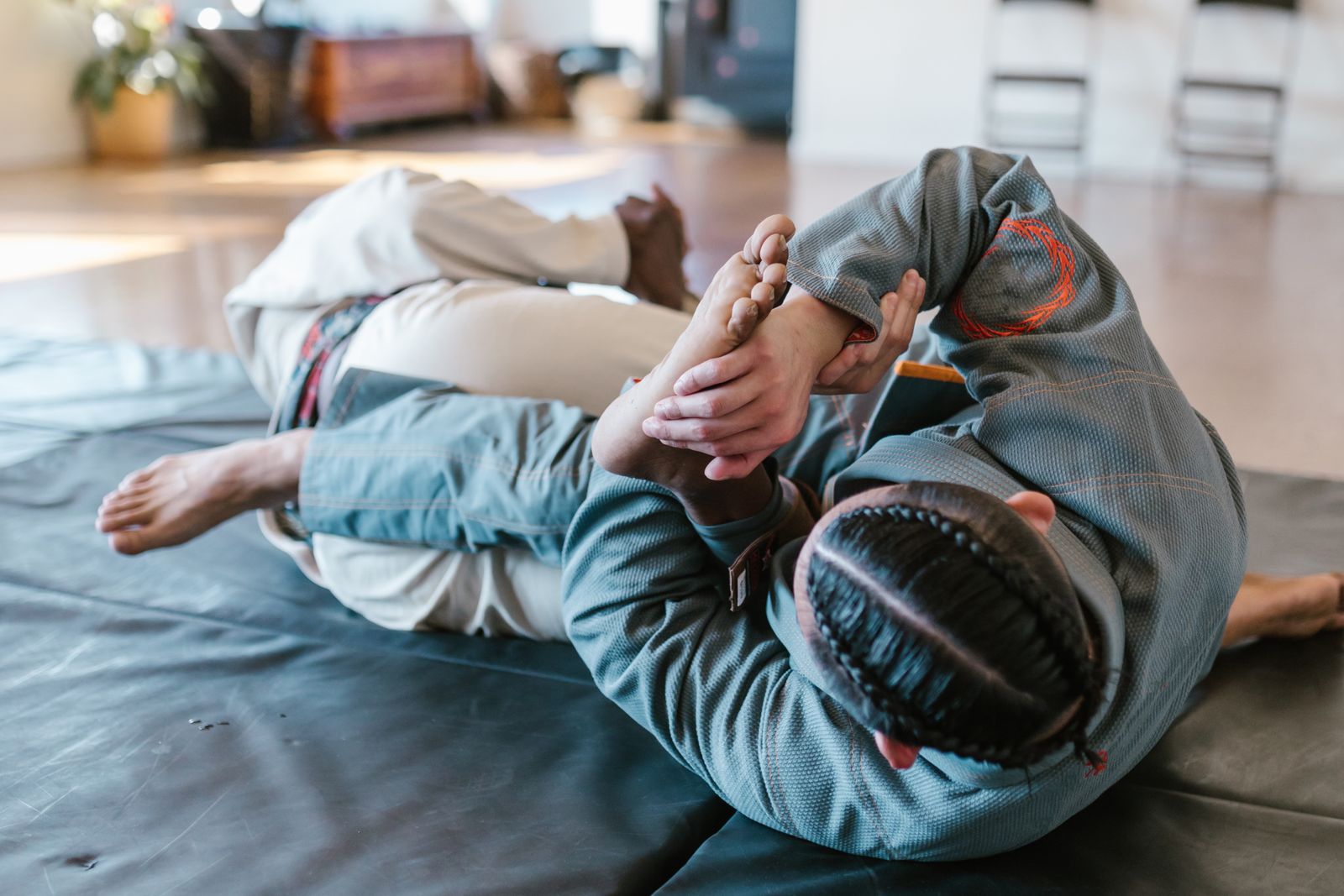
A toe hold is a submission applied through the foot using rotational pressure. The attacker joins their hands in a configuration similar to a kimura-style figure-four grip, but the control problem is different: the partner’s leg and hips still need to be contained.
Do not confuse the submission with the position used to reach it. Ashi garami, outside ashi, 50/50 and De La Riva describe positions or entanglements. A toe hold is one possible attack, not another name for those positions. Our BJJ leg-lock reference separates those labels and explains why a position name does not settle legality.
It is also different from a straight ankle lock and a heel hook. Those techniques have different grips, mechanics and rules implications. Calling every foot attack an “ankle lock” hides distinctions that matter.
Control before rotation
Lister’s demonstration gives four useful checkpoints. They belong to his particular entry, but they also explain why a foot grip alone is not enough.
1. Limit the whole-body turn
Lister emphasizes controlling the partner’s other leg. If you hold only the attacked foot, the partner can turn and relieve the position. In his completed entry, he triangles the opposite leg with his own leg so both legs are accounted for.
2. Use the grip as a control, not a squeeze
His placement cue is pinky finger to pinky toe. He also notes that other placements can bend the foot, so this is not a claim that every toe hold must use one exact hand position. For the finish shown, he changes from an initial thumb grip to a thumbless, figure-four-style grip.
3. Keep the conditions for the entry
Against this De La Riva position, Lister does not want his partner to sit up. That is a specific condition of the rolling entry, not a universal rule for every toe hold. If the partner changes the position, reset rather than forcing the same finish.
4. Use small movements under supervision
Once the position and grip are connected, Lister identifies the wrists and forearms as the finishing mechanism. Do not turn that into permission to crank. In training, add pressure gradually, watch your partner rather than chasing a predetermined range, and stop at the tap.
One De La Riva rolling entry, broken down
The publisher-linked Dean Lister demonstration uses the following sequence:
- Start with inside control. The partner is on their back playing De La Riva guard. Lister keeps them from sitting up and establishes the conditions for the roll.
- Do not grab the foot first. Reaching early advertises the attack. Instead, he swims his arm around the leg and begins the roll.
- Catch the grip during the roll. He connects the foot grip as the movement brings him into position, using the pinky-to-pinky-toe cue and then the thumbless finishing grip described above.
- Account for the second leg. He triangles the partner’s opposite leg to restrict the turn. This is the detail that keeps the foot grip from becoming an isolated hand fight.
- Finish with control, not a tug. The demonstrated finish uses the wrists and forearms with small movements. The partner taps, and he releases.
Reset if your partner sits up before the roll or frees the second leg; the entry no longer has the controls shown in the demonstration.
Common mistakes and better cues
| Mistake | Why it causes trouble | Better cue |
|---|---|---|
| Grabbing the foot immediately | The partner sees the attack before your position is ready | Establish inside control; swim and roll before connecting the grip |
| Controlling only the attacked leg | The partner can turn or roll out | Account for the second leg and the whole-body turn |
| Ignoring the sit-up | The De La Riva example depends on the partner staying on their back | Prevent the sit-up early or reset the entry |
| Using a large arm pull | Force replaces position and makes controlled practice harder | Keep the second leg controlled; add pressure gradually with the small wrist-and-forearm movements shown in the demonstration, under qualified coaching |
| Assuming every finish has the same rules | Belt, format and pressure direction can change the answer | Check the exact row in the event’s current rules |
Defensive priorities
Defend Lister’s entry before the grip is complete rather than waiting until your foot is under rotational pressure.
- Sit up early. The demonstrated entry starts with you on your back; sitting up before the roll removes that starting position.
- Fight the foot grip. Do not let the attacker quietly connect the figure-four. Hand-fight and pull the foot back before the control is settled.
- Protect the free leg. If the opposite leg gets triangled, the attacker has addressed the turn that could have helped you escape.
- Do not invent a late escape under pressure. If the position is finished, tap early and reset. Ask a qualified coach to show the escape for the exact variation rather than rolling blindly against the pressure.
Is a toe hold legal in BJJ?
It depends on the organization, age or experience category, belt, format and—in IBJJF gi—the direction of pressure. Use the current event documents, not a general statement that toe holds are “legal at brown belt.”
IBJJF adult divisions
The checked IBJJF illegal-moves poster is labelled v4.0. The June 2024 rulebook has conflicting version identifiers: the front cover and running headers say v6.1, the final page also carries “VERSION 6.2,” and the download index calls it v6.0. The table below is limited to the poster’s adult divisions.
| Adult division | Toe hold | Separate outward-pressure row |
|---|---|---|
| White, blue and purple, gi or no-gi | Prohibited | Also prohibited |
| Brown and black, gi | Permitted | Outward pressure on the foot is marked illegal |
| Brown and black, no-gi | Permitted | This row is not marked illegal in the adult brown/black no-gi column |
The setup can be restricted even when the submission is named as permitted. Knee reaping and other positional rules still apply. If you are unsure how a referee will classify the exact movement, ask before the event.
ADCC categories
The ADCC championship regulations list any leg lock or ankle lock as legal. The separate category regulations are more restrictive. Beginners are explicitly prohibited from using toe holds. Advanced/intermediate competitors are not given that same named toe-hold prohibition, but they are prohibited from using heel hooks and any foot locks that twist the knee, so the exact mechanics still matter.
Kids and masters beginners use the beginner restrictions. Masters advanced, intermediate and professional categories use the advanced/intermediate restrictions. Read our ADCC rules guide for the wider category context, and check the division on your registration rather than assuming every ADCC-branded event uses the professional championship list.
How to train the toe hold with control
- Name the position and submission first. Have your coach identify the entanglement and the intended attack. Do not use a rules table to justify trying an unfamiliar finish.
- Drill the grip without pressure. Practice the pinky placement and thumbless figure-four as a static control. Your partner should be able to speak and tap freely.
- Drill the entry without the finish. Start from De La Riva, practice the swim and roll, then stop once the second leg is controlled. Reset if your partner sits up or frees that leg.
- Add resistance gradually. Have your partner try the sit-up and grip defense while you keep the pace slow. Increase resistance only if you can still stop the sit-up and control the second leg without forcing the finish.
- Follow club rules. A technique being legal for one competition division does not make it appropriate for every class or every partner.
Toe hold FAQs
Is a toe hold the same as a heel hook?
No. They are different attacks with different grips and mechanics. Their rules also differ: for example, the checked IBJJF poster permits toe holds for adult brown and black belts in the gi but does not permit heel hooks in that division.
Can white belts use a toe hold in IBJJF competition?
No. The checked poster prohibits toe holds for adult white belts, and the same adult restriction covers blue and purple belts. A coach may still introduce the concepts in a suitable class, but that is separate from tournament permission.
Is a toe hold legal in no-gi?
Under the checked IBJJF poster, it is permitted for adult brown and black belts in no-gi. That answer does not cover lower belts, every masters category or other promotions. Check the exact event and division.
Is there one correct toe hold grip?
No single hand placement covers every variation. Lister uses a pinky-to-pinky-toe cue and a thumbless finish in this demonstration, while noting that other placements can bend the foot. Learn the grip for the specific entry your coach is teaching.
Bottom line
Lister’s entry depends on controlling the sit-up and second leg, not just gripping the foot. Before competing, check the exact division and direction of pressure.
Sources
- Dean Lister’s rolling De La Riva toe hold, BJJ Fanatics and the publisher-linked video demonstration — teaching mechanics and entry conditions; video inspected November 11, 2026.
- IBJJF Books and Videos — linked June 2024 rulebook (v6.1 on the front cover and running headers; “VERSION 6.2” also appears on the final page) and illegal-moves poster v4.0; poster visually inspected November 11, 2026.
- ADCC championship regulations and category regulations — professional, advanced/intermediate, beginner and masters distinctions; checked November 11, 2026.