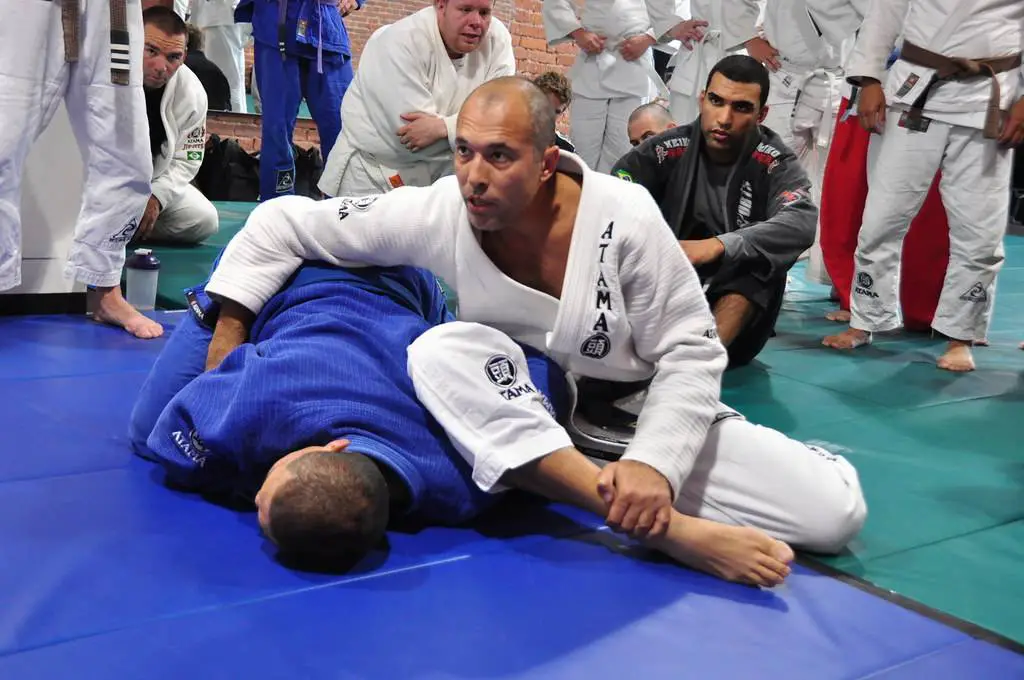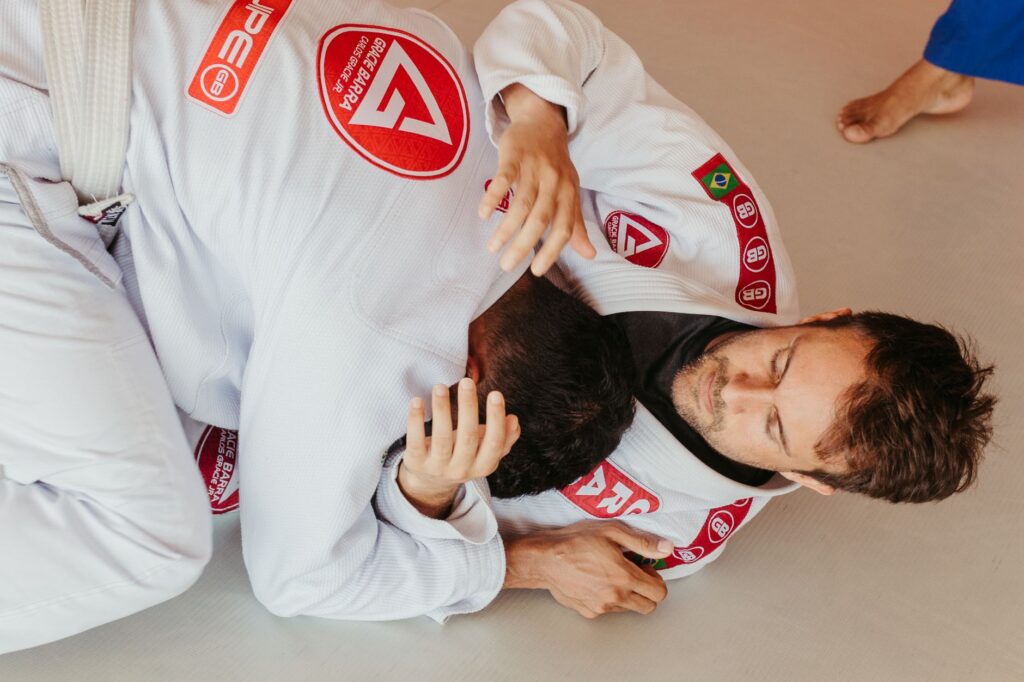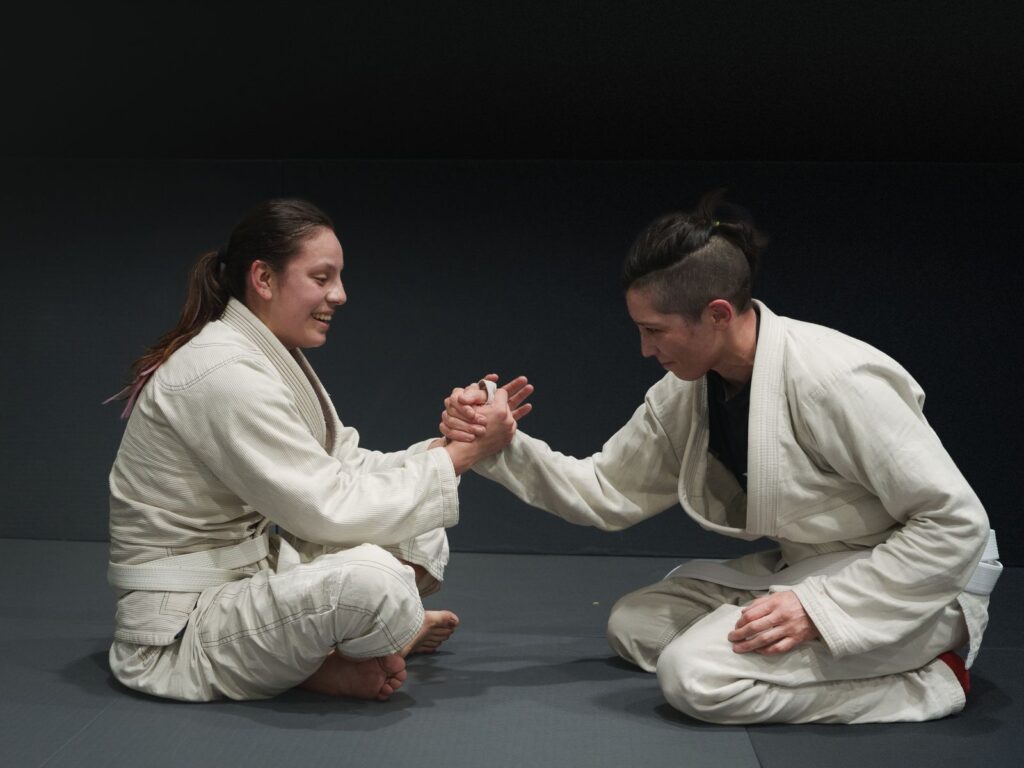
Quick answer: a white belt is the entry rank in BJJ, and the job there is simpler than people expect: survive, escape, and learn the basic positions before worrying about finishing anyone. Under the current official IBJJF graduation system, there is no minimum time anybody has to spend at white belt — an instructor can promote a student to blue whenever the student appears ready, and the federation’s formal minimums apply to the belts above. Promotion is decided by your professor’s judgment about how consistently you can defend, escape, and execute basics under resistance, not by a countdown on the calendar.
Last updated: November 10, 2026. Graduation rules come from the official IBJJF Graduation System page and the linked June 2026 document; coach expectations come from Stephan Kesting’s Grapplearts BJJ Roadmap. Club standards vary, and your academy’s rules decide your promotion.
This guide is educational. Practice under qualified coaching, apply pressure gradually, tap early, and release immediately when a partner taps or cannot communicate clearly.
Most guides treat the white-to-blue stage as a timeline: train this long, earn stripes, get blue. That framing misses the actual job. The BJJ belt order guide explains how the belt sequence fits together. This guide is about the rank you hold now: what it means, what your instructor is looking for, how promotion to blue is decided, and what actually moves the needle in year one.
Free every Tuesday
The Grappler Brief
The week’s biggest stories from BJJ, judo, wrestling, and submission grappling—curated for people who train.
Sent out weekly.Opt out anytime.
White belt at a glance
| Detail | What to know |
|---|---|
| Where it sits | Entry rank in the adult (16+) IBJJF ladder: white, blue, purple, brown, black, then coral and red senior ranks |
| Minimum age to hold it | Any age, per the IBJJF graduation system |
| IBJJF minimum time at white | No minimum period — promotion timing is the professor’s call |
| Minimum age for blue belt | 16 years old under IBJJF rules |
| What coaches look for | Survival, escapes, basic technique under resistance, consistency, and safe training habits |
| Realistic first goal | Roll safely and build one small escape-and-defense game, not a highlight reel |
What the white belt actually means
A white belt is the level where BJJ formally expects almost nothing of you yet. That sounds like a free pass; it’s the point. The rank exists so you can learn to lose well: get flattened, be mounted, get your guard passed, and work an escape while an upper belt explains what you did wrong.
Practically, white belt means three things. Your curriculum is survival and position: escapes from the bad spots, guard retention, and recognizing where you are. You are not expected to have a game — coaches are checking whether you can stop the match from ending, not whether you can end it. Blue belt is the first rank that promises a functional foundation; white belt is where that foundation gets built.
About stripes: white belts commonly wear up to four to mark progress and attendance, but under the IBJJF degree system stripes below black belt are optional and at your professor’s discretion, so counts are not comparable across gyms.
What is expected of a white belt
Coach Stephan Kesting’s BJJ Roadmap turns the white-belt job into a concrete checklist. You do not need fifty techniques; you need one small, reliable option in each part of the game:
- Recognize the six primary positions. Guard with its closed/open/half variants, side mount, knee mount, mount, rear mount, and turtle. Can you name where you are mid-roll?
- Basic control in each position. Where to grip, where your legs go, and how to use hips and weight instead of strength.
- At least two transitions from every top position. A way to improve position, like a guard pass to side mount, or side mount to mount.
- At least two escapes or sweeps from every bottom position. A way out of the bad spots upper belts keep putting you in.
- At least two submissions from each position. Pick a couple of high-percentage options per position; do not try to learn every move at once.
The Roadmap also pushes one idea that shapes year one: position before submission. From a bad spot, improve position or re-establish guard first — usually by routing through guard or turtle as a staging area.
Instructors also grade behavior and habits: showing up consistently, drilling with attention, tapping early, keeping nails trimmed and your gi clean, and rolling at a pace your partner can survive. None of it replaces technique, but it separates improvers from dropouts.
How promotion to blue belt is usually decided
Start with the official part, which kills a persistent myth. The IBJJF Graduation System (June 2026 document) sets a minimum age of 16 for blue belt and says the time it takes a student to graduate from white belt to black belt “is at the professor’s discretion.” It lists no minimum period for the white belt itself. The federation’s minimums run the other way: adult athletes who reach blue belt must stay there for two years before purple — reduced to one year for athletes who came through the youth grey/yellow/orange groups, with exceptions for some youth backgrounds.
So the official system does not regulate your wait at white; it regulates whether a promotion will be recognized. At most academies, promotion to blue is a skill-and-consistency call made by your professor and senior instructors.
| Signal | What a coach is usually checking |
|---|---|
| Escapes under resistance | Can you get out of side control, mount, and back control against someone near your level in live rounds, not just drills? |
| Survival against upper belts | Do you keep breathing steady and defend the whole round instead of panicking early? |
| Basics in live rounds | Do the fundamentals you drill actually appear when rolling — shrimping, framing, guard retention, a working bridge-and-roll escape? |
| Consistency over time | Are you present for months, not streaks? Coaches promote people who accumulate mat time. |
| Training behavior | Do you roll safely, tap early, respect partners, and follow club rules, especially with newer students? |
| Competition | Optional at most schools. Some coaches use a tournament match as a readiness check; others never weigh it. |
One caveat: every academy calibrates “ready” differently, and prior grappling experience can shorten the path without skipping BJJ-specific habits. Ask your instructor directly what they would want to see before they promote you.
A realistic first-year training plan
Months 1–2: learn the survival toolkit
Your only real job is to avoid getting submitted every round: work escapes from mount and side control, basic bridging and shrimping, and the habit of keeping elbows tight and your neck defended. Learn the six position names as they come up, and handle the hygiene basics so you keep partners.
Months 3–6: connect the positions
Start ticking off the Roadmap checklist: one escape that lands, one guard recovery, one guard pass you understand, one or two submissions you drill repeatedly. Ask whether your school has a white-belt curriculum and follow it, not random online tutorials. If your gym runs an open mat, attend a few — that is where drilled techniques start becoming yours.
Months 6–12: turn survival into direction
You should be able to roll without a coach narrating every exchange. Pick a small game: one guard you feel okay in, one pass, one submission per position, one sweep. Keep a short notebook of the moves you drilled and the mistake that keeps showing up. Our BJJ basics guide for beginners covers the core positions and movements in more depth.
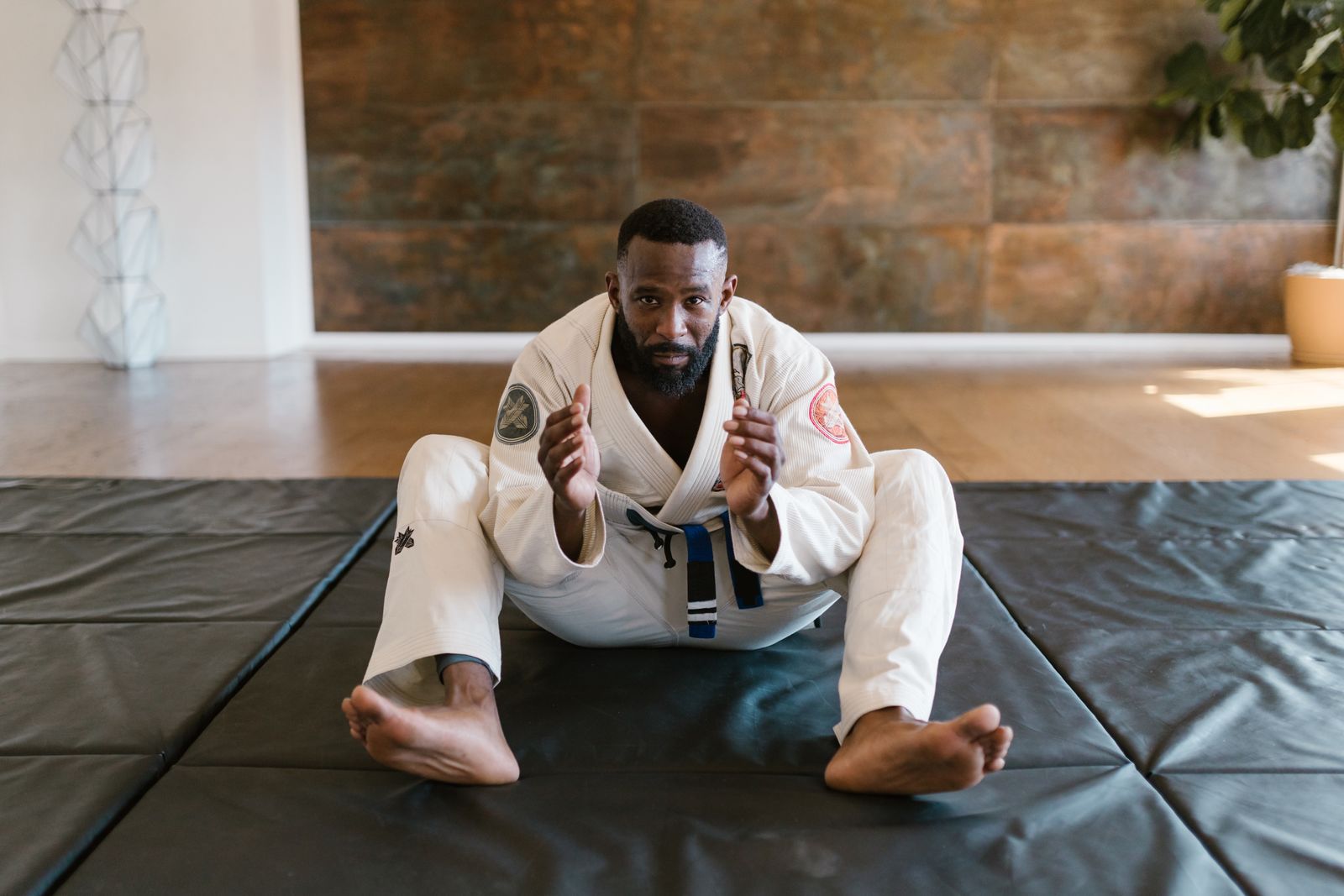
Frequency beats intensity. Two to three classes a week, kept up for months, produces more progress than a four-week sprint. If you can only train once a week, do that and accept the slower pace — consistency is the one factor you control.
Common mistakes and better cues
| Mistake | Why it slows you down | Better cue |
|---|---|---|
| Chasing submissions before escapes | You attack from losing positions and get mounted over and over | From a bad spot, escape first or re-establish guard — position before submission |
| Rolling too hard with everyone | The round becomes a muscle contest, your technique never develops, and partners avoid you | Match your partner’s pace and set one goal per round, like “survive side control the whole round” |
| Comparing your timeline to others’ | You chase a promotion instead of skills, and every month feels like failure | Ask what a blue belt can do that you cannot, and build that skill; the promotion follows |
| Trying every technique from the internet | You get 2% of everything and 100% of nothing | Drill a small set repeatedly under your coach, one or two per category |
| Skipping warm-up and hygiene | You raise your injury risk and burn goodwill with partners | Treat preparation as part of training; a dirty gi means sitting out |
| Training through pain or injury | A small issue becomes a months-long break | Sit out when something hurts; ask your coach and, if needed, a healthcare professional before returning |
Does the IBJJF require a minimum time at white belt?
No, according to the June 2026 IBJJF Graduation System. The document lists no minimum period for white belt for juveniles (16–17) or adults. The two-year figure people repeat is usually a confusion with the blue belt minimum: adult athletes must spend two years at blue before purple, with reductions for some youth-belt backgrounds. Time from white to blue is formally left to the professor.
Related: athletes who turn 16 and hold a youth grey, yellow, or orange belt must move into blue belt when they join the adult ladder, while a green belt can go to blue or purple at the professor’s decision. A 16-year-old can legally be a blue belt with zero time at adult white belt.
White belt FAQs
How long does the white belt stage usually last?
There is no official minimum, and real-world timing varies widely with training frequency, age, coaching standards, and prior grappling experience. The BJJ blue belt guide lays out typical ranges. Ignore the timeline and build the skills — that is what actually earns the belt.
Do I need to compete to get promoted?
At most academies, no. Some coaches treat a competition match as a readiness check; others never count it. Competing is mostly about personal growth, not promotion requirements.
Are white-belt stripes official?
Under the IBJJF degree system, degrees below black belt are the professor’s option, so most academies use up to four stripes to mark progress, but the stripes are not a federation requirement. Stripe counts don’t translate across gyms.
Can I start BJJ as an adult at white belt?
Yes. The IBJJF system allows white belt at any age, and the youth belt ladder applies only to athletes 15 and under. Adult beginners in their 30s, 40s, and 50s are ordinary — the escape-first curriculum applies to everyone.
What should I learn first?
Escapes from mount and side control, bridging, shrimping, and recognizing the six primary positions. Then add one guard, one pass, and one submission per position, drilled under your coach.
Bottom line
White belt is the rank where you are supposed to survive, escape, and learn the positions — not to fill a highlight reel. The IBJJF system imposes no minimum time at white belt, and promotion to blue is your professor’s judgment about how consistently you defend, escape, and drill the fundamentals. Train consistently, keep a small game, and let the promotion follow the skills.
Sources
- IBJJF Graduation System — current official page and linked General System of Graduation document (file
20260611_IBJJF_Graduacao_EN.pdf, June 2026; page header carries “VERSION 3.1 2025” as a design line) and the2026_InfoPoster_Belts_EN.pdfposter; checked November 11, 2026. - Grapplearts BJJ Roadmap — Stephan Kesting’s free A Roadmap for Brazilian Jiu-Jitsu (Edition 1.5 PDF, accessed from that page) for white-belt expectations, the six positions, and the position-before-submission framework; checked November 11, 2026.