Last reviewed: October 26, 2026.
Quick answer: a BJJ open mat is a training session with more freedom to choose what you practice than in a normal taught class. People may drill, troubleshoot positions or spar. “Open” does not automatically mean free entry, unrestricted visitors or no supervision. Before attending, confirm five things: visitor permission, beginner eligibility, format, gear and cost.
For your first regular lesson, start with the BJJ beginner FAQ. An open mat answers a different need: you already know where you want to train, but need to understand how that particular session works.
What happens at an open mat?
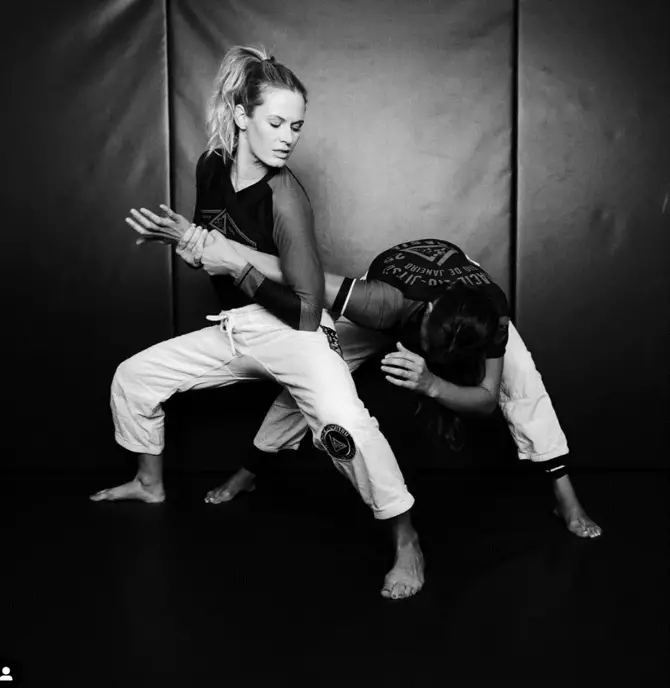
The host sets the format. You might see pairs working through a technique, students taking timed rounds and someone asking a partner to help with a specific position. Those activities can share the same mat without every participant following the same lesson.
Free every Tuesday
The Grappler Brief
The week’s biggest stories from BJJ, judo, wrestling, and submission grappling—curated for people who train.
Sent out weekly.Opt out anytime.
Atos describes its open mat as a non-instructed opportunity to drill, spar and analyze techniques. That is a useful example of the format, not a promise about every academy’s session. Your host may organize the room differently or restrict who can attend.
| Question | Typical taught-class expectation | Open-mat detail to confirm |
|---|---|---|
| Who chooses the material? | The instructor usually sets the lesson | Whether you choose your own drilling or join organized rounds |
| Can a first-time beginner join? | Some classes explicitly welcome beginners | Whether an introduction or existing experience is required |
| Who pairs partners? | The instructor may direct pairings | Whether you should ask the host for a suitable partner |
| What does entry include? | A specified class booking | Visitor fee, waiver and any membership or affiliation restriction |
Check the visitor policy before leaving home
Read the academy’s own current visitor information, then ask about anything that is unclear. Do not assume a social post from last year is the current policy. Confirm the session date and which location is hosting it, especially when a team has more than one gym.
The Atos visitor page illustrates why the details matter: it asks visitors to reserve, describes drop-in charges and distinguishes uniform conditions. Policies can change. This guide deliberately avoids turning one gym’s current price or timetable into a rule for the sport.
- Access: are visitors from another team welcome, and must you book first?
- Eligibility: is the session suitable for your age, experience and belt?
- Format: is it gi, no-gi, mixed, drilling, timed rounds or another arrangement?
- Administration: what waiver, payment or identification is needed?
- Gear: are there academy-branded uniform requirements or restrictions on patches?
Get the answers before paying for travel or a day pass. An invitation to “come train sometime” is worth clarifying into a specific session, rather than treating it as a permanent booking.
Can a beginner go to open mat?
A beginner can attend when the host allows it and there is an appropriate way to participate. A non-instructed session may not provide the step-by-step introduction you need for your first experience. If you have never trained, ask whether a beginner class would be a better starting point.
Be specific about your experience. “I have done six introductory classes” tells a host more than “I am new.” Ask whether someone can help you find a partner and whether you should start with drilling or a restricted positional round. Do not arrive expecting an unpaid private lesson from whichever advanced belt happens to be there.
For a foundation in the vocabulary and positions, the BJJ beginner roadmap can help you understand what people are asking you to practice. It cannot establish permission to join a particular gym’s session.
What should you bring?
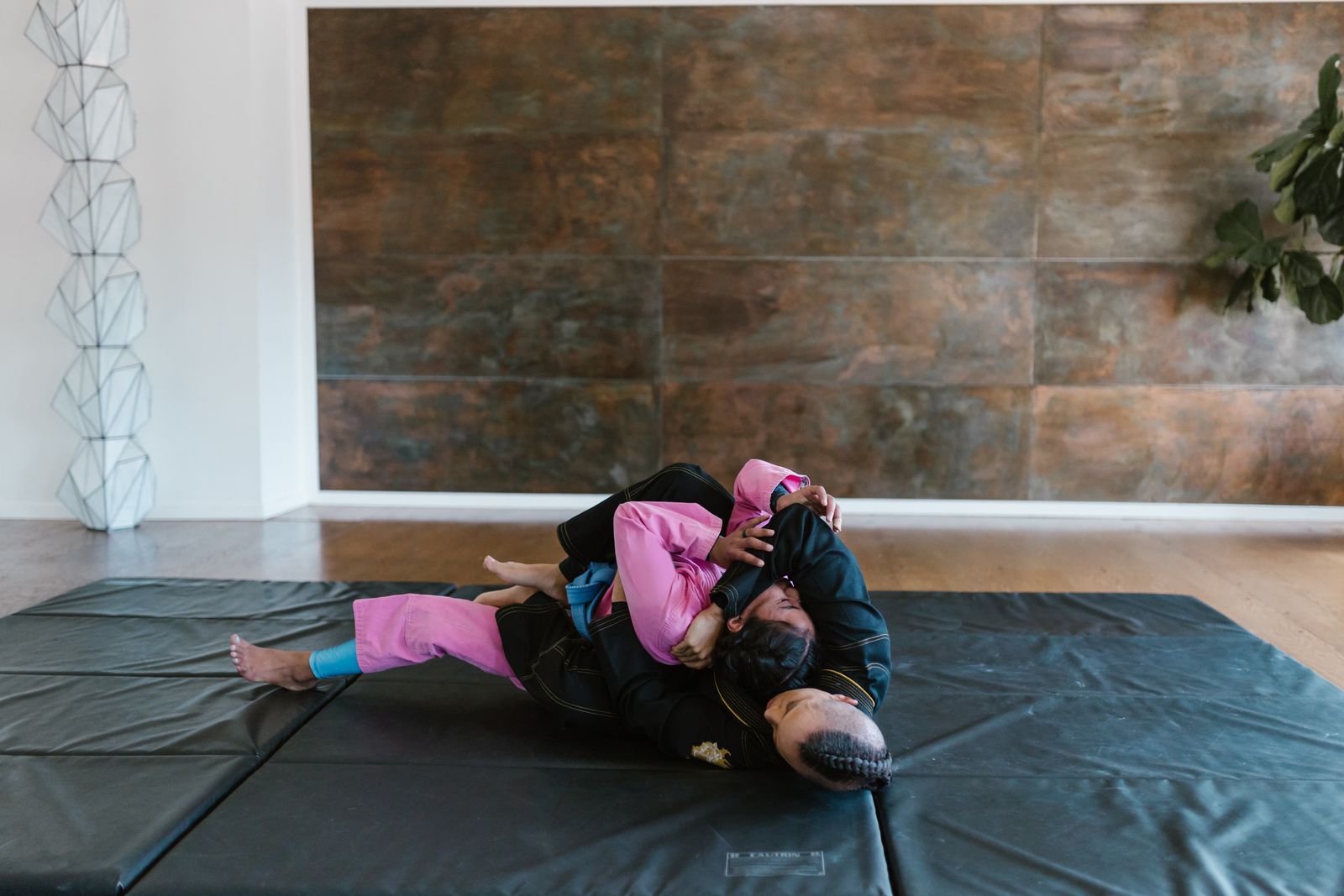
Bring the uniform the host has approved, drinking water, a towel and footwear for walking off the mat. Check the venue’s changing arrangements and arrive with clean equipment. If you need to borrow or rent something, arrange that ahead of time instead of assuming spare gear will fit.
Gi and no-gi are not interchangeable clothing instructions. A session may require one format, offer both or limit particular rounds. The gi versus no-gi comparison explains the broader distinction; the host decides what you should wear that day.
How to ask for a round without making it awkward
Introduce yourself, state your experience and ask what the other person wants to work on. A simple request is enough: “Would you like to drill this position, or are you looking for a round?” Someone resting or declining a round does not owe you an explanation.
Agree on the format before starting. If you want a lighter or restricted round, say so clearly and check that your partner agrees. Ask about allowed techniques if you are unsure. Training with someone who competes under another ruleset is a reason to communicate, not a reason to assume every technique is on the table.
Tap clearly, release when a partner taps and stop when either person asks to stop. Move or pause when the host directs it or when the space becomes crowded. You can decline a round that does not feel appropriate for your experience. These are participation choices, not proof of weakness.
See the BJJ etiquette guide for the broader habits around shared mat space. Host instructions still come first.
A message you can send before your first visit
Hi, I train at [academy] and have [experience/belt]. I would like to visit your open mat on [date]. Are visitors at my level welcome? Do I need to book or complete a waiver, what is the fee, and what gi/no-gi uniform should I bring? Is there anything else a first-time visitor should know?
Replace the brackets with your actual details. If you are travelling, also confirm the address and how the host communicates a cancellation.
Your first-visit checklist
- Confirm the correct session, location and visitor permission.
- Explain your experience and check beginner eligibility.
- Complete the required booking, payment and waiver steps.
- Pack the approved clean gear and ask about rentals if needed.
- Introduce yourself to the host before stepping onto the mat.
- Choose a partner and agree on the purpose of the round.
- Follow the room’s instructions and leave time to pack up respectfully.
Open-mat questions
Is open mat always free?
No. A host can charge visitors, restrict entry to members or use another arrangement. Check the current policy rather than assuming the word “open” describes the price.
Do I have to spar?
Ask the host what participation looks like. Some sessions allow drilling and discussion; others are organized around rounds. Tell prospective partners what you want to do.
Can I attend another team’s open mat?
Check that academy’s visitor policy and any relevant expectations at your own academy. A public timetable is not a substitute for permission where booking is required.
Is there always a coach teaching?
No. A session can be hosted or supervised without being a taught lesson. If you need instruction, ask what help is actually available.
Source and scope
The linked Atos academy pages document one real open-mat format and visitor process. Other hosts may differ. This is a first-visit planning guide, not a directory of current prices, times or permitted gyms.