Quick answer: Sambo is a Russian grappling art whose name is an acronym for SAMozashchita Bez Oruzhiya — “self-defence without weapons.” It was officially recognised as a sport on 16 November 1938 and is governed internationally by FIAS, founded in Madrid on 13 June 1984. Its defining rule is one most grapplers get backwards: Sport Sambo bans chokeholds but allows leg locks — the exact mirror image of judo, which allows chokes and bans leg locks. Matches are 5 minutes for adults, you win outright with a perfect throw, a submission, or an 8-point lead, and a 20-second hold-down scores 4 points.
Last updated: July 28, 2026. The rules in this guide come from the official FIAS International SAMBO Rules (Sport SAMBO and Combat SAMBO editions), published by the International SAMBO Federation. Always check the current rule book and your event’s regulations before competing.
Sambo is the grappling art most Western practitioners have heard of and fewest have actually seen. It produced Fedor Emelianenko and Khabib Nurmagomedov, it sits behind a large share of the takedown game in modern MMA, and yet it is routinely described in vague terms — “Russian judo,” “like wrestling with submissions.” Those descriptions miss what actually makes it distinct, which is not its throws but its rule set.
Sambo at a glance
| Question | Answer |
|---|---|
| What the name means | SAMozashchita Bez Oruzhiya — “self-defence without weapons” |
| Origin | Soviet Union; officially recognised as a sport 16 November 1938 |
| Governing body | FIAS (International SAMBO Federation), founded 13 June 1984 in Madrid |
| Main forms | Sport Sambo, Combat Sambo, Beach Sambo |
| Uniform | Kurtka (jacket) in red or blue, shorts, belt, and soft wrestling boots (sambovki) |
| Chokes | Banned in Sport Sambo; legal in Combat Sambo |
| Leg locks | Legal — but not heel hooks or twisting knee locks |
| Match length | 5 minutes (adults and juniors); 4 minutes (youth, cadets, masters) |
| Instant win | Perfect throw, submission, or an 8-point lead |
What is Sambo?
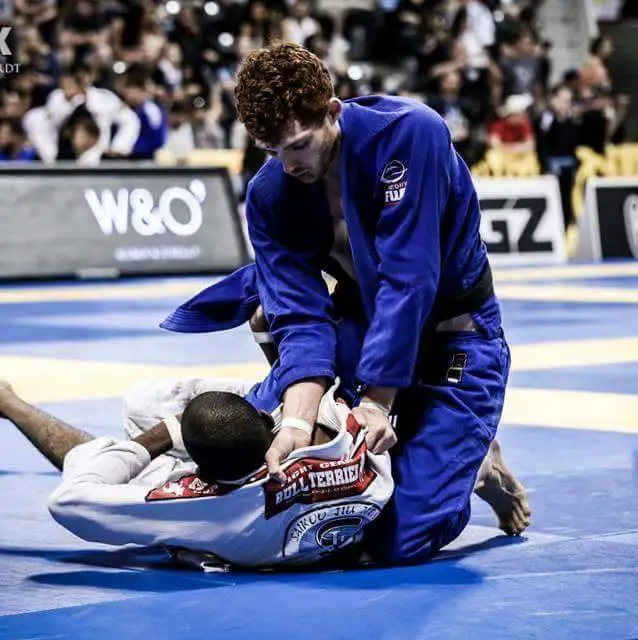
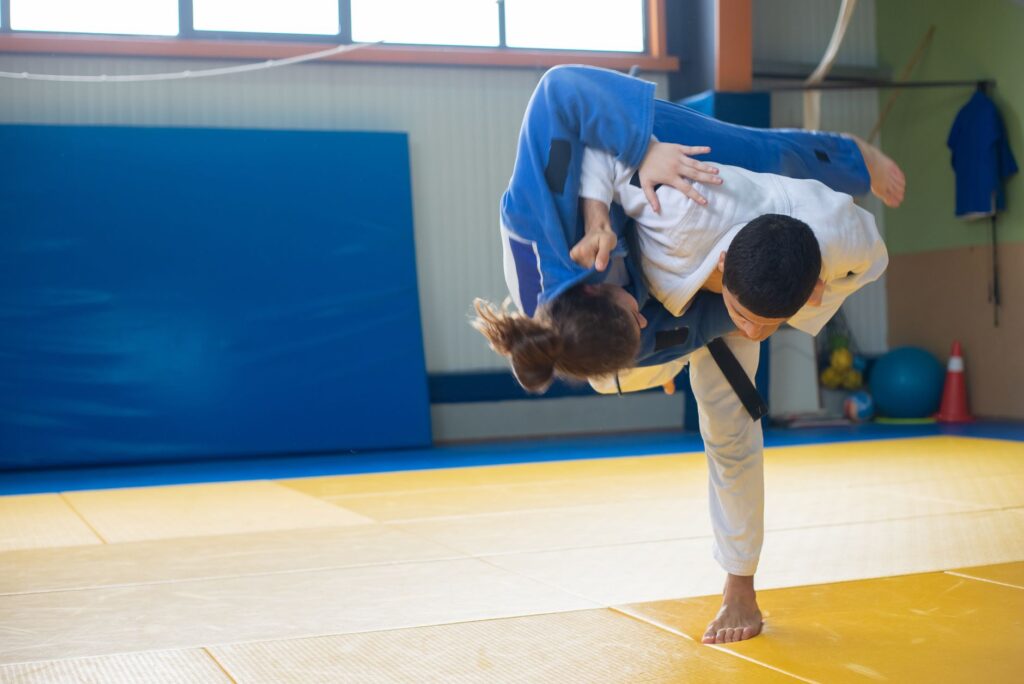
Sambo is a jacketed grappling art built for throws, hold-downs and joint locks. A match starts standing, both athletes take grips on the kurtka, and the primary goal is a clean throw. If nobody is thrown decisively, the fight goes to the ground where hold-downs and submissions decide it. In broad shape, that is judo. What separates them is the small print.
Free every Tuesday
The Grappler Brief
The week’s biggest stories from BJJ, judo, wrestling, and submission grappling—curated for people who train.
Sent out weekly.Opt out anytime.
The art was assembled deliberately rather than inherited. Soviet instructors in the 1920s and 1930s combined Japanese judo and jujutsu with the many folk wrestling styles found across the USSR and its neighbours — Georgian chidaoba, Armenian kokh, Tatar köräş and others — and codified the result as a single system for military and police use. It was officially recognised as a sport on 16 November 1938. The acronym gives away the original intent: SAMozashchita Bez Oruzhiya, self-defence without weapons.
That mongrel origin is why sambo looks familiar to judoka, wrestlers and BJJ players simultaneously, and why its technical vocabulary is broader than any of them. It kept judo’s jacket, wrestling’s leg attacks, and a submission set that judo had already restricted.
The rule that defines Sambo: no chokes, but leg locks
This is the single most important thing to understand, and it is the opposite of what most people assume. Under the FIAS rules, the chokehold appears on Sport Sambo’s list of prohibited techniques. Applying one earns a warning with a score, and a second attempt gets you removed from the bout.
Meanwhile leg locks — straight ankle locks, knee bars, and the painful holds that judo banned decades ago — are a normal, legal part of the sport. The result is a grappling art whose submission game runs almost entirely below the waist.
| Submission | Sport Sambo | Judo | BJJ (gi, adult) |
|---|---|---|---|
| Chokes and strangles | Banned | Legal | Legal |
| Armlocks (elbow) | Legal | Legal | Legal |
| Straight ankle lock | Legal | Banned | Legal |
| Knee bar | Legal | Banned | Brown & black only |
| Heel hook / twisting knee locks | Banned | Banned | Banned in the gi |
| Toe and finger locks | Banned | Banned | Banned |
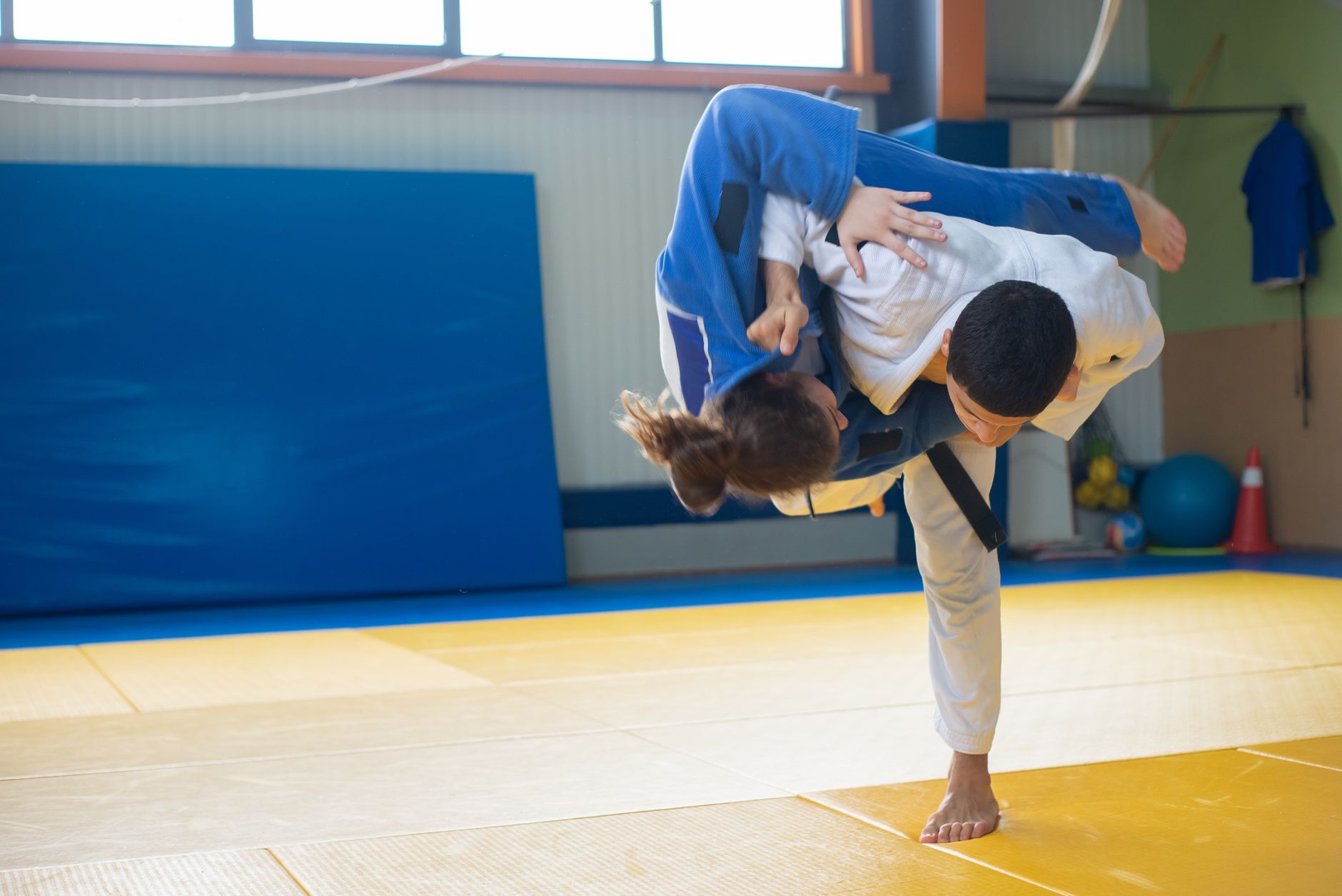
Read across the top row and the picture is clear: sambo and judo made opposite choices about which half of the body you are allowed to attack. Judo kept the strangle and removed the leg lock; sambo removed the strangle and kept the leg lock. That single decision shapes how each art is played.
One nuance worth stating precisely, because it is often reported wrongly: sambo’s leg-lock permission is not unlimited. The rule book specifically prohibits the “knee lever by bending the leg not in the plane of its natural folding” and the foot “knot” — which rules out heel hooks and toe holds. Sambo allows leg locks that bend joints the way they bend; it bans the ones that twist.
How Sambo is scored
Sambo scoring rewards how cleanly you throw someone, and specifically whether you stayed standing. A throw where the attacker keeps their feet is worth more than the same throw where the attacker goes down with their opponent.
| Result | Score |
|---|---|
| Total victory (bout ends) | A perfect throw — attacker stays standing, opponent lands on the back or in the “bridge”; a submission tap; an 8-point lead; or opponent withdrawal |
| 4 points | Throw without falling, opponent lands on side or half-bridge; throw with falling, opponent lands on back or bridge; hold-down of 20 seconds |
| 2 points | Throw without falling, opponent lands on chest, stomach, buttocks, lower back or shoulder; throw with falling, opponent lands on side; hold-down over 10 seconds but incomplete |
| 1 point | Throw with falling, opponent lands on chest, stomach, buttocks, lower back or shoulder; also awarded for the opponent’s second and third warning |
The 8-point rule is sambo’s version of a technical fall: open up an eight-point lead at any moment and the bout stops immediately. Combined with the fact that one perfect throw ends the match outright, this makes sambo unusually decisive — plenty of bouts never reach full time.
Bouts run 5 minutes for adults and juniors, 4 minutes for youth, cadets and masters, dropping to 3 minutes for masters over 65 and for repechage bouts. There is no golden score: if the points are level, the win goes to the athlete with more points from actual technical actions — throws and hold-downs — rather than from the opponent’s penalties.
The three forms of Sambo
Sport Sambo is the grappling-only version described above: throws, hold-downs, armlocks and leg locks, no chokes, no strikes. It is what you will see at a FIAS World Championship.
Combat Sambo adds striking — punches, kicks, knees — and puts chokeholds back on the legal list. Athletes wear headgear and gloves. It is the closest thing in the amateur world to MMA in a jacket, and it is the version that produced much of Russia’s MMA talent pipeline. We break the two apart in detail in our Combat Sambo vs Sport Sambo guide.
Beach Sambo is a stripped-down outdoor format on sand, with its own FIAS rule book, shorter bouts and no ground phase to speak of — throws decide it.
The uniform
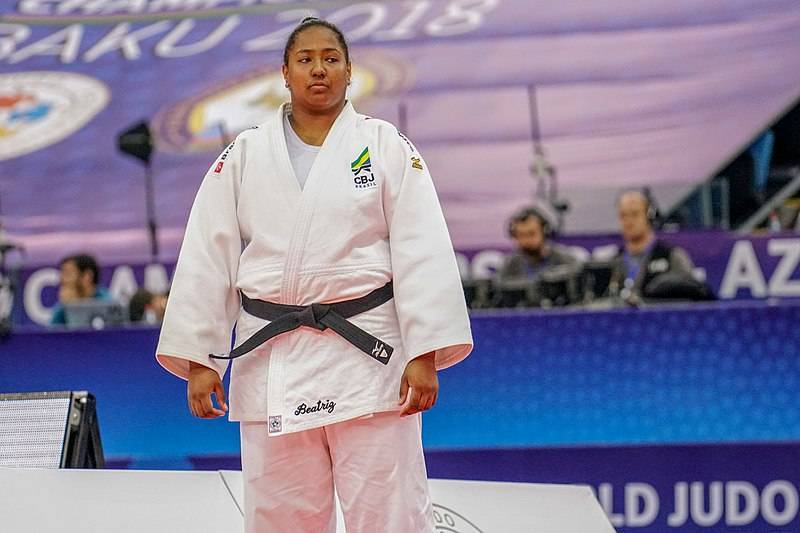
Sambo’s kit is instantly recognisable and sits somewhere between a judogi and a wrestling singlet. Competitors wear a kurtka — a short, close-fitting jacket in red or blue with open shoulder loops that give the opponent grips — plus matching shorts, a belt, and soft-soled wrestling boots called sambovki. Women also wear a plain white shirt beneath the jacket.
The rule book is specific: the sleeve must reach the wrist with at least 10 cm of clearance around the arm, and the jacket’s laps must hang 25–30 cm below the waistline. The shoes are the detail that surprises grapplers coming from judo or BJJ — sambo is the only major jacketed grappling art fought in footwear, which changes footwork and makes foot sweeps land differently.
Note that sambo does not use a coloured belt ranking system the way BJJ or judo do. The belt is functional — it holds the jacket shut and provides grips. Rank in sambo has traditionally been expressed through sporting titles and classifications rather than belt colour, which is why “sambo belts” is a question with no tidy answer.
Weight categories
FIAS runs seven weight categories per gender in the adult division, with the top category open-ended.
| Men (adults) | Women (adults) |
|---|---|
| 58 kg | 50 kg |
| 64 kg | 54 kg |
| 71 kg | 59 kg |
| 79 kg | 65 kg |
| 88 kg | 72 kg |
| 98 kg | 80 kg |
| +98 kg | +80 kg |
Cadet and youth divisions use lower brackets, and masters use the adult table. For how this compares with other grappling rule sets, see our judo weight classes and IBJJF weight classes guides.
Is Sambo effective for MMA?
The track record speaks for itself. Fedor Emelianenko was a Combat Sambo world champion before becoming the most feared heavyweight of his era; Khabib Nurmagomedov built an undefeated UFC career on a combat sambo and wrestling base; Islam Makhachev, Rustam Khabilov and a long list of others came through the same system.
There are structural reasons beyond talent. Combat Sambo already includes strikes and grappling in one rule set, so its athletes never have to bolt two sports together. The jacket teaches grip fighting and throws that transfer to clinch work against the cage. And because sambo scoring rewards the throw where you stay standing, sambo players tend to arrive in MMA already comfortable finishing takedowns in a dominant position rather than dragging opponents down with them.
The honest caveat: Sport Sambo’s choke ban leaves a real gap. An athlete who has only trained sport sambo has spent zero rounds defending a rear naked choke, which is the single most common submission in the UFC — our UFC statistics study puts the rear naked choke at 39% of all submission finishes. Combat sambo athletes do not have this gap, because chokes are legal there.
How to start training Sambo
The practical obstacle in most of the English-speaking world is access. Sambo clubs are common across Russia and the former Soviet states and thin on the ground elsewhere, so your realistic options are often a dedicated sambo club if one exists locally, a judo or wrestling club with a sambo-experienced coach, or an MMA gym with a combat sambo lineage.
If none of those exist near you, the closest substitutes are judo for the jacket and throws and wrestling for the leg attacks and pace — training both gets you most of the way to a sambo skill set. Kit is a small barrier: you will need a kurtka, shorts and sambovki rather than a standard judogi, and most clubs will point you at the FIAS-certified suppliers.
FAQ
What does Sambo stand for?
It is an acronym of the Russian phrase SAMozashchita Bez Oruzhiya, meaning “self-defence without weapons.” The art was officially recognised as a sport on 16 November 1938.
Are chokes allowed in Sambo?
Not in Sport Sambo — the chokehold is on the FIAS list of prohibited techniques, and using one earns a warning with a score. Chokes are legal in Combat Sambo, where a choke that causes loss of consciousness is scored as a total victory.
Are leg locks allowed in Sambo?
Yes — straight ankle locks and knee bars are legal, which is a major difference from judo. But sambo bans twisting attacks: heel hooks, toe holds and any knee lever that bends the joint outside its natural plane are prohibited.
Is Sambo the same as Russian judo?
No, though judo is one of its parents. Sambo has a different uniform (jacket, shorts and wrestling boots rather than a full gi), a different scoring system, no chokes, legal leg locks, and it draws on the folk wrestling styles of the former USSR as well as on judo.
Does Sambo have belts?
Not as a ranking system. The sambo belt is part of the uniform — it secures the jacket and offers grips — rather than a mark of grade. Progression has traditionally been recognised through competitive titles and sporting classifications instead of belt colours.
How long is a Sambo match?
Five minutes for adults and juniors, four minutes for youth, cadets and masters, and three minutes for masters over 65 and for repechage bouts. A bout can end early through a perfect throw, a submission, or an eight-point lead.
Bottom line
Sambo is not “Russian judo,” and the difference is not cosmetic. It is a jacketed grappling art that made the opposite submission choice to judo — no chokes, but leg locks — rewards the throw where you stay on your feet, and ends bouts early on an eight-point lead. Add Combat Sambo’s strikes and chokes and you have a system that has been quietly producing elite MMA fighters for thirty years. Start with our Combat Sambo vs Sport Sambo breakdown, or see how it stacks up against what you already train in Sambo vs Judo and Sambo vs BJJ.
Sources
- FIAS International SAMBO Rules (Sport SAMBO) — scoring, prohibited techniques, weight categories, bout duration, uniform regulations
- FIAS International SAMBO Rules (Combat SAMBO) — chokehold rules and the combat prohibited-technique list
- FIAS: History of SAMBO — 16 November 1938 recognition; FIAS founded 13 June 1984 in Madrid; provisional IOC recognition 2018