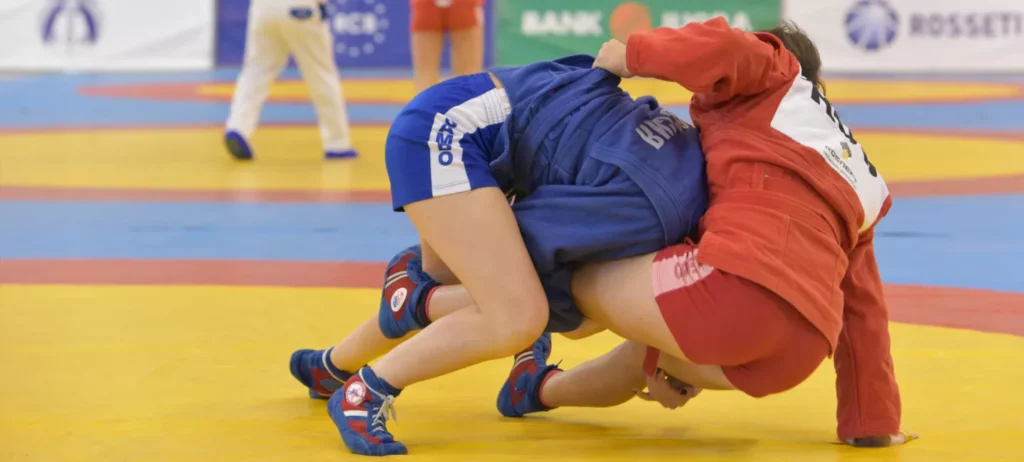
Quick answer: Combat Sambo and Sport Sambo run on the same throws, the same scoring and the same 5-minute clock — the difference is what you are allowed to do with your hands. Combat Sambo permits strikes and chokeholds; Sport Sambo bans both. In Combat Sambo a choke that causes loss of consciousness is scored as a total victory and the referee allows one minute to work it, while in Sport Sambo the chokehold is a listed prohibited technique that earns a warning with a score. Combat athletes also wear headgear, gloves and shin protection. Both versions still ban heel hooks, toe holds and any knee lever bent outside its natural plane.
Last updated: July 28, 2026. Rules below come from the two official FIAS International SAMBO Rules books — the Sport SAMBO edition and the Combat SAMBO edition — published by the International SAMBO Federation. Confirm your event’s regulations before competing.
“Combat sambo” gets used loosely, usually as a synonym for “the scary Russian one.” In FIAS terms it is something much more specific: a separate competitive discipline with its own rule book, its own protective equipment and its own prohibited-technique list. Comparing the two rule books side by side is the fastest way to understand what sambo actually is — because the throws are identical and only the finishing options change.
Combat Sambo vs Sport Sambo at a glance
| Element | Sport Sambo | Combat Sambo |
|---|---|---|
| Strikes | None — striking is a prohibited technique | Punches, kicks and knees permitted |
| Chokeholds | Banned | Legal — one minute allowed to finish |
| Armlocks & leg locks | Legal in both | |
| Heel hooks / toe holds | Banned in both | |
| Throws & scoring | Identical — 4, 2 and 1 point scale, 8-point lead ends the bout | |
| Bout length | 5 minutes for adults and juniors | |
| Protective gear | None beyond the uniform | Headgear, gloves, shin and groin protection |
| Closest comparison | Judo with leg locks and no chokes | MMA in a jacket |
The core difference: strikes and chokes
Sport Sambo’s prohibited-technique list bans, in the rule book’s own words, “direct impact with hands, legs or head on the opponent’s face” and the “chokehold.” Do either and you get a warning with a score against you; do it twice and you are withdrawn from the bout. That is why sport sambo looks like jacket wrestling with joint locks — the two most common finishing methods in every other combat sport are simply unavailable.
Free every Tuesday
The Grappler Brief
The week’s biggest stories from BJJ, judo, wrestling, and submission grappling—curated for people who train.
Sent out weekly.Opt out anytime.
Combat Sambo restores both. Its rule book contains a dedicated set of chokehold provisions: a choke is considered to start the moment the attacker fixes it, one minute is allocated to complete it, and a choke resulting in loss of consciousness is scored as a total victory. Strikes are legal too, subject to a long list of restrictions covered below.
The effect is that the two disciplines share a skeleton and differ entirely in finishing. A sport sambo player and a combat sambo player will throw you identically. Only one of them can then punch you or strangle you.
What Combat Sambo does not allow
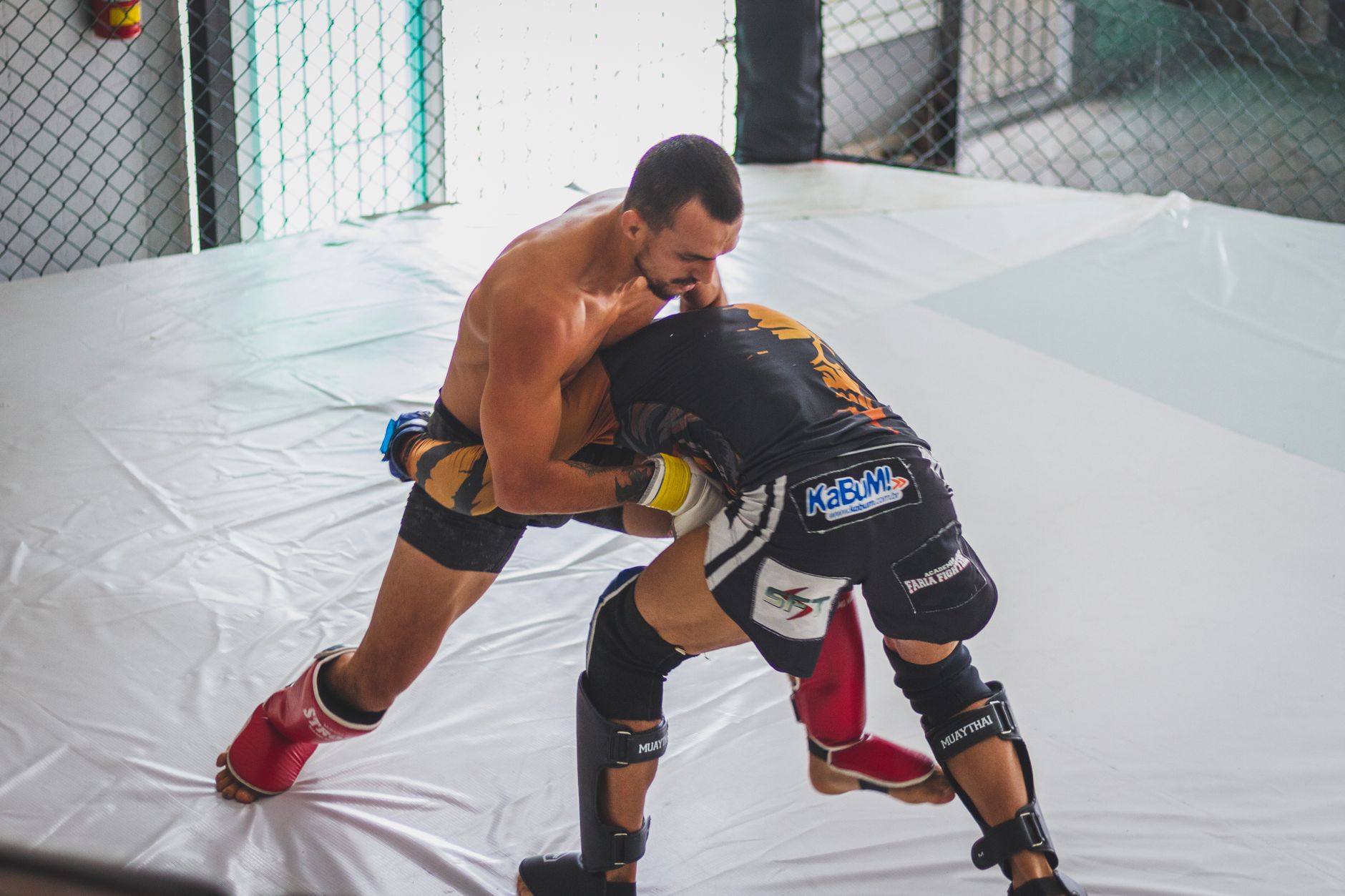
Combat Sambo permits striking, but the restrictions are extensive and more conservative than MMA. Prohibited actions include:
- Strikes to the back of the head, the crown, the throat, the collarbone, and the joints of the arms and legs against their natural bend
- Strikes to the back, lower back, tailbone; any intentional strike to the groin
- Direct impact with the elbow or knee to any part of the body
- Strikes with the palm or base of the palm, and hits with the fingers
- Strikes from a standing position against an opponent who is on the ground
- Head strikes if the opponent is not wearing a helmet
- For men, head strikes and elbow strikes to the head in the ground position; for women, head strikes and elbow strikes to the head in both ground and standing positions
That last rule is one of the sharper differences from MMA: combat sambo does not allow ground-and-pound to the head for men, and removes head striking from women’s bouts entirely. The rule book also keeps the joint-lock restrictions shared with sport sambo — the foot “knot,” the “knee lever by bending leg not in the plane of its natural folding,” and painful holds on toes, fingers and hands are prohibited in both.
Sambo rules and scoring (both disciplines)
Scoring is shared, and it is unusual in one important way: a throw is worth more if you stay standing. Sambo treats going down with your opponent as a partial failure of the technique.
| Score | Awarded for |
|---|---|
| Total victory | A perfect throw (attacker stays standing, opponent lands on the back or in the “bridge”); a submission tap; an 8-point lead; opponent withdrawal or disqualification. In Combat Sambo, also a choke causing loss of consciousness. |
| 4 points | Throw without falling where the opponent lands on the side or half-bridge; throw with falling where they land on the back or bridge; a hold-down of 20 seconds |
| 2 points | Throw without falling where the opponent lands on chest, stomach, buttocks, lower back or shoulder; throw with falling where they land on the side; an incomplete hold-down of more than 10 seconds |
| 1 point | Throw with falling where the opponent lands on chest, stomach, buttocks, lower back or shoulder; also given for the opponent’s second and third warning |
Bouts last 5 minutes for adults and juniors, 4 minutes for youth, cadets and masters, 3 minutes for masters over 65 and for repechage. If the score is level at the end there is no golden score — the win goes to whoever scored more points from genuine technical actions (throws and hold-downs) rather than from the opponent’s penalties. Compare this with how judo and wrestling resolve tied bouts.
Equipment
Both disciplines wear the sambo uniform: the kurtka jacket in red or blue, matching shorts, a belt, and soft wrestling boots (sambovki). The rule book specifies the sleeve must reach the wrist with at least 10 cm of clearance, and the jacket laps must sit 25–30 cm below the waistline.
Combat Sambo adds protective equipment — headgear, gloves, shin guards and groin protection, manufactured to a FIAS specification sheet. The helmet is not optional in a meaningful sense: head strikes are prohibited against an opponent who is not wearing one.
Which should you train?
For MMA: Combat Sambo, without much argument. It is the only major amateur rule set that combines jacket grappling, takedowns, strikes and chokes in a single competitive format, which is why it has fed so many fighters into the UFC. Athletes never have to weld striking and grappling together afterwards.
For grappling: Sport Sambo. The choke ban sounds like a limitation, and it is, but it forces a genuinely deep throwing and leg-lock game — you cannot fall back on a strangle, so you learn to finish with position and joint locks. Sport sambo players tend to have excellent takedowns when they cross into BJJ.
For self-defence: Combat Sambo is closer to the art’s original purpose — the name means “self-defence without weapons,” after all — but sport sambo’s throws onto a hard surface are not a small thing either. Access usually decides this for you, since combat sambo clubs are rarer outside the former Soviet states.
In practice, most sambo clubs teach the shared base — throws, hold-downs, joint locks — and then split into discipline-specific work. Starting in one does not lock you out of the other.
FAQ
What is the difference between Combat Sambo and Sport Sambo?
Combat Sambo allows strikes and chokeholds and requires protective equipment; Sport Sambo prohibits both striking and chokes and is grappling-only. Throws, hold-downs, joint locks, scoring and bout length are the same in both.
Are chokes legal in Combat Sambo?
Yes. The Combat Sambo rule book allocates one minute to complete a chokehold once it is fixed, and a choke causing loss of consciousness is scored as a total victory. In Sport Sambo the chokehold is a prohibited technique.
Is Combat Sambo the same as MMA?
No. Combat Sambo is fought in a jacket and boots with headgear and gloves, and its striking rules are more restrictive — no elbow or knee impact to the body, no palm strikes, no head strikes on the ground for men, and no head strikes at all in women’s bouts.
How do you win a Sambo match?
By total victory — a perfect throw where you stay standing and your opponent lands on their back, a submission, or an eight-point lead — or by leading on points when time expires. A 20-second hold-down is worth 4 points.
Are heel hooks legal in Combat Sambo?
No. Both rule books prohibit the foot “knot” and any knee lever that bends the leg outside the plane of its natural folding, which rules out heel hooks and toe holds in Sport and Combat Sambo alike.
Bottom line
Sport Sambo and Combat Sambo are one grappling system with two finishing rule sets. Strip the strikes and the chokes out and you have sport sambo; put them back and you have the closest thing amateur combat sport has to MMA in a jacket. Everything underneath — the throws, the 4-2-1 scoring, the 8-point stoppage, the 20-second hold-down, the ban on twisting leg attacks — is shared. Start with our guide to Sambo for the full picture of the art.
Sources
- FIAS International SAMBO Rules (Sport SAMBO) — prohibited techniques, scoring, bout duration, uniform
- FIAS International SAMBO Rules (Combat SAMBO) — chokehold provisions, striking restrictions, protective equipment