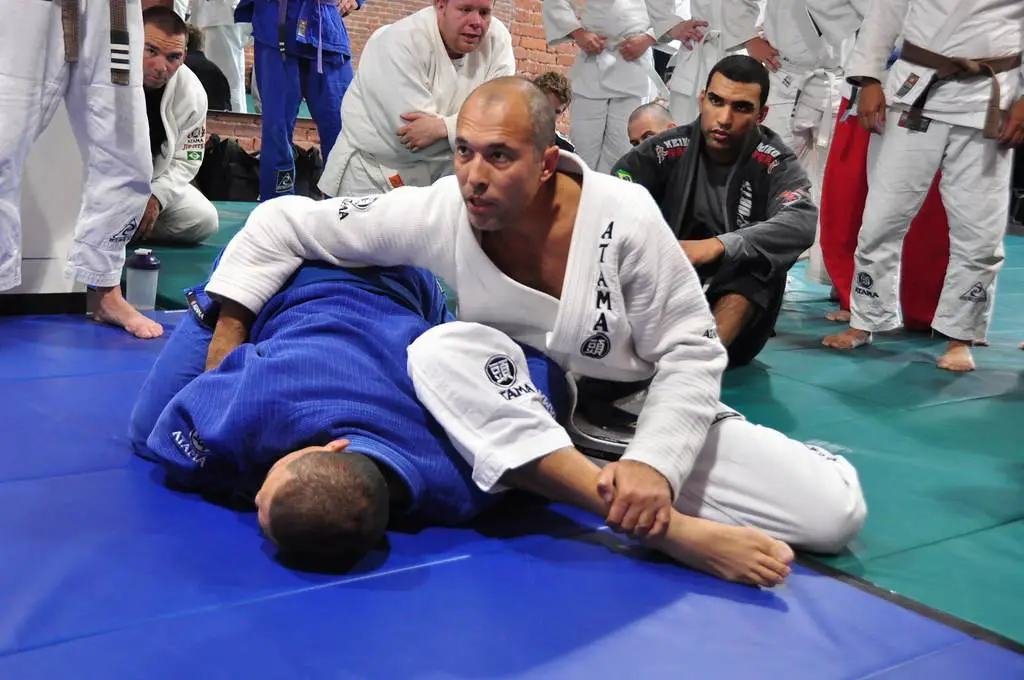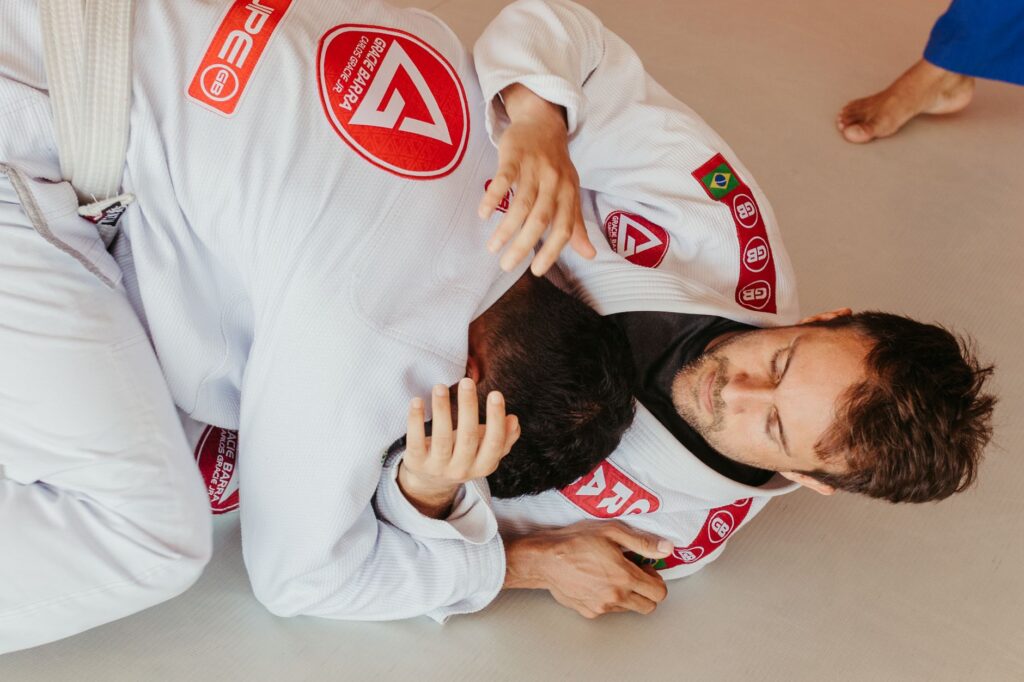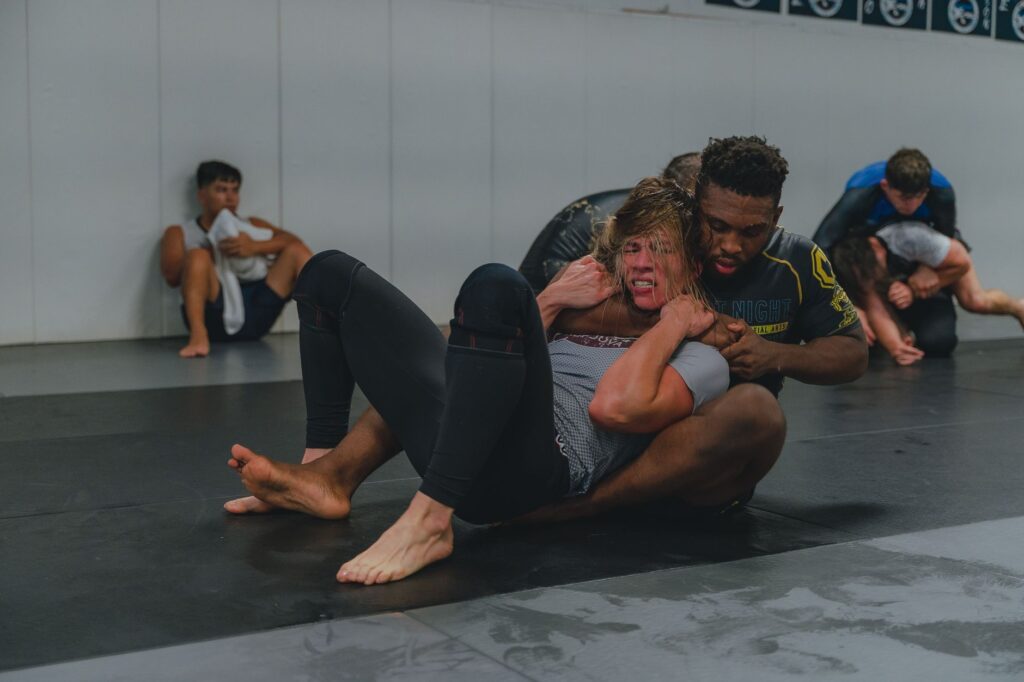
Quick answer: The hip-bump sweep reverses an opponent from closed guard by sitting up into them, posting on one hand, trapping their same-side arm at the shoulder, and driving your hips over that trapped side into mount. It punishes one specific behavior — an opponent who sits back or postures up in your guard — and it forms one corner of the classic closed-guard “triple threat” with the kimura and the guillotine, three attacks that all begin with the same sit-up.
This guide is educational. Drill with qualified coaching, apply pressure gradually, tap early, and release immediately when a partner taps or cannot communicate clearly.
| Detail | Hip-bump sweep summary |
|---|---|
| Technique family | Closed guard sweep (sit-up series) |
| Trigger | Opponent leaning back, posturing up, or resting in your guard |
| Scoring | 2 points once reversed and stabilized (IBJJF-style) |
| Sit-up series partners | Kimura, guillotine — the classic triple threat |
What is the hip-bump sweep?
The hip-bump (or sit-up) sweep is closed guard‘s answer to distance. Most guard attacks want the opponent pulled down onto you; the hip bump goes the other way — when they lean back to posture, you follow them up. You sit up explosively, post on one hand behind you, wrap your other arm over their opposite shoulder to trap the arm, and bump your hips up and over that trapped side. With their arm caught, there is no post on the falling side, and you ride them down into mount.
It earns its place in every fundamentals program for two reasons: it works at every level in gi and no-gi alike, and it teaches the sit-up entry that powers a whole family of attacks.
Free every Tuesday
The Grappler Brief
The week’s biggest stories from BJJ, judo, wrestling, and submission grappling—curated for people who train.
Sent out weekly.Opt out anytime.
How the hip-bump works, step by step
- Read the lean: the sweep starts when their weight rocks back — off your hips, onto their heels. That is the only invitation it needs.
- Sit up on the swing: open the guard, swing your arm and torso up in one motion, and post the free hand on the mat behind you at roughly 45 degrees.
- Trap over the shoulder: your rising arm hooks over their opposite shoulder and pins their arm above the elbow to your side — this arm is their missing post.
- Bump and ride: drive your hips up into their chest line, turning over the trapped-arm side. Their base breaks backward and diagonally; you follow the roll into mount, hips heavy before you celebrate.
The triple threat: why the hip bump never travels alone
Defend the hip bump and you have already chosen your poison. Push back into the guard player to kill the bump, and your neck arrives in guillotine range. Post your trapped arm on the mat to stop the roll, and the wrapped shoulder converts to a kimura grip. This is the classic sit-up-guard triple threat, and it is why the hip bump remains effective at black belt long after opponents “know” it: the sweep, the kimura, and the guillotine share one entry and cover each other’s defenses.
Common mistakes
| Mistake | Why it fails | Better cue |
|---|---|---|
| Bumping while they hug you close | No space to sit up into; you crunch uselessly | The trigger is their lean back — wrong moment, wrong sweep |
| Forgetting to trap the arm | They post the hand and the sweep dies at 45 degrees | Over-the-shoulder wrap above their elbow before the bump |
| Posting the hand too far behind | Your own arm is now a kimura target and your hips can’t lift | Post close and angled, weight moving forward into them |
| Bumping with the chest, not the hips | Chest-to-chest pushing is a strength contest you don’t need | Hips rise into them — the arch does the sweeping |
How opponents defend it
- Driving their weight forward — the correct defense, and the guillotine’s cue.
- Posting the trapped arm — stops the roll, feeds the kimura.
- Sprawling their hips back and away — reopens distance; you land seated facing them, which is a fine place to wrestle up or re-pull guard.
- Elbow tight, refusing the wrap — respect it and return to your pulling game; the hip bump needs the shoulder line, not a forced wedge.
Scoring and competition context
A completed hip bump scores 2 points under the IBJJF-style points system and typically banks mount’s 4 immediately after. It is also one of the most MMA-relevant sweeps in BJJ — the sit-up entry doubles as a stand-up and guillotine platform, and the mechanics survive strikes better than grip-dependent sweeps. Rules vary by event; the BJJ rules and scoring guide has the framework.
Safety and training notes
- The posting hand takes sudden load — post with fingers spread and elbow soft; a locked, badly angled post is a wrist injury waiting for a rep count.
- Kimura follow-ups torque shoulders quickly — in drilling, apply the rotation slowly and stop at the tap, not after it.
- Two bodies roll together on a clean bump — check the landing space, especially on crowded mats.
Stop if a partner reports unusual pain, numbness, or trouble breathing beyond normal positional discomfort. This article does not diagnose injuries; seek qualified medical care for concerning or persistent symptoms.
Examples to study
- MMA guard work: the hip bump appears constantly in the cage precisely because it needs no cloth — watch how fighters chain it with the guillotine when opponents drive back in.
- Fundamentals-focused competition footage: at blue and purple belt the full triple threat is visible in almost every long closed-guard exchange; count the forced choices, not just the finishes.
Related GrapplerHQ guides
Sources and further reading
- IBJJF Books and Videos — current rules materials
- ADCC Rules and Regulations
- Injury prevalence among BJJ practitioners — PubMed
FAQ
When should I use the hip-bump sweep?
The moment your opponent leans back, postures up, or rests in your closed guard. It specifically punishes backward weight — against forward pressure, choose the pendulum/flower direction instead.
What is the closed guard triple threat?
The hip-bump sweep, kimura, and guillotine — three attacks sharing the same sit-up entry, where each common defense to one feeds another.
Does the hip bump work in no-gi and MMA?
Yes — it is one of the most cloth-independent sweeps in BJJ, which is why it shows up in MMA constantly. The shoulder wrap and hip drive need no grips at all.
Why does my hip bump stall halfway?
Either their arm isn’t trapped (they posted) or you bumped with your chest instead of arching the hips. Fix the wrap first, then the arch — in that order.
Bottom line
The hip bump turns your opponent’s rest break into your 2 points. Read the lean, sit up on the swing, trap the arm, and let the hip arch do the work — and when they defend it, say thank you: the kimura and guillotine were the point all along.