Quick answer: The tripod sweep topples a standing opponent from open guard using three points of attack at once: a foot pushing on their hip, a hook behind their far ankle or knee, and a hand gripping their near heel. Push the hip, block the leg, pull the heel — they sit down backward, and you follow up to top position or to your feet. It is the definitive answer to opponents who stand up to pass, and it scores 2 points like any sweep.
This guide is educational. Drill with qualified coaching, apply pressure gradually, tap early, and release immediately when a partner taps or cannot communicate clearly.
| Detail | Tripod sweep summary |
|---|---|
| Technique family | Open guard sweep (vs standing opponent) |
| The three points | Foot on hip (push) + hook behind far leg (block) + heel grip (pull) |
| Scoring | 2 points once reversed and stabilized (IBJJF-style) |
| Classic pairing | The sickle/hook sweep in the opposite direction |
What is the tripod sweep?
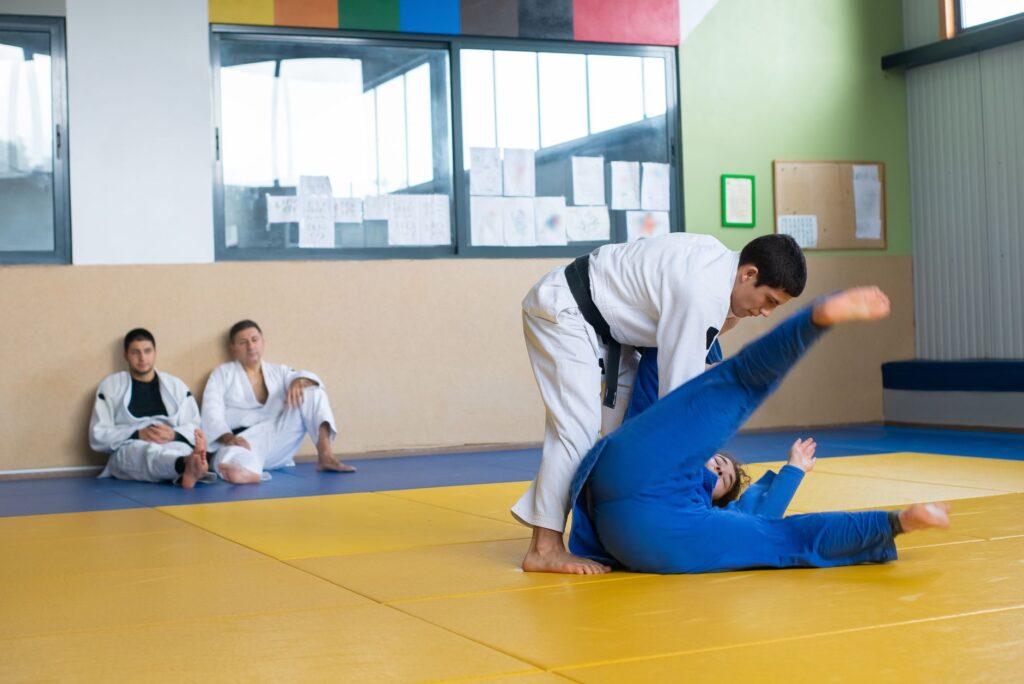
The tripod sweep is open guard’s most reliable takedown of a standing opponent. The name describes the mechanics: like kicking one leg of a tripod while holding the others, you simultaneously push their hip away, block one leg from stepping back, and pull the other leg’s heel toward you. With all three points working, balance has nowhere to go — they sit down hard, and the same push that toppled them carries you up.
It appears the moment opponents stand in your guard — which, at every level above beginner, is most of the time. Standing passers give up their base’s connection to the mat, and the tripod is the tax they pay for it. It flows naturally from shin-to-shin, De La Riva, and basic feet-on-hips open guard.
Free every Tuesday
The Grappler Brief
The week’s biggest stories from BJJ, judo, wrestling, and submission grappling—curated for people who train.
Sent out weekly.Opt out anytime.
How the tripod sweep works, step by step
- Grip the near heel or ankle cuff — this is the leg they will fall over; the grip stops it from stepping away.
- Set the pushing foot on their hip or thigh on the same side as your heel grip — the push travels through their center, not their leg.
- Hook behind the far leg — calf or ankle, with your free leg — so the escape step backward no longer exists.
- Push-pull-block in one beat: extend the hip push as you pull the heel and hold the hook. They sit backward over their blocked base. Then get up: technical stand-up or forward pressure into their open legs — the sweep’s 2 points require you to arrive on top, and dawdling on your back invites a scramble reset.
When the moment appears
- The instant they stand to break closed guard — feet arrive at hips naturally as your guard opens.
- Against upright torreando attempts — their reaching for your knees leaves the hips square and pushable.
- From De La Riva when they square up: the DLR hook converts to the back-leg block, and the tripod appears without re-gripping.
- Whenever their weight rocks to their heels — the push needs their center already drifting backward; that read is the whole timing.
Common mistakes
| Mistake | Why it fails | Better cue |
|---|---|---|
| Pushing without the heel grip | They step back with the free leg and you’ve just pushed them away | Capture the heel before the push — the fall needs a fence |
| Hook and grip on the same leg | One leg fully controlled, one fully free — they hop and base | Spread the three points: push center, block far, pull near |
| Admiring the sweep from your back | No stabilization on top means no 2 points and a free pass attempt for them | The stand-up is part of the sweep — drill them as one motion |
| Pushing at their chest height | High pushes bend them forward onto you instead of seating them back | Push the hipline — balance lives at the hips, not the shoulders |
How opponents defend it
- Stepping the far leg back early — beats the hook, but stretches them into a lunge your sickle sweep (the tripod’s mirror, hooking the near leg and pushing the far hip) punishes in the other direction.
- Sinking their hips and bending the knees — heavier base, but now they are low enough for you to wrestle up into a single leg with the heel grip you already own.
- Peeling the pushing foot off the hip — occupies both their hands, opening the second-leg attacks and re-entries.
- The pattern: the tripod, the sickle, and the wrestle-up form a triangle of standing-opponent answers; defending one walks into another.
Scoring and competition context
The tripod scores 2 points under the IBJJF-style points system once you land on top and stabilize — the sweep-versus-takedown distinction matters here, and since this reversal starts from guard it counts as a sweep. It is a staple of modern gi and no-gi competition alike because standing passing dominates both, and in ADCC-rules contexts the fast wrestle-up variant is often preferred to sitting back for the topple. Event specifics: BJJ rules and scoring guide.
Safety and training notes
- Partners fall backward onto their seat and sometimes their wrists — drill with fall-aware partners and clear mat space behind them.
- The ankle hook can twist if they spin out mid-rep — hooks release when the fall starts; riding the hook down is for competition, not drilling.
- Push through the hip, never the knee line — a pushing foot that slides down to the knee under force becomes a joint attack nobody signed up for.
Stop if a partner reports unusual pain, numbness, or trouble breathing beyond normal positional discomfort. This article does not diagnose injuries; seek qualified medical care for concerning or persistent symptoms.
Examples to study
- Modern lightweight gi guard players: the tripod-sickle pairing is a fixture of open-guard exchanges against standing passers — watch the feet swap targets as the opponent circles, and how the sweep is finished before the opponent’s hands ever touch the mat.
- No-gi wrestle-up specialists: the same heel grip and hip push, finished by coming up into a single leg rather than waiting for the topple — the tripod as an entry rather than an ending.
Related GrapplerHQ guides
Sources and further reading
- IBJJF Books and Videos — current rules materials
- ADCC Rules and Regulations
- Injury prevalence among BJJ practitioners — PubMed
FAQ
What are the three points of the tripod sweep?
A foot pushing on their hip, a hook blocking behind their far ankle or knee, and a hand pulling their near heel. All three must fire together — any two alone lets them step out.
Does the tripod sweep count as a sweep or a takedown?
A sweep — it starts from guard, so the reversal scores 2 points under IBJJF-style rules once you stabilize on top, even though the opponent was standing.
What do I do after the tripod sweep lands?
Get up immediately — technical stand-up or forward pressure into their guard. The points require top stabilization, and the sweep’s momentum is your ticket up; waiting wastes it.
What if they step their far leg back?
That is the sickle sweep’s cue — swap your hooks and attack the opposite direction. The tripod and sickle are drilled as a pair for exactly this reason.
Bottom line
The tripod sweep is a balance equation: push the center, fence the near leg, erase the far step — solved, they sit. Capture the heel before you push, fire all three points as one beat, and stand up like it is part of the sweep, because it is. Anyone who stands in your open guard owes you 2 points; the tripod is how you collect.