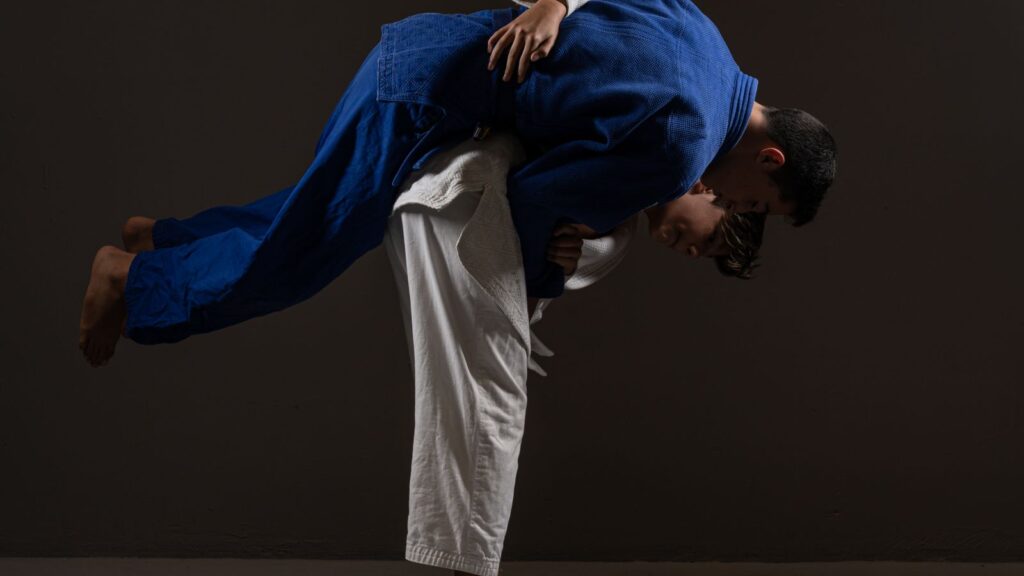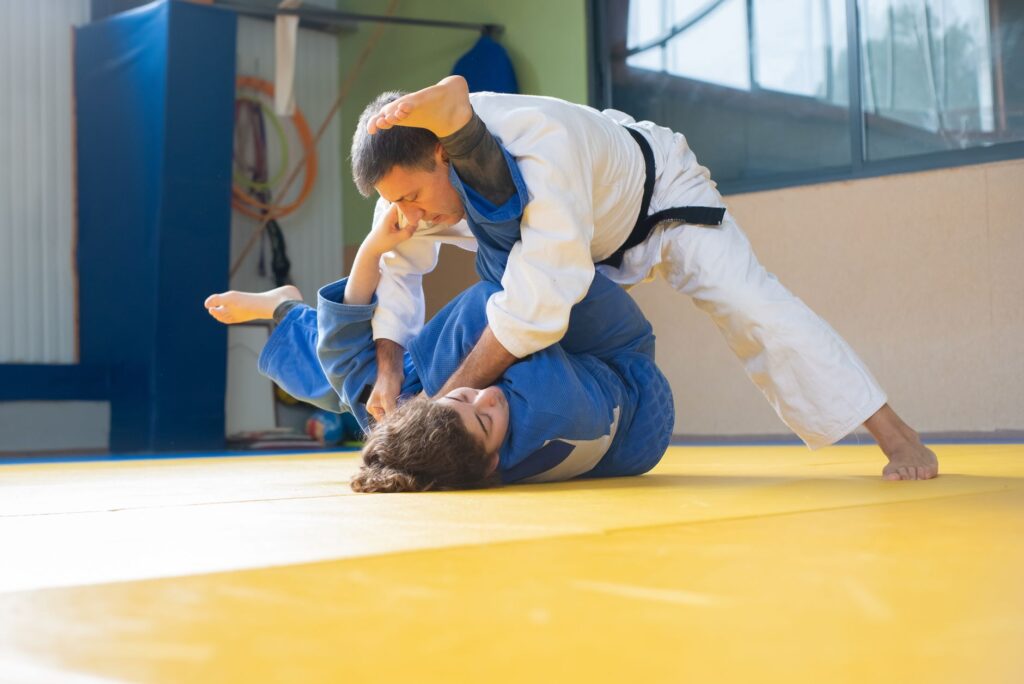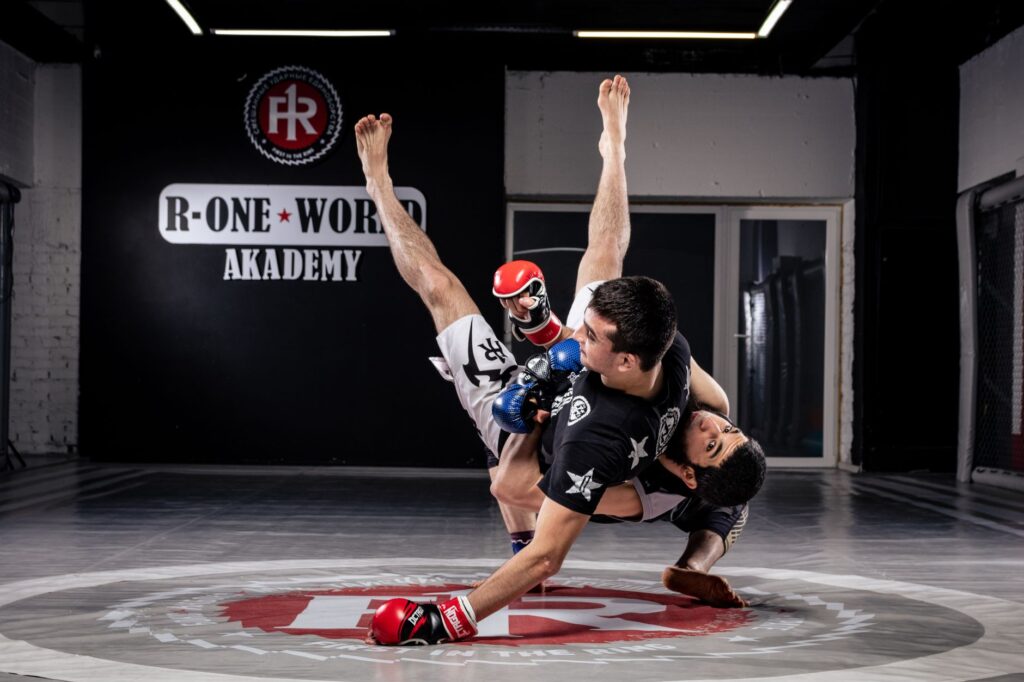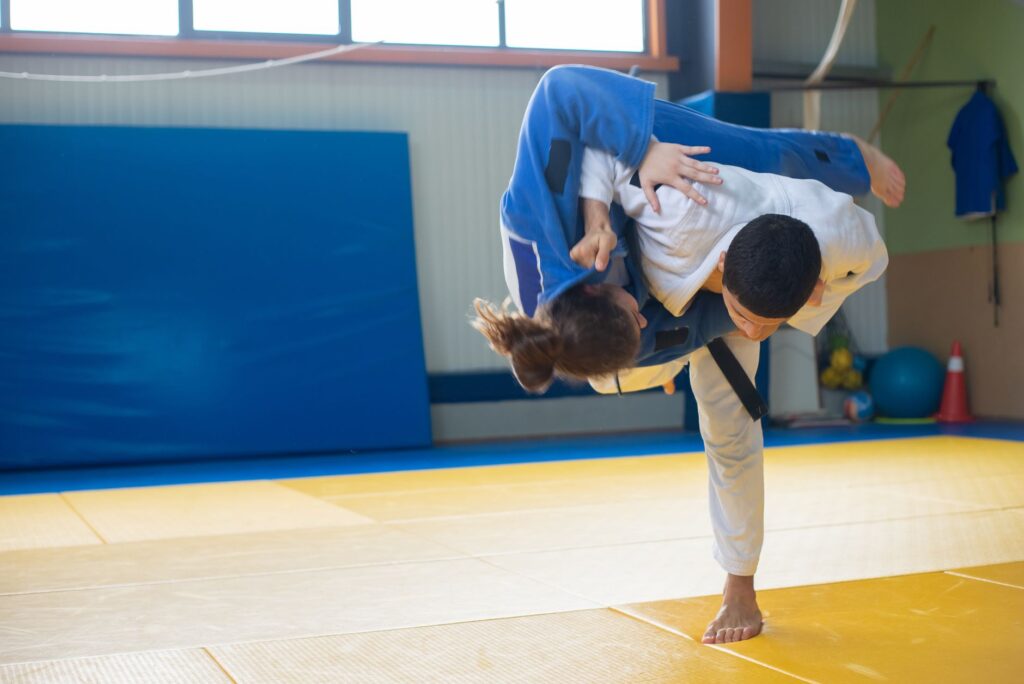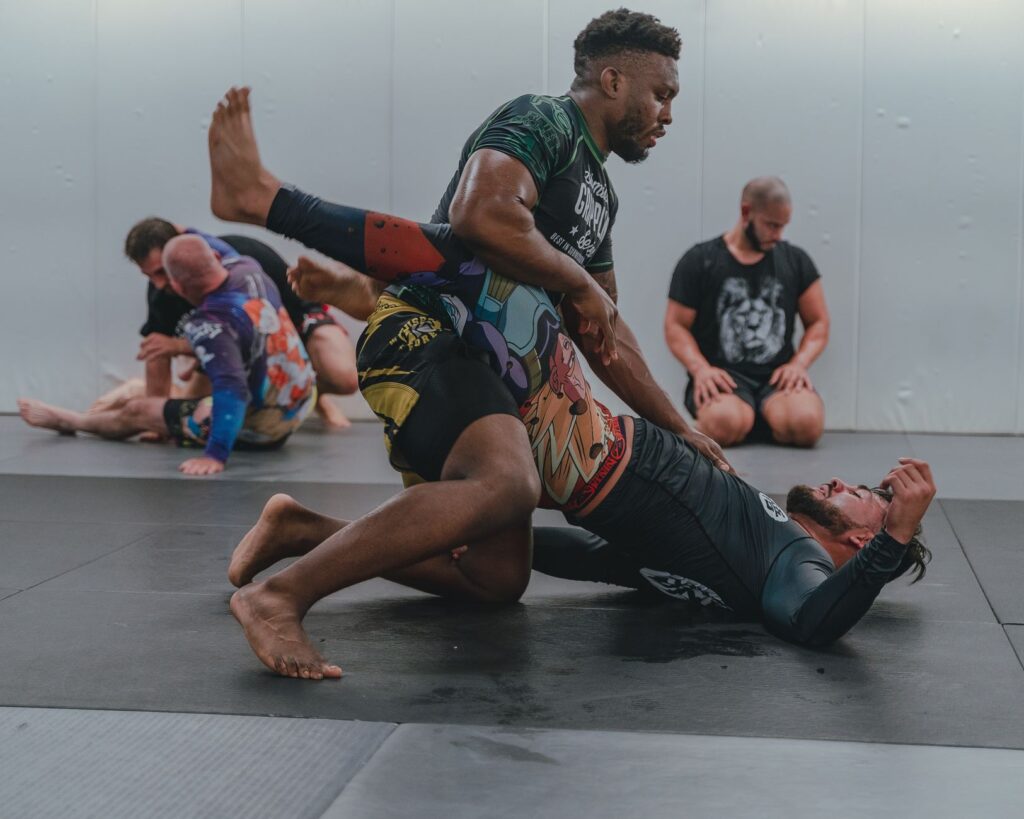
Judo vs Wrestling: The Differences Explained
Judo and wrestling reward opposite things: one perfect throw versus relentless accumulation. How the arts differ in rules, training, and which is better for BJJ, MMA, or self-defense.
Knee-on-belly scores 2 points and trades side control’s smother for mobility — attack the arm, chase the back. Control, transitions, and escapes.
The ankle pick needs no deep shot and keeps your head up, out of the guillotine — the takedown for grapplers who’d rather not wrestle. Setups and finishes.
The body lock is an upper-body clinch takedown with no leg grab and no exposed neck. Learn where to clasp, how to trip, and how to defend it.
The double-leg takes both legs and the whole base at once — higher reward, higher guillotine risk. Learn the penetration step, finishes, and the sprawl.
The single-leg is BJJ’s go-to takedown: lower commitment than a double and guillotine-safe if the head stays inside. Setups, finishes, and defense.
Free every Tuesday
The week’s biggest stories from BJJ, judo, wrestling, and submission grappling—curated for people who train.
Sent out weekly.Opt out anytime.
Hip escape (shrimping) is the movement behind nearly every BJJ escape. Learn the mechanics, the common mistakes, and where it actually gets used.
Guard recovery is a decision, not a move. Learn to read the window, frame before you move, and pick the right recovery tool for the position you’re in.
Single-leg X isolates one leg mid-scramble. Learn the figure-four, the off-balancing it depends on, and where it leads: sweeps and leg entries.
Lasso guard pins an arm with a leg and a sleeve grip. Learn why the grip comes first, and how the position feeds triangles, omoplatas, and sweeps.