Quick answer: judo throws are called nage-waza, and the Kodokan classifies them into five families: te-waza (hand techniques), koshi-waza (hip techniques), ashi-waza (foot and leg techniques), and two kinds of sutemi-waza (sacrifice throws, where you drop your own body to throw). The traditional teaching syllabus, the Gokyo no Waza, contains 40 foundational throws in five groups; the full modern Kodokan list recognises 68. The most common competition throws include osoto-gari, seoi-nage, uchi-mata, o-goshi and tai-otoshi. A throw scores ippon — an instant win — when it lands the opponent largely on their back with control, speed and force.
Last updated: July 25, 2026. This guide covers the categories of judo throws, the most important techniques to know, and the full 40-throw Gokyo no Waza syllabus with translations. Names follow the Kodokan classification, the standard used by the International Judo Federation. It is a reference guide, not a substitute for hands-on coaching — throws must be learned on the mat with proper breakfalls.
The categories of judo throws (nage-waza)
Every judo throw belongs to one of five categories, grouped by the part of the body that does the work. Standing throws (tachi-waza) use the hands, hips or legs; sacrifice throws (sutemi-waza) drop the thrower to the mat to generate the movement.
| Category | Meaning | How it works | Examples |
|---|---|---|---|
| Te-waza | Hand techniques | The arms do most of the throwing action | Seoi-nage, tai-otoshi, kata-guruma |
| Koshi-waza | Hip techniques | The hip is loaded under the opponent as a pivot | O-goshi, harai-goshi, uchi-mata |
| Ashi-waza | Foot and leg techniques | The legs reap, sweep or hook the opponent’s base | Osoto-gari, ouchi-gari, de-ashi-harai |
| Ma-sutemi-waza | Rear sacrifice throws | The thrower falls straight back to throw | Tomoe-nage, sumi-gaeshi, ura-nage |
| Yoko-sutemi-waza | Side sacrifice throws | The thrower falls to the side to throw | Tani-otoshi, yoko-otoshi, soto-makikomi |
Uchi-mata is often listed as a hip technique but uses a strong leg action, which is a reminder that the categories describe the primary mechanic, not a rigid boundary. Coaches classify a throw by what makes it work.
Free every Tuesday
The Grappler Brief
The week’s biggest stories from BJJ, judo, wrestling, and submission grappling—curated for people who train.
Sent out weekly.Opt out anytime.
The most important judo throws to know
These are the throws that appear most often in competition and in every beginner’s first year. Learn these and you understand the backbone of judo.
- Osoto-gari (large outer reap) — you break the opponent’s balance backwards and reap their supporting leg from the outside. One of the first throws taught and still a competition mainstay.
- O-goshi (large hip throw) — the classic hip throw: turn in, load the opponent across your hips, and rotate them over. The template for all koshi-waza.
- Seoi-nage (shoulder throw) — you drop under the opponent and throw them over your shoulder. Devastating for smaller judoka against bigger opponents.
- Uchi-mata (inner-thigh throw) — you lift and sweep the inside of the opponent’s thigh with your leg. The signature throw of many Olympic champions.
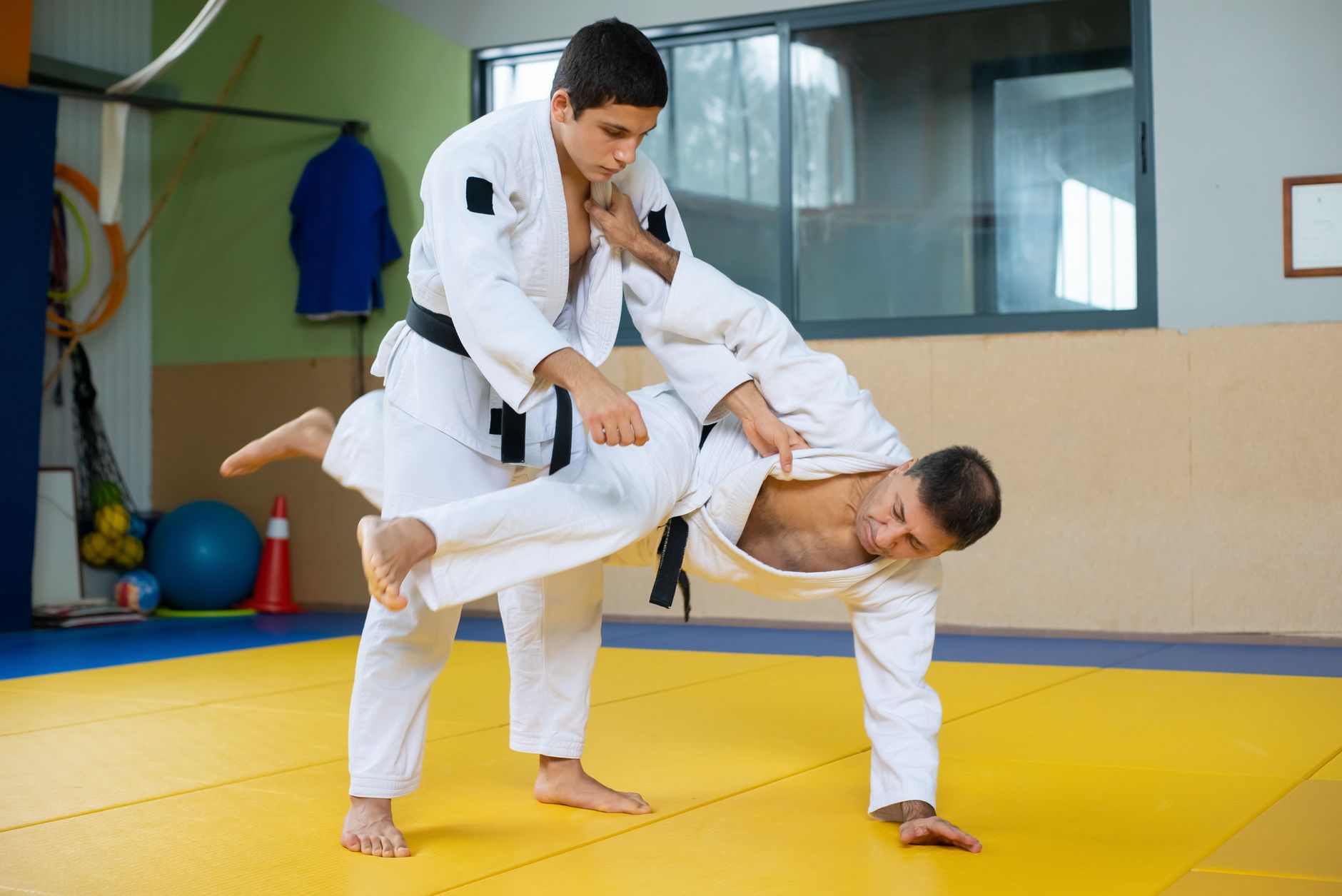
- Tai-otoshi (body drop) — a hand technique that blocks the opponent’s leg and drops them over it with no hip contact. Pure timing and direction.
- Harai-goshi (sweeping hip throw) — like o-goshi but you sweep the opponent’s leg and hip away as you turn, adding a leg action to the hip throw.
- Ouchi-gari and kouchi-gari (large and small inner reaps) — you reap the opponent’s leg from the inside, driving them backward. Constant setups and combinations.
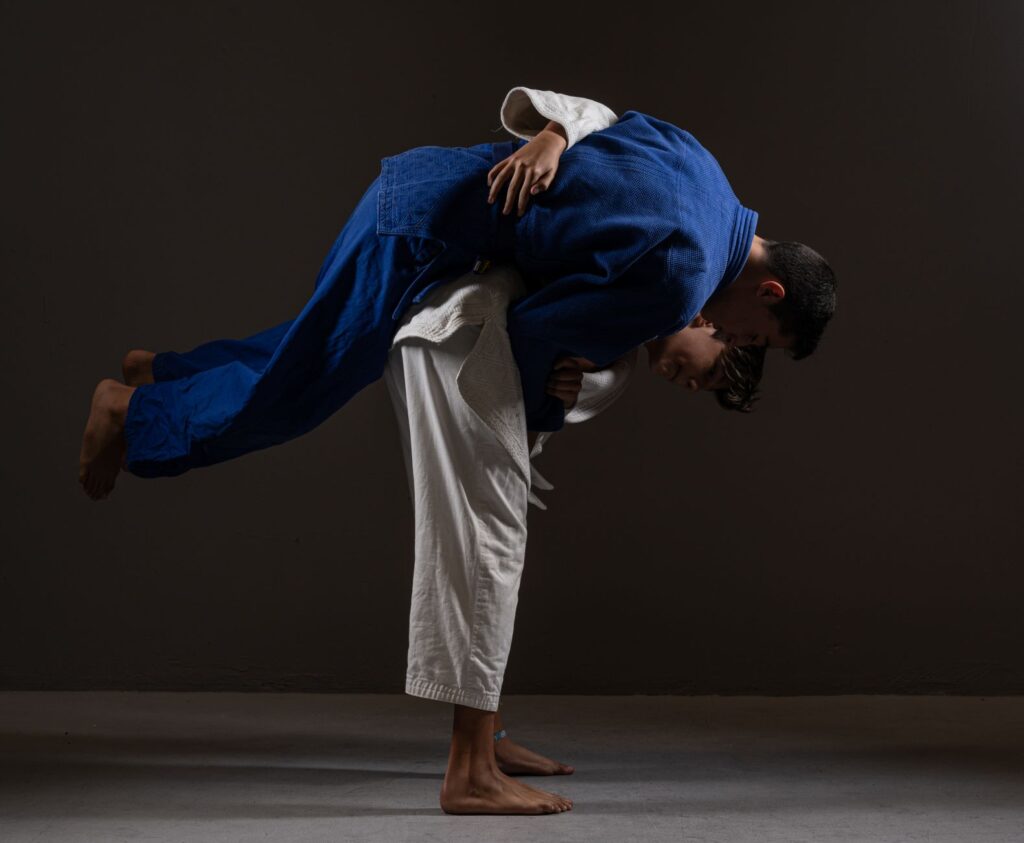
- Tomoe-nage (circle throw) — the famous sacrifice throw: you sit, plant a foot on the opponent’s belly, and roll them over your head.
The Gokyo no Waza: judo’s 40 foundational throws
The Gokyo no Waza (“five sets of techniques”) is judo’s traditional throwing syllabus, first organised at the Kodokan in 1895 and settled into its familiar form of 40 throws in five groups from 1920. Students traditionally learn them group by group, from the most fundamental in Dai Ikkyo to the more advanced in Dai Gokyo.
| Group | Throws (Japanese — English) |
|---|---|
| Dai Ikkyo (1st) | De-ashi-harai (advancing foot sweep), Hiza-guruma (knee wheel), Sasae-tsurikomi-ashi (propping drawing ankle), Uki-goshi (floating hip), Osoto-gari (large outer reap), O-goshi (large hip), Ouchi-gari (large inner reap), Seoi-nage (shoulder throw) |
| Dai Nikyo (2nd) | Kosoto-gari (small outer reap), Kouchi-gari (small inner reap), Koshi-guruma (hip wheel), Tsurikomi-goshi (lifting-pulling hip), Okuri-ashi-harai (sliding foot sweep), Tai-otoshi (body drop), Harai-goshi (sweeping hip), Uchi-mata (inner thigh) |
| Dai Sankyo (3rd) | Kosoto-gake (small outer hook), Tsuri-goshi (lifting hip), Yoko-otoshi (side drop), Ashi-guruma (leg wheel), Hane-goshi (springing hip), Harai-tsurikomi-ashi (lifting-pulling foot sweep), Tomoe-nage (circle throw), Kata-guruma (shoulder wheel) |
| Dai Yonkyo (4th) | Sumi-gaeshi (corner reversal), Tani-otoshi (valley drop), Hane-makikomi (springing wraparound), Sukui-nage (scooping throw), Utsuri-goshi (changing hip), O-guruma (large wheel), Soto-makikomi (outer wraparound), Uki-otoshi (floating drop) |
| Dai Gokyo (5th) | Osoto-guruma (large outer wheel), Uki-waza (floating technique), Yoko-wakare (side separation), Yoko-guruma (side wheel), Ushiro-goshi (rear hip), Ura-nage (rear throw), Sumi-otoshi (corner drop), Yoko-gake (side hook) |
The Gokyo is not the whole of judo. In 1982 the Kodokan reinstated eight older throws and added a set of newer recognised techniques (Shinmeisho no Waza), bringing the official list to 68 throws. Modern competition has also popularised throws and pick-ups that sit outside the classical syllabus, though rule changes have since restricted many direct leg grabs.
Judo throws in BJJ and MMA
Judo throws travel well. In Brazilian jiu-jitsu they are among the most reliable ways to start a match on top and score the takedown, and judo black belts have a long record of converting their throwing base into BJJ success. In MMA, throws like osoto-gari, uchi-mata and the various hip throws appear regularly as takedowns that put a fighter straight into top position.
The main adjustment outside judo is the grip and the pace: without a gi, many throws rely on body locks and underhooks rather than sleeve and lapel grips. To see how the two arts connect, read our judo hub and our comparison of judo vs jiu-jitsu. For how ranks, divisions and scoring work in judo, see our judo belt order, judo weight classes and judo rules guides.
Frequently asked questions
How many judo throws are there?
The traditional Gokyo no Waza syllabus contains 40 throws in five groups. The full modern Kodokan list recognises 68 throws in total, after eight older techniques were reinstated and a set of newer ones added in 1982.
What is the most common judo throw?
Osoto-gari, seoi-nage and uchi-mata are among the most frequently used in competition. Osoto-gari and o-goshi are usually the first throws a beginner learns because they teach the core principle of breaking balance before throwing.
What are the five categories of judo throws?
Te-waza (hand techniques), koshi-waza (hip techniques), ashi-waza (foot and leg techniques), ma-sutemi-waza (rear sacrifice throws) and yoko-sutemi-waza (side sacrifice throws). Together they make up nage-waza, the throwing techniques of judo.
What is a sacrifice throw in judo?
A sutemi-waza, where the thrower deliberately drops their own body to the mat — backward for ma-sutemi-waza or sideways for yoko-sutemi-waza — to generate the throwing motion. Tomoe-nage, the “circle throw,” is the best-known example.
Can you use judo throws in BJJ?
Yes, and they are highly effective for winning the takedown and starting on top. The gi grips transfer directly to gi BJJ; in no-gi, throws are adapted to use body locks and underhooks instead of sleeve and lapel grips.
What throw scores ippon in judo?
Any throw can score ippon if it lands the opponent largely on their back with control, considerable force and speed. Ippon ends the match instantly, which is why judo is built around throwing rather than points-grinding.