Quick answer: There are two escapes that solve most mount problems: the trap-and-roll (upa), which reverses the position entirely, and the elbow escape, which recovers guard piece by piece. Both depend on the same early decision — getting your elbows tight to your ribs before the mount climbs high. Escape percentages collapse once the knees reach your armpits, so the real skill is starting the escape the moment mount arrives, not after it settles.
This guide is educational. Drill with qualified coaching, apply pressure gradually, tap early, and release immediately when a partner taps or cannot communicate clearly.
| Detail | Mount escapes summary |
|---|---|
| Primary escapes | Trap-and-roll (upa), elbow escape (shrimp), heel drag, kipping escape |
| Survival posture | Elbows to ribs, chin down, hips ready to bridge |
| Best timing | Immediately on mount arrival, before the position settles |
| Biggest danger | Straight-arm pushing — it feeds armbars and chokes |
Why mount escapes fail before they start
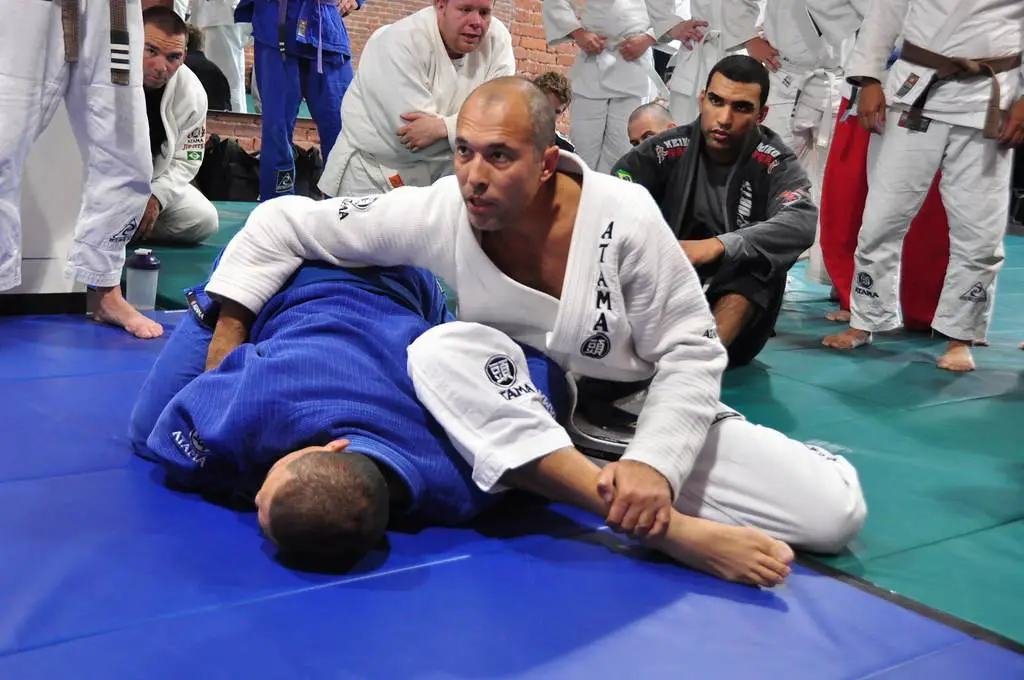
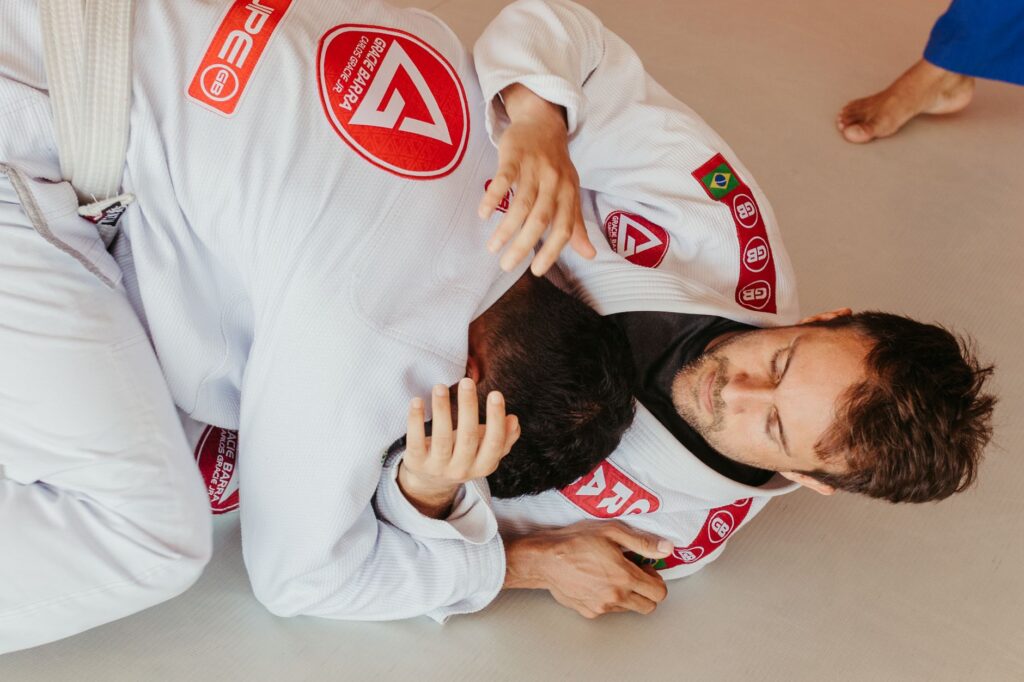
Being under mount costs 4 points in competition and gets worse the longer it lasts, because good mount players climb. From low mount your elbows still work and both classic escapes are available. From high mount — knees in your armpits, elbows stranded above your own shoulders — you are down to emergency options. That is why every credible mount-defense system starts with posture, not movement: elbows pinned to the ribs, chin tucked, back never flat for long.
Defensive specialists like Priit Mihkelson teach this as a positional skill in its own right: survive first with a structure that gives the attacker nothing, then escape from that structure. The order matters. Escaping without surviving first is how people get armbarred mid-bridge.
Free every Tuesday
The Grappler Brief
The week’s biggest stories from BJJ, judo, wrestling, and submission grappling—curated for people who train.
Sent out weekly.Opt out anytime.
The trap-and-roll (upa) escape
The trap-and-roll reverses mount completely, usually landing you inside their closed guard. The mechanics:
- Trap an arm. Wrap or grip one of their arms so it cannot post — wrist and elbow, not just a hand on a sleeve.
- Trap the same-side foot with your own foot, removing the second post on that side.
- Bridge over the trapped shoulder — up and diagonal, not straight up. Straight-up bridges lift them without tipping them.
- Follow the roll into top position and settle before doing anything ambitious.
It works best when the mounted player leans forward or posts a hand — which is exactly when beginners panic-push instead. The trap-and-roll punishes forward pressure; remember that pairing and the timing teaches itself.
The elbow escape (shrimp)
The elbow escape trades the dramatic reversal for reliability: it works even when the trap-and-roll is defended, and it feeds directly into guard. Turn slightly to one side, wedge the elbow and then the knee inside their thigh, shrimp your hips out, and recover half guard first, full guard second. Most real escapes are hybrids — a bridge threat that forces them to post, into the elbow escape while their weight is forward. Chaining the two beats either one alone.
No-gi additions: heel drag and kipping
- Heel drag: when their foot floats near your thigh, hook it with your heel and drag it across your leg into half guard — often available exactly when grapevines release to climb.
- Kipping escape: against high mount, arch and kip the hips repeatedly to shuffle your shoulders out the back door. Athletic, but it addresses the position the classic escapes handle worst.
- Both reward leg dexterity — they are worth drilling for no-gi players whose opponents float and ride rather than settling.
Common mistakes
| Mistake | Why it fails | Better cue |
|---|---|---|
| Pushing their chest with straight arms | Hands off your ribs is exactly what armbars and chokes need | Elbows stay glued to your sides; push with frames, not extensions |
| Bridging straight up | Lifts the rider without tipping them; they base and re-settle heavier | Bridge diagonally over the trapped shoulder |
| Turning belly-down to escape | Gives your back — a worse position than the one you left | Turn toward them with elbow-knee connection, never away |
| Waiting for the “right moment” | The right moment was when mount arrived; it climbs while you wait | First reaction: elbows in, bridge threat, start the escape now |
How mount players counter your escapes
- Against the trap-and-roll: they post wide, keep an arm free, or ride the bridge with their hips — which reopens the elbow escape underneath.
- Against the shrimp: they climb high so your elbows cannot wedge, or trap your inside knee — which is when the kipping and heel-drag family matters.
- The meta-lesson: every counter to one escape improves another. Escape chains, not escape attempts.
Scoring and competition context
Under the IBJJF-style points system, escaping mount scores you nothing directly — but it erases the attacker’s best scoring position, and a trap-and-roll that lands in their guard flips the whole match’s geography. In MMA, mount escapes are worth even more: staying mounted means absorbing strikes, so the urgency multiplies. Rules details vary; check the BJJ rules and scoring guide for the current event’s specifics.
Safety and training notes
- Bridging is a neck-adjacent movement. Warm up the bridge before drilling escape rounds, and keep the drive through shoulders and feet, not the crown of the head.
- Escape drilling means someone sits on ribs repeatedly. Agree on pressure levels, especially across size differences.
- If an armbar catches you mid-escape in drilling, tap early — fighting a deep armbar to save an escape rep is how elbows get hurt.
Stop if a partner reports unusual pain, numbness, or trouble breathing beyond normal positional discomfort. This article does not diagnose injuries; seek qualified medical care for concerning or persistent symptoms.
Examples to study
- Priit Mihkelson’s defensive posture material. The clearest modern articulation of survive-first structure under mount — watch where the elbows live and how little the defender moves until the escape is actually there.
- High-level competition mounts. Notice how rarely elite mounts finish when the bottom player keeps elbow connection early — and how fast they finish when the elbows get stranded above the shoulders.
Related GrapplerHQ guides
Sources and further reading
- IBJJF Books and Videos — current rules materials
- ADCC Rules and Regulations
- Injury prevalence among BJJ practitioners — PubMed
FAQ
What is the easiest mount escape for beginners?
The trap-and-roll (upa) is usually taught first because its steps are concrete: trap an arm, trap the same-side foot, bridge over that shoulder. The elbow escape matters just as much but takes longer to feel.
Should I bridge or shrimp to escape mount?
Both, as a chain. The bridge threat forces the mounted player to post and lean; the shrimp exploits the space that reaction creates. Either alone is much easier to counter than the two together.
How do I escape high mount?
With difficulty — which is the honest answer. Kipping escapes and forcing back down to low mount exist, but the real fix is earlier: never let the climb happen while your elbows can still fight it.
Why do I keep getting armbarred when escaping mount?
Almost certainly straight-arm pushing. Any time your hands extend to their chest, the armbar is available. Keep elbows on your ribs and move them with your bridge and hips instead.
Bottom line
Mount escapes are 80% posture and timing, 20% technique. Elbows in and chin down the instant mount lands, bridge and shrimp as one chained threat, and never — under any pressure — push with straight arms. Escape low mount early, because nobody escapes high mount comfortably.