Quick answer: Escaping back control follows a strict order: protect the neck first (chin down, two hands controlling the choking arm), then walk your shoulders to the mat on the open side, then deal with the hooks. Skip a step and the step you skipped finishes you — defenders who chase the hooks while their neck is open get choked mid-escape. The hand fight is the escape; everything after it is follow-through.
This guide is educational. Drill with qualified coaching, apply pressure gradually, tap early, and release immediately when a partner taps or cannot communicate clearly.
| Detail | Back escapes summary |
|---|---|
| Escape order | 1. Neck safe → 2. Shoulders to the mat → 3. Strip hooks → 4. Turn to face |
| Key concept | Escape toward the open side (under the seatbelt’s under-arm) |
| Survival grips | Two-on-one on the choking arm, chin tucked |
| Biggest danger | Prioritizing hooks or hips while the neck is still exposed |
What you’re actually escaping
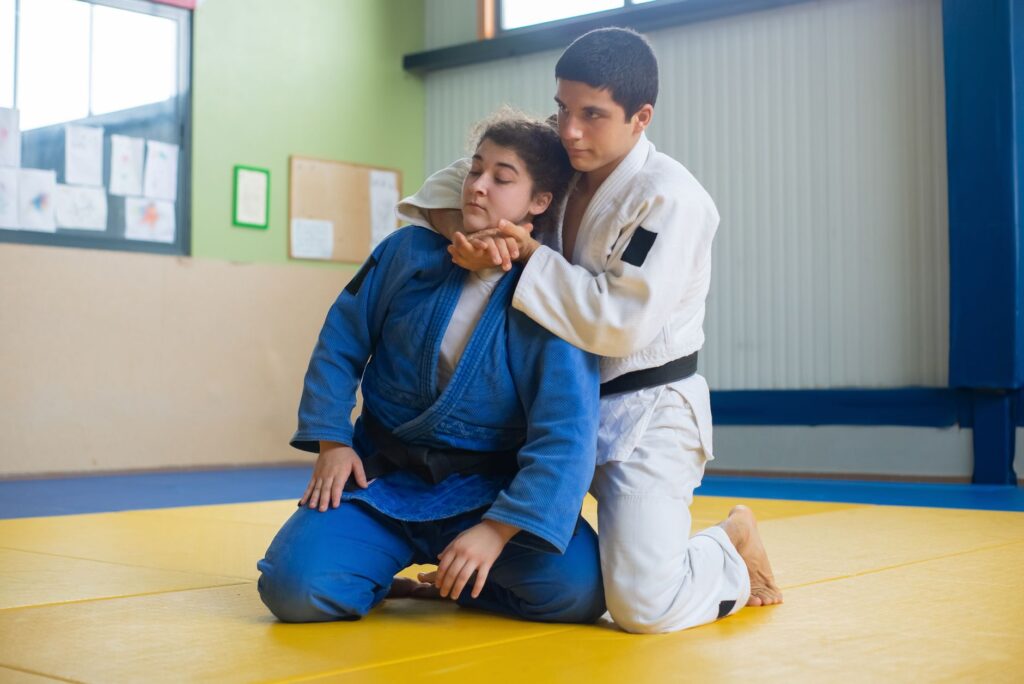
Back control holds you with three connections: the seatbelt grip, the chest glued to your back, and the hooks (or a body triangle). The choke threat is what makes it all work — as long as the rear naked choke is live, every defensive resource you have is mortgaged to your neck. That is why real back escapes start with the hand fight, not with movement: neutralize the choking arm and the position loses its teeth.
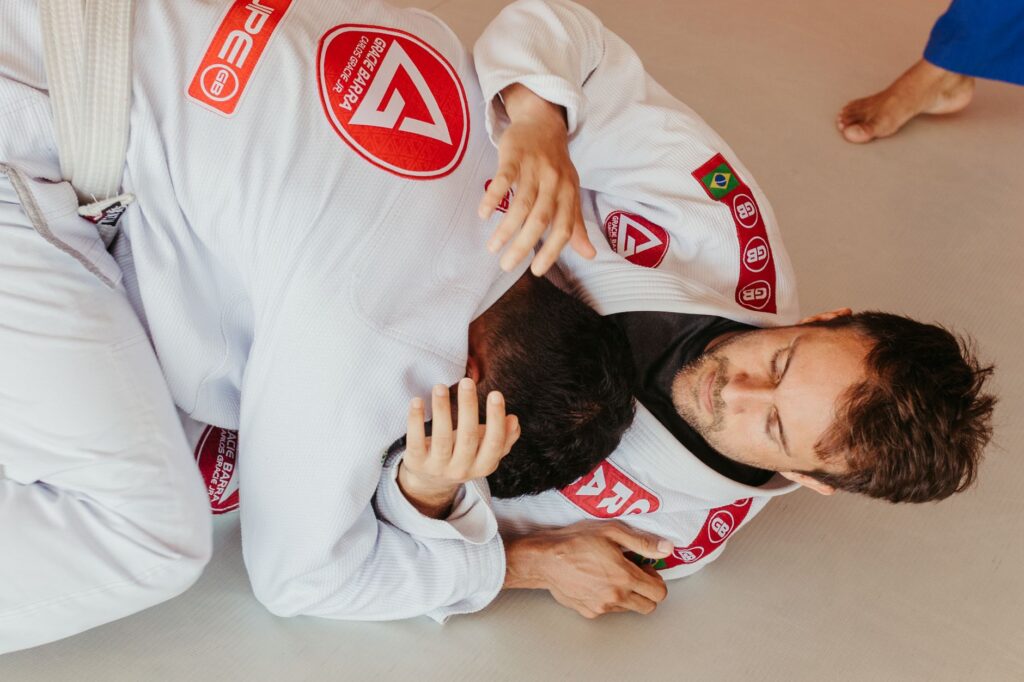
Survival posture looks like this: chin tucked, both hands controlling their choking-side wrist and elbow (two-on-one), elbows tight so no arm can be threaded under yours. In the gi, add collar awareness — the bow and arrow choke starts with a collar grip you can fight before it ever tightens.
Free every Tuesday
The Grappler Brief
The week’s biggest stories from BJJ, judo, wrestling, and submission grappling—curated for people who train.
Sent out weekly.Opt out anytime.
The shoulder-walk escape, step by step
- Win or stalemate the hand fight. Two hands on the choking arm; strip the grip or at least keep the forearm off your neck.
- Identify the open side — the side of the seatbelt’s under-arm. Escaping toward the over-arm side walks you into the choke.
- Walk your shoulders toward the mat on that side, one shoulder blade at a time, aiming to put your upper back flat on the floor past their chest.
- Pin their top leg or clear the bottom hook as your weight settles onto them, then turn your hips to face them and come up into their guard or a top position.
The feeling to chase: your back gets heavier on them as theirs loses connection with you. When your shoulders are on the mat and theirs are under you, the position is already dead — finish the turn calmly.
Escaping the body triangle
The body triangle trades hooks for a locked squeeze, and it rides turns better than hooks do. The standard answer: turn toward the locked ankle side and put the lock’s own pressure against their trapped foot — the mat and your weight attack the ankle they left underneath. Most body-triangle players unlock rather than accept that pressure, and the moment it unlocks you are back to a normal hooks problem. Until then, the neck rules still apply: hand fight first, always.
Common mistakes
| Mistake | Why it fails | Better cue |
|---|---|---|
| Pulling at hooks while the neck is open | You win a leg and lose consciousness | Neck first — the hooks cannot choke you |
| Escaping toward the over-arm side | You rotate into the choking arm’s strength | Shoulder-walk toward the under-arm (open) side |
| Turning belly-down to stand up | They ride you like a backpack and re-attack | Back flat to the mat, then turn to face them |
| Explosive spinning without control | Scrambles favor whoever has the seatbelt — them | Slow, positional shoulder walking beats spinning |
How back players counter your escape
- They re-anchor the seatbelt higher as your shoulders slip — expect the grip fight to restart several times per escape.
- They follow your fall — good back players shoulder-walk with you, keeping their chest glued. Your counter is pinning a leg or trapping their bottom arm as you descend.
- They switch to armbars when the choke dies — as your defense wins the neck, watch for the leg swinging over for the arm. Elbows stay tight through the whole escape.
Scoring and competition context
Back control costs 4 points under the IBJJF-style points system once the hooks are in — so the cheapest escape is the one that happens before the hooks settle. After the points are banked, escaping still matters enormously: it ends the highest-percentage submission threat in the sport and restarts your own game. In GrapplerHQ’s UFC BJJ study, the rear naked choke led all submissions — the single best statistical argument for drilling this escape more than any other. Rules details: BJJ rules and scoring guide.
Safety and training notes
- Chokes in escape drilling get deep fast. The defender is deliberately delaying their tap to work the escape — attackers must apply the squeeze progressively, and defenders must tap the moment the escape is truly gone.
- Never fight a fully locked choke to save a drill rep. Going out in training is a real risk with a set RNC; tap and reset.
- Body-triangle ankle pressure works both ways — if you are the one locking it, uncross when the defender’s weight attacks your foot rather than letting the ankle take it.
Stop if a partner reports unusual pain, numbness, or trouble breathing beyond normal positional discomfort. This article does not diagnose injuries; seek qualified medical care for concerning or persistent symptoms.
Examples to study
- Elite competitors surviving the back in ADCC and high-level no-gi. Time how long the hand fight lasts before any hip movement starts — often minutes. That patience is the escape.
- Xande Ribeiro’s defensive game. Famous for an extraordinary unsubmitted run in elite competition; study how his defense stays structural rather than explosive, on the back as everywhere else.
Related GrapplerHQ guides
Sources and further reading
- IBJJF Books and Videos — current rules materials
- ADCC Rules and Regulations
- Injury prevalence among BJJ practitioners — PubMed
FAQ
What is the first thing to do when someone takes my back?
Chin down, two hands on the choking arm. Nothing else matters until the neck is safe — hooks and hips are problems you are allowed to have, a live choke is not.
Which direction should I escape back control?
Toward the open side — the side of the seatbelt’s under-arm. Escaping toward the over-arm side turns you into the choke’s strength.
How do I get out of a body triangle?
Turn toward the locked-ankle side so your weight and the mat press into their trapped foot. Most opponents unlock rather than accept the ankle pressure, converting the problem back to normal hooks.
Why do strong opponents escape my back control easily?
Usually your seatbelt, not their strength — if your chest connection depends on the hooks alone, a committed shoulder walk beats it. Keep the seatbelt anchored and follow their fall.
Bottom line
Back escapes are a priority list, not a technique: neck, shoulders, hooks, face them — in that order, every time. Win the hand fight patiently, walk your shoulders to the open side, and treat every explosive shortcut as what it is: a faster route to being choked. The position that produces the sport’s most finishes deserves the sport’s most disciplined escape.