Quick answer: UFC men’s divisions run from flyweight at 125 lb to heavyweight at 265 lb. The current women’s rankings list strawweight 115 lb, flyweight 125 lb and bantamweight 135 lb. Championship weigh-ins use the stated limit; ordinary non-title bouts generally allow one additional pound. A familiar label such as “lightweight” is not enough: check the promotion, division and whether the bout is for a title.
Last updated: (Pacific).
Official weight guidance and ranking categories checked October 26, 2026. The tables below separate title limits from ordinary non-title allowances. Kilograms are approximate conversions for reference; the displayed conversion is not a replacement for a bout’s contracted official scale limit.
UFC men’s weight classes
| Division | Title limit (lb) | Approx. kg | Ordinary non-title ceiling (lb) |
|---|---|---|---|
| Flyweight | 125 | 56.7 | 126 |
| Bantamweight | 135 | 61.2 | 136 |
| Featherweight | 145 | 65.8 | 146 |
| Lightweight | 155 | 70.3 | 156 |
| Welterweight | 170 | 77.1 | 171 |
| Middleweight | 185 | 83.9 | 186 |
| Light Heavyweight | 205 | 93.0 | 206 |
| Heavyweight | 265 | 120.2 | 266 |
The men’s list contains eight currently ranked divisions. The jumps are uneven: flyweight to bantamweight is 10 lb, while light heavyweight to heavyweight is 60 lb. The labels describe the promotion’s divisions, not equal steps on one standardized ladder.
Free every Tuesday
The Grappler Brief
The week’s biggest stories from BJJ, judo, wrestling, and submission grappling—curated for people who train.
Sent out weekly.Opt out anytime.
UFC women’s weight classes
| Division | Title limit (lb) | Approx. kg | Ordinary non-title ceiling (lb) |
|---|---|---|---|
| Strawweight | 115 | 52.2 | 116 |
| Flyweight | 125 | 56.7 | 126 |
| Bantamweight | 135 | 61.2 | 136 |
These are the three women’s divisions listed on the checked current UFC rankings page. Rankings are useful for checking which categories the promotion currently presents. Pound-for-pound rankings are a comparison list, not an additional weight division.
Why do some lists say UFC has 12 divisions?
UFC’s weight explainer retains an introductory count of 12, while the checked rankings list eight men’s and three women’s weight categories. A dated general count and a current category list can therefore disagree. This page shows the categories actually listed in the current rankings rather than copying that opening count.
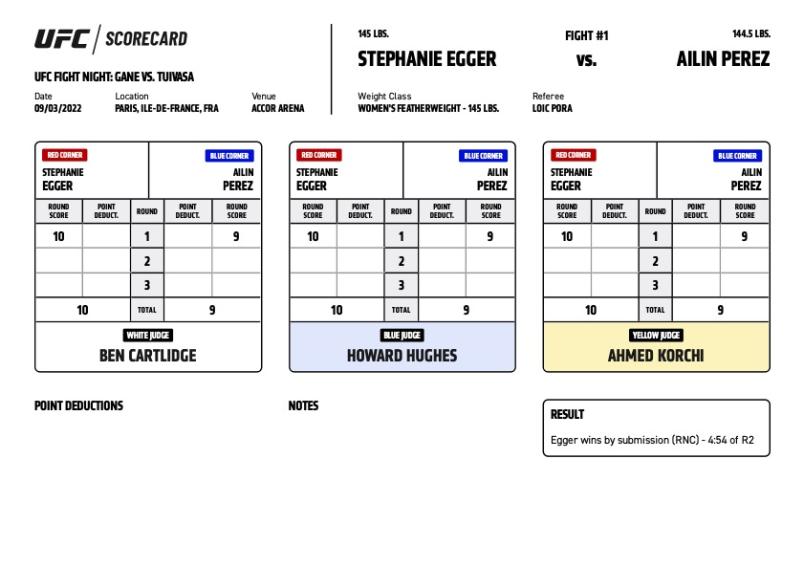
Older women’s featherweight coverage concerns a 145 lb category. Its historical existence does not establish a currently ranked women’s division or an active title. Use the current official listings for present-day categories and dated reporting for historical fights.
Title weight and non-title allowance are different
The official UFC weight explainer specifies a one-pound allowance for non-title bouts and the exact division limit for championship bouts. For lightweight, that means 155 lb for a title weigh-in and ordinarily 156 lb for a non-title fight.
Example:155.5 lb is below the ordinary 156 lb non-title lightweight ceiling but above the 155 lb championship limit. The same reading can therefore have different consequences depending on what was contracted. It does not become acceptable in a title bout simply because the fighter remains a lightweight.
The allowance is not a rule that every fighter must weigh an extra pound, and it does not turn a 156 lb weigh-in into a new division. Athletes can record a lower permitted weight. The tables identify ceilings, not a recommended bodyweight or a plan for reaching it.
What does a catchweight fight mean?
A catchweight is a specifically agreed bout weight rather than the normal standard division booking. It can be arranged in advance or become part of negotiations after a missed weight. It is not an automatic permission to compete at any number, and “catchweight” does not by itself tell you the title eligibility or commission conditions.
Read the actual agreement and event information. A fight that proceeds after a weight miss may have a purse deduction, restricted title eligibility or other conditions. Another fight may be canceled. Avoid treating the outcome of one athlete’s miss as a universal UFC penalty schedule.
Official weigh-ins versus ceremonial weigh-ins
The scale result used to establish whether the contracted weight was made comes from the official weighing process. Ceremonial weigh-ins are the public presentation; seeing an athlete step onto a stage scale is not enough to reconstruct the regulatory weigh-in decision.

UFC’s guidance places official weighing before fight night and explains that additional time may depend on the overseeing commission and circumstances. This reference does not promise a second attempt, a universal extension or a universal local weighing window. Check the actual event’s official information.
The listed limit is a weighing requirement, not a claim about what an athlete weighs while competing. This is a rules reference, not weight-cutting guidance. It does not recommend dehydration, rapid loss or a method to enter a lighter class.
How these labels compare with BJJ and submission grappling
“Featherweight” means 145 lb in the standard UFC men’s table. Another organizer can use a different number for a similarly named grappling class, and a gi tournament can require clothing that an MMA scale process does not. Class names are convenient labels within a ruleset.
For a BJJ entry, open the IBJJF weight-class chart or NAGA divisions guide. Confirm the organizer, age/experience category, competition format and scale clothing. Do not choose a grappling bracket from the UFC table.
For watching UFC, combine the weight reference with our scoring guide and fight statistics study. A weight class describes the booking category; it does not tell you the scheduled rounds or the judging criteria.
UFC weight-class FAQs
What is the UFC lightweight limit?
The championship limit is 155 lb. Ordinary non-title lightweight bouts generally allow up to 156 lb.
What is the UFC heavyweight limit?
The standard championship ceiling is 265 lb. UFC’s published non-title guidance allows one additional pound.
Does UFC have a 165 lb division?
A 165 lb division is not listed among the checked current UFC ranking categories. Standard men’s UFC welterweight uses 170 lb.
Are women’s and men’s flyweight the same limit?
Yes. Both standard UFC flyweight divisions have a 125 lb championship limit, while their rankings and competition are separate.
Can I use the kilogram figures for an official weigh-in?
The figures here are rounded conversions from pounds. Follow the contracted limit and official weighing instructions rather than treating a rounded display as an extra allowance.
Sources and conversion method
- UFC weight classes and weigh-ins: pound limits, title/non-title distinction and weigh-in context.
- Current UFC rankings: currently displayed men’s and women’s categories, checked October 26, 2026.
Reference conversion:1 lb=0.45359237 kg. Each displayed kilogram value is rounded to one decimal place from the championship pound limit. The ordinary one-pound non-title allowance is kept in pounds to avoid disguising it as a larger rounded metric tolerance.