Quick answer: Z guard (knee shield guard) is an on-your-side open guard where the bottom player wedges a shin and knee across the opponent’s hip and thigh, using it as a frame to stop a pass while the other leg stays free to hook, sweep, or hunt a leg. It doesn’t score or finish anything by itself — it’s a retention position, the platform you build sweeps and leg entries from once the frame is holding.
This guide is educational. Drill with qualified coaching, apply pressure gradually, tap early, and release immediately when a partner taps or cannot communicate clearly.
| Detail | Z Guard summary |
|---|---|
| Technique family | Open guard / retention position |
| Main variations | Standard knee shield, inverted (reverse) Z guard, lockdown-assisted Z guard |
| IBJJF scoring | No points on its own — it’s a frame, not a scoring position |
| First control priority | Shin and knee driven across the hip and thigh, not just resting on top |
What is Z guard in BJJ?
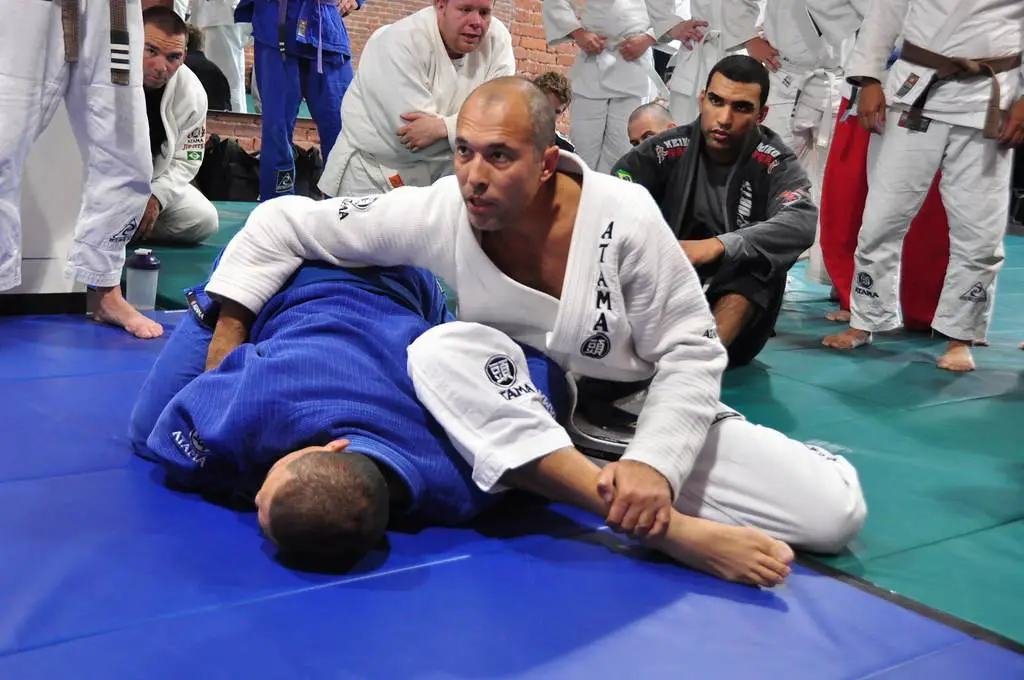
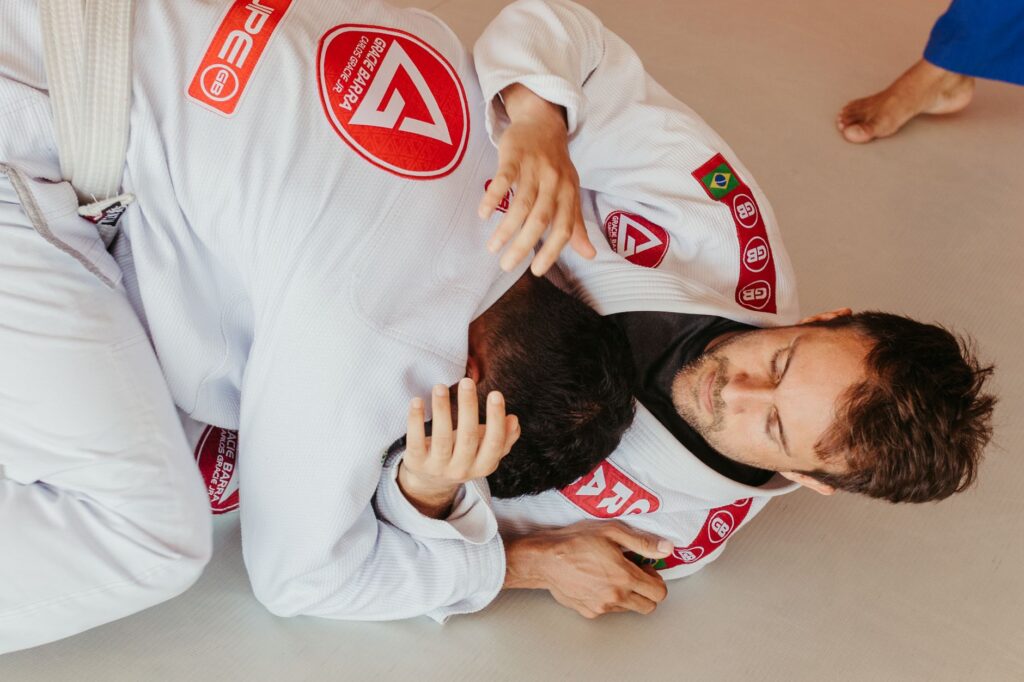
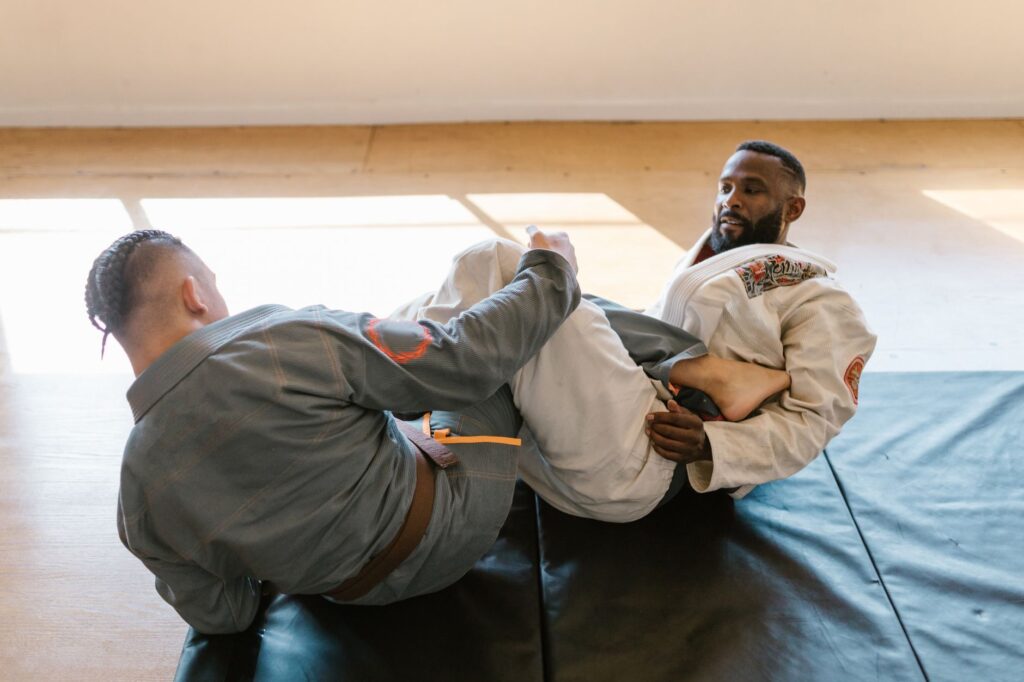
Z guard gets its name from the shape your bottom leg makes: shin across the opponent’s far hip, knee angled into their near thigh, foot tucked near your own hip — roughly a Z when viewed from above. You’re lying on your side rather than flat on your back, which is what separates it from butterfly or full guard. The shield leg does the defensive work; the other leg is free to hook behind a knee, hunt an ankle for single-leg X, or post for a sweep.
Most people meet Z guard by accident, on the way to half guard or while scrambling to stop a pass, before learning it as its own position with its own attacks. Treat it that way from the start — the frame buys time, but time only matters if you use it to advance somewhere.
Free every Tuesday
The Grappler Brief
The week’s biggest stories from BJJ, judo, wrestling, and submission grappling—curated for people who train.
Sent out weekly.Opt out anytime.
How the Z guard frame actually works
- Drive the shin across, don’t just rest it there. A loose knee shield gets flattened the moment the passer weights it. Actively push the shin into the hip and thigh so it’s doing real work against their base.
- Control the far-side sleeve or wrist. Without a grip on the passing arm, the opponent free-hands a crossface and the frame collapses regardless of how good your leg position is.
- Keep your head and shoulder off the mat. Staying propped on your elbow lets you see the pass developing and react; flat on your back, you’re guessing.
- Use the free leg to threaten, not just dangle. A hook behind the knee or a foot on the far hip turns a stalling position into an active one the passer has to respect.
Common entries and where Z guard leads
Z guard is rarely the starting point — it’s where scrambles and passes settle when nobody has clean control yet.
- Stopping a knee-slide or over-under pass. The shin goes in the instant you feel the passer’s knee start to slide across.
- Recovering from a flattened half guard. Reinserting the knee shield is often the first step back toward a usable bottom position.
- Transitioning into single-leg X or full X guard. Once the free leg traps an ankle, Z guard becomes the launch point for a sweep rather than just a stall.
- Setting up the shin-to-shin or “kiss of the dragon” sweep. With the frame in and a grip secured, off-balancing the passer forward opens a direct route to top position.
Common mistakes
| Mistake | Why it fails | Better cue |
|---|---|---|
| Letting the shin go flat and passive | The passer simply weights through it and smashes the frame down | Keep driving the shin across; treat it as an active push, not a resting shield |
| Ignoring the far-side grip | A free crossface arm collapses the whole position regardless of leg work | Control the sleeve or wrist before worrying about the free leg |
| Lying flat on the back | You lose the ability to see and react to the pass | Stay propped on the bottom elbow, hips slightly off the mat |
| Treating Z guard as a permanent home | A stationary frame eventually gets solved and passed | Use the position’s window to attack a sweep or leg entry, not to stall indefinitely |
How passers beat Z guard
Passing Z guard usually means neutralizing the shin before it can reset, then circling away from the free leg.
- Smash the knee shield flat with weight and a crossface. Once the shin loses its angle, the frame stops doing anything.
- Circle toward the free leg rather than fighting the shield directly. The shield leg is strong against pressure from the front; the space behind it is weaker.
- Control the far hip before the guard player can hook or hunt the ankle. Taking that option away early removes most of Z guard’s offense.
- Stay patient instead of forcing a rushed pass. A hurried pass attempt against a live knee shield is exactly what turns into a sweep.
Is Z guard legal in BJJ?
Yes — Z guard itself is just a body position and carries no rules restriction at any belt level or in any major ruleset.
The caution is around what the position can accidentally lead into: awkward shin and knee angles under heavy pressure can drift toward knee-reaping positions or calf-slicer entanglements, both of which are restricted or age/belt-gated in several rulesets.
Details differ by organization and division — confirm the current rulebook for the event you’re actually entering via the BJJ rules and scoring guide or the event page itself.
Safety and training notes
- Watch knee-on-knee collisions. A passer driving forward into a braced shin can jam a knee for both partners; ease into pressure rather than crashing through the frame.
- Be deliberate with calf-slicer-adjacent positions. If a leg gets trapped awkwardly in the scramble, stop and reset rather than fighting for it at speed.
- Communicate before adding real resistance. Z guard scrambles move fast; agree on pace with newer partners before going live.
Stop if a partner reports unusual pain, numbness, or joint discomfort beyond normal positional pressure. This article does not diagnose injuries; seek qualified medical care for concerning or persistent symptoms.
Examples to study
- Modern half guard and De La Riva players using Z guard as a waystation. Watch how they never let the frame sit static — it’s always resetting toward a sweep or a leg entry.
- Z guard into single-leg X transitions in competition footage. Note the moment the free leg commits to the ankle; that’s usually the same moment the top player’s base is already compromised.
Pause footage right as the shin first makes contact and again right as the free leg commits to a hook or a leg entry — those two moments usually explain more than the finish itself.
Related GrapplerHQ guides
Sources and further reading
- Complete Guide To The BJJ Z Guard.
- IBJJF Books and Videos — current rules materials.
- ADCC Rules and Regulations.
- Injury prevalence among BJJ practitioners — PubMed.
FAQ
What is Z guard used for?
Mainly stopping a pass and buying time. On its own it’s a stalling frame; its real value is as a launch point into sweeps like the shin-to-shin sweep or leg entries like single-leg X.
What’s the difference between Z guard and half guard?
Half guard traps one of the opponent’s legs between yours. Z guard doesn’t trap a leg at all — it uses a knee shield as a frame across the hip, with the other leg completely free.
Does Z guard score points in BJJ?
No. It’s a defensive and transitional position, not a scoring one. Points come from what you do after using the frame — a sweep or a guard pass on your opponent, for example.
How do you stop getting passed from Z guard?
Keep the shin actively driven across the hip rather than resting flat, and control the far-side sleeve or wrist so the passer can’t free-hand a crossface.
Bottom line
Z guard is a frame with an expiration date, not a home. It buys you the few seconds a scramble takes to settle, and what you do with those seconds — hook a leg, off-balance forward, reset to half guard — matters more than how tight the shin looks. If your Z guard keeps getting flattened, the fix is almost never a stronger leg; it’s a tighter grip on the passing arm before the shin ever goes in.