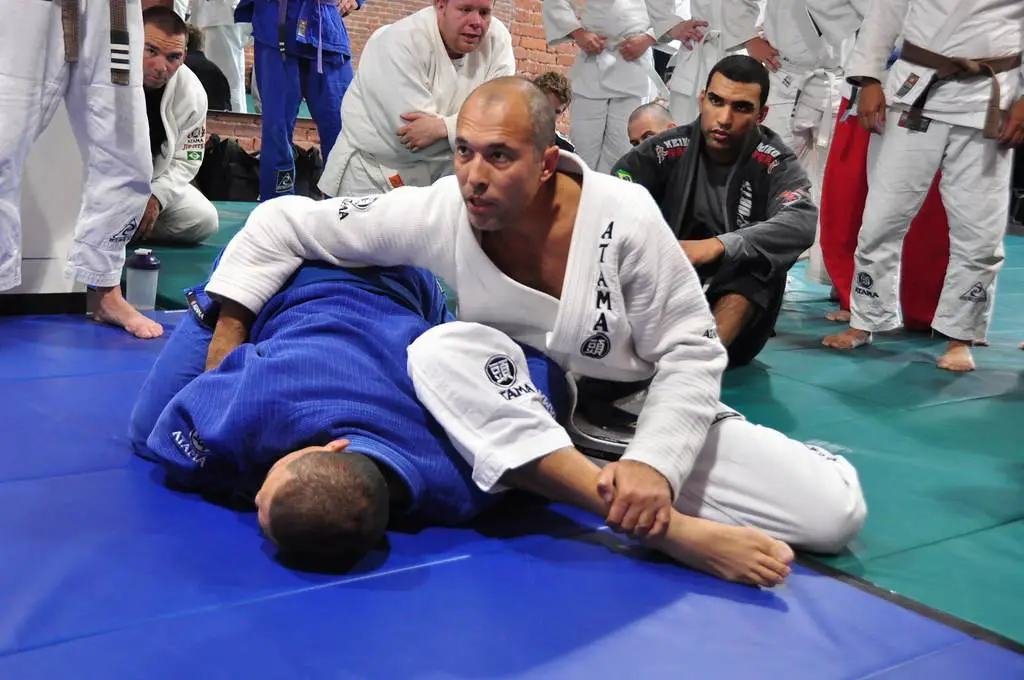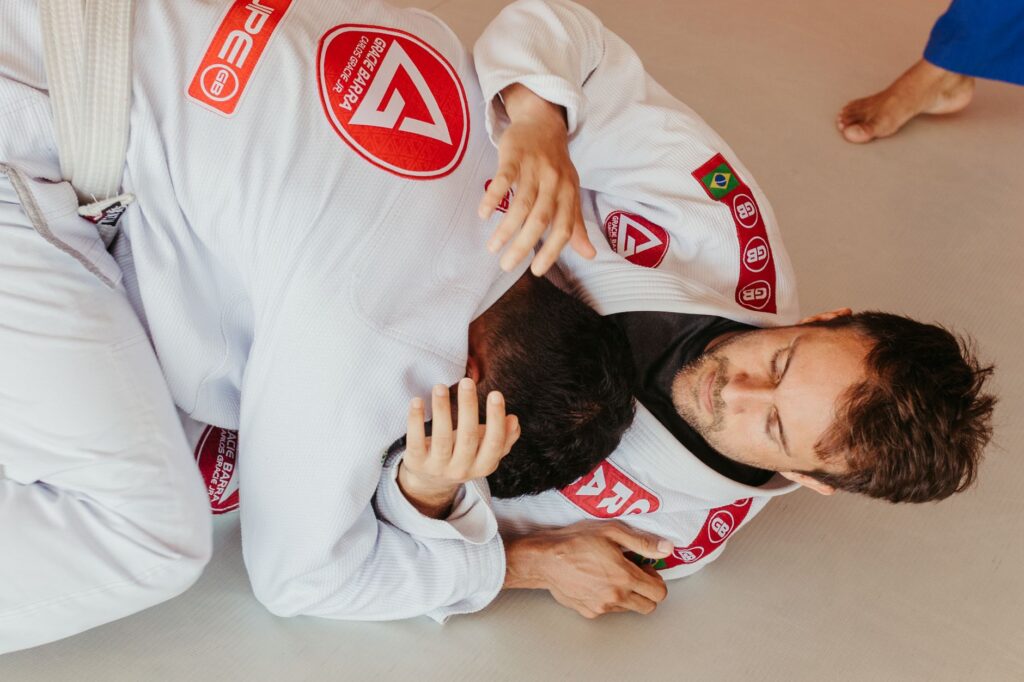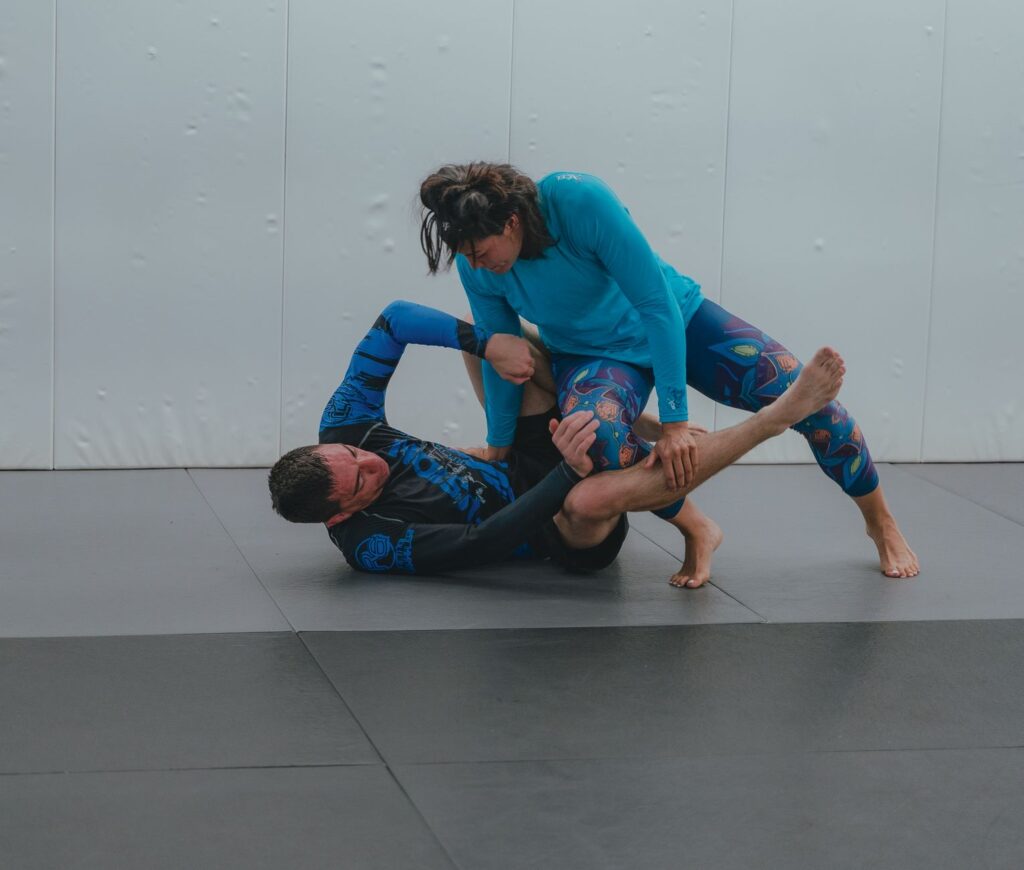
Quick answer: The two escapes that solve most side control problems are the frame-and-shrimp guard recovery and the underhook turn to the knees. Which one is available depends on the top player’s far arm: crossface committed means underhook chances; underhook denied means frame and shrimp. The window matters more than the technique — escapes launched while the pin is still settling succeed several times more often than escapes from a fully set position.
This guide is educational. Drill with qualified coaching, apply pressure gradually, tap early, and release immediately when a partner taps or cannot communicate clearly.
| Detail | Side control escapes summary |
|---|---|
| Primary escapes | Frame-and-shrimp to guard, underhook to knees, bridge-through reversal |
| Survival posture | Frames on neck and hip, inside elbow tight, never flat and empty-handed |
| Best timing | The moment the pass lands, before the crossface sets |
| Biggest danger | Pushing up with straight arms — americana and arm-triangle territory |
What you’re actually escaping
Side control pins you by controlling two things: your head (the crossface turns your face away, taking your spine with it) and your near elbow (blocked so your frames cannot rebuild). Every escape is a fight to reclaim one of those. That is why flailing legs and bench-pressing accomplish nothing — the position is being held at your head and elbow, not your chest.
Survival comes first: forearm frame across their neck or shoulder line, other hand framing at the hip, inside elbow tight so it cannot be mined for attacks. From that structure you can wait safely — Priit Mihkelson has built much of his defensive teaching on exactly this idea — and pick your escape window instead of panicking into one.
Free every Tuesday
The Grappler Brief
The week’s biggest stories from BJJ, judo, wrestling, and submission grappling—curated for people who train.
Sent out weekly.Opt out anytime.
The frame-and-shrimp guard recovery
- Frame — forearm across the neck/shoulder, second hand at their hip. Frames are posts to move your body away from, not arms to push with.
- Bridge — a sharp hip lift to make them carry weight on their own base for a beat.
- Shrimp on the way down — hips escape sideways in the space the bridge bought, not after it ends.
- Knee in — near knee slides into the gap to the inside position; recover half guard or full guard in stages.
The most common failure is shrimping without the bridge — sliding your shoulders along the mat while their full weight stays on you. Bridge first, always, even a small one.
The underhook escape to the knees
When the top player raises their far arm to attack or transition, swim your inside arm under it, turn onto your side, and drive up to your knees into a wrestling dogfight. From there you can attack a single leg, run the feet in a circle behind them, or complete the reversal. Two cautions: come up with your head on the correct side (inside, tight to their body), and never dive for the underhook while your neck is exposed — a lazy underhook entry with the head out is the classic D’Arce and anaconda feed.
Escaping the variations
- Kesa gatame (scarf hold): the bridge-through works here — trap their trailing arm so they cannot post, bridge over your own shoulder, and roll them across you. Against modified kesa with an underhook, work the hips free and recover guard instead.
- North-south: frames go under their hips or armpits; spin on your upper back to re-align your legs with their body, or shrimp out the side door. Guard the neck — the north-south choke lives exactly where careless arms go.
- Knee-on-belly: its own problem with its own timing — covered in the knee-on-belly escapes guide.
Common mistakes
| Mistake | Why it fails | Better cue |
|---|---|---|
| Bench-pressing them off you | Extended arms feed americanas, arm triangles, and armbars | Frames carry structure, elbows stay bent and tight |
| Shrimping without bridging | You drag your own shoulders under their full weight | Bridge to unweight, shrimp in the space it buys |
| Turning away to your knees | Face-down with them behind you is a back-take gift | Turn toward them with the underhook, head tight |
| Escaping late, after the pin sets | A settled crossface has answers for everything | The escape starts the moment the pass lands — or earlier |
How top players counter your escapes
- They re-crossface during your shrimp, flattening you before the knee arrives — which is why the frames must keep working mid-escape.
- They whizzer the underhook and stretch you back down, or spin behind as you rise — keep the head tight and the base under you as you come up.
- They switch positions — kesa, north-south, back to classic — faster than you re-frame. The counter to a mobile top game is escaping earlier, not framing harder.
Scoring and competition context
Escaping side control scores nothing directly under the IBJJF-style points system — but it denies the advance to mount (4) or knee-on-belly (2) and erases the top player’s platform. Recovering guard resets the match to neutral, which against a passer who already banked 3 points is the start of getting them back. Rules vary by event; the BJJ rules and scoring guide covers the framework.
Safety and training notes
- Crossface pressure on the jaw and neck accumulates during escape drilling; agree on intensity, and treat neck pain as a full stop.
- Frames collapse suddenly when strength gives out — tap to pressure or reset rather than letting a frame fold under someone’s full weight.
- Bridge-throughs land both bodies in a heap; clear space on crowded mats before drilling them.
Stop if a partner reports unusual pain, numbness, or trouble breathing beyond normal positional discomfort. This article does not diagnose injuries; seek qualified medical care for concerning or persistent symptoms.
Examples to study
- Priit Mihkelson’s frame structure. Study where his students’ elbows live under side control and how long they can safely stay there — the escape looks slow because the survival is complete.
- Wrestlers who cross-train BJJ. Watch how instinctively they hit the underhook and turn to the knees — the dogfight escape is imported wrestling, and it shows.
Related GrapplerHQ guides
Sources and further reading
- IBJJF Books and Videos — current rules materials
- ADCC Rules and Regulations
- Injury prevalence among BJJ practitioners — PubMed
FAQ
What is the first side control escape to learn?
The frame-and-shrimp guard recovery. It teaches frames, bridging, and hip movement — the mechanics every other escape in BJJ reuses.
Why can’t I escape side control against bigger opponents?
Usually timing, not size. Heavy opponents are hardest once settled, so the escape has to start before the crossface sets. If you are already flat with no frames, rebuild structure first — escaping from nothing fails at any size.
Should I turn toward or away from my opponent?
Toward them, with frames or an underhook. Turning away exposes your back — the only common exception is a deliberate, tight turtle entry, which is its own skill with its own risks.
Do I score points for escaping side control?
No — escapes score nothing directly. Their value is denying the mount and knee-on-belly advances and resetting to a position where you can score.
Bottom line
Side control escapes are won at the head and the near elbow, in the first seconds after the pass lands. Frame early, bridge before you shrimp, take the underhook when the far arm leaves, and never push up with straight arms. If you are already flat under a settled pin, survive first — a patient rebuilt frame beats a desperate explosion every time.