Makhachev’s latest win has reopened an old MMA argument: is a champion’s job simply to win, or does he owe us a show?
Islam Makhachev just won again.
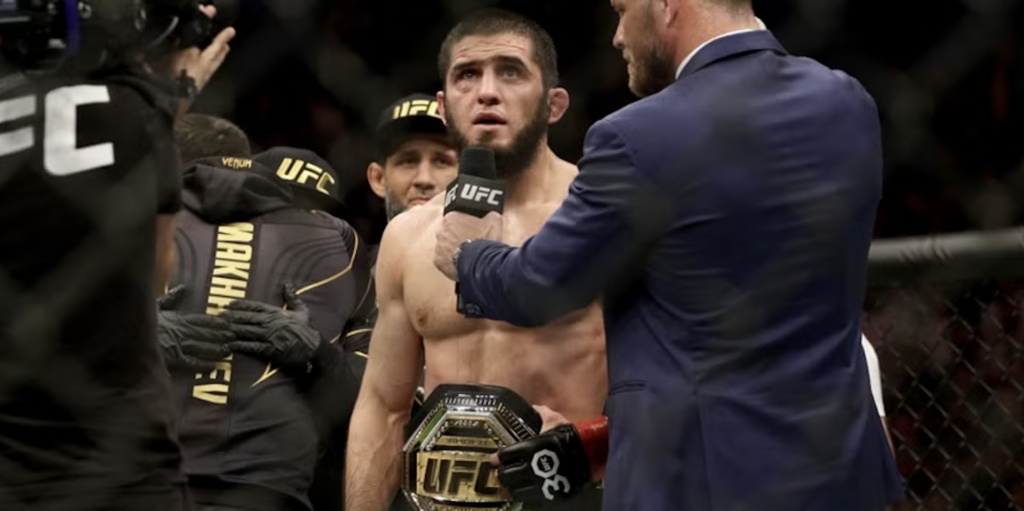
He retained the welterweight title against Ian Machado Garry, moved to 29–1 and recorded his 17th straight UFC victory. The judges gave him a unanimous decision. Many fans are making a claim for GOAT status. Others are less impressed.
That reaction gets to a problem MMA has never quite resolved. Profesional Fighting is a sport, but sport is also entertainment. We want to see the best athletes using the best techniques to win. We would just prefer they do it in a way that makes us jump off the couch.
Free every Tuesday
The Grappler Brief
The week’s biggest stories from BJJ, judo, wrestling, and submission grappling—curated for people who train.
Sent out weekly.Opt out anytime.
People who do not watch MMA tend to imagine its audience as a collection of beer-drinking meatheads in “Just Bleed” shirts, howling for violence. Anyone who has spent time watching or training martial arts at a decent level knows how shallow that stereotype is. The violence is obvious, but underneath it are timing, technique, leverage, deception and an absurd amount of problem-solving under pressure.
Still, the meatheads have a point about one thing: most people watch fights to be entertained.
In the early years of the UFC, that part took care of itself. The sport was raw and unpredictable, full of strange matchups between fighters with completely different ideas about how a fight should work. Wrestler versus kickboxer. Karate stylist versus jiu-jitsu specialist. Sumo wrestler versus savate fighter. It was partly a competition and partly a live experiment asking which martial art actually worked.
More than 30 years later, the experiment has produced an answer. No single martial art wins at this level, on this stage. Elite fighters need to strike, wrestle, pin and move between those phases without leaving obvious gaps. The overall skill level has risen, the weaknesses have become harder to find and the athletes are far more professional.
They have also become more efficient. Efficiency, unfortunately, is not always exciting.
How Dagestan found the answer
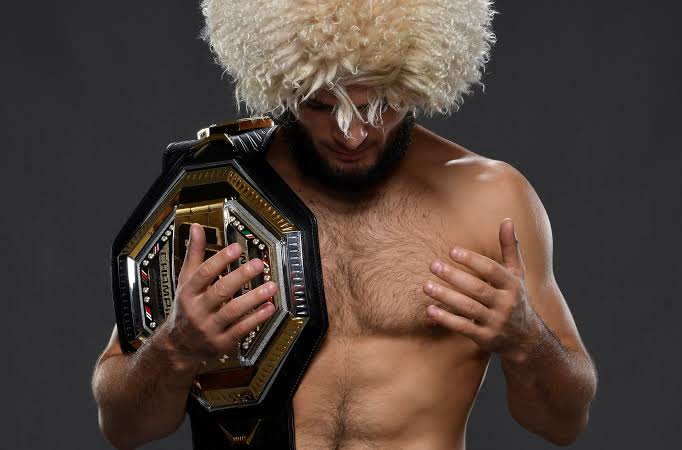
No place has come to represent this evolution more than Dagestan. The wider Caucasus has produced a remarkable number of elite combat athletes, but Khabib Nurmagomedov and Islam Makhachev are the two names most closely associated with its success in the UFC.
After UFC 330, they held a combined professional record of 58–1. Khabib retired at 29–0. Islam moved to 29–1 and, with his 17th consecutive UFC victory, pushed an already ridiculous run even further.
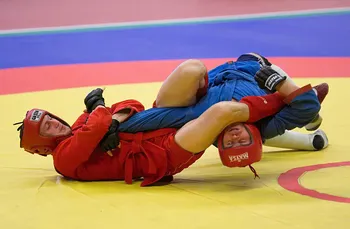
That success is not the result of some mystical “mountain toughness,” as it is sometimes presented. Wrestling is deeply embedded in Dagestan’s sporting culture, and the region’s grappling traditions existed long before anyone had heard of the Octagon. Sambo, formalized in the Soviet Union, blended wrestling, judo, self-defence and regional folk styles into a system that translated remarkably well to mixed martial arts. Combat sambo added striking to the equation.
For Khabib and Islam, this was not a base they picked up after deciding to become MMA fighters. It was an education that began in childhood. Under Abdulmanap Nurmagomedov, Khabib’s father and Islam’s early coach, wrestling, judo and sambo were treated as connected parts of the same puzzle.
Plenty of great wrestlers have entered MMA. What made this group different was how completely they adapted wrestling to the cage. They learned how to turn the fence into a weapon, chain takedowns together and make standing up the start of another problem rather than the end of one.
We all know what it looks like by now: Close the distance. Force the opponent backwards. Connect the hands. Attack the legs and hips. Pin the lower body. Make the other fighter carry your weight while taking away one option at a time. Smothering, exhausting and brutally effective.
And it’s not like they can’t strike. Makhachev has provided plenty of evidence of that—but the striking often serves the larger system. A punch forces a reaction. The reaction opens a takedown. The takedown leads to control, and the control drains enough energy that the opponent’s choices become narrower with every minute.
The method is built to remove chaos. The trouble is that chaos is often what the audience came to see.
Control is not the same as offence
That brings us back to Makhachev’s fight with Machado Garry.
Islam won by unanimous decision, controlling long stretches through pressure, takedowns and positioning. Garry landed meaningful strikes, however, and Islam appeared to carry more visible damage by the end. For some viewers, the final image felt at odds with the result: the man who looked more beaten up was leaving with the belt.
The usual arguments followed. Did the right man win? Should control count when it produces little damage? Even if the decision was correct, do we have to pretend we enjoyed it?
The scoring rules are more complicated than “control wins.” The Association of Boxing Commissions’ latest guidance says damage is the most important factor in a round, whether it comes through striking or grappling. A takedown that leads to ground-and-pound or a serious submission threat is effective offence. Simply holding position is not meant to be enough on its own.
There is a catch. UFC events are regulated by local athletic commissions, whose published criteria can differ. Pennsylvania, where UFC 330 took place, lists effective striking first, followed by effective grappling, fighting-area control and aggression or defence. There is no single standard following the UFC around the world.
Fights are also scored round by round. Judges do not look at both men after 25 minutes and decide who appears to have had a worse evening. Cuts and swelling matter, but they are imperfect evidence. The face at the post-fight interview is not a scorecard.
Fans are not wrong to be frustrated, but this is not really grappling versus striking. It is productive offence versus control that prevents offence from happening. The skill required to earn and hold a position is real. So is the difference between using that position to fight and using it to run down the clock.
What does a champion owe us?
Makhachev’s first responsibility is to win. That is the uncomfortable truth behind the whole debate.
He does not write the judging criteria, and he is under no obligation to create unnecessary danger because the audience wants a firefight. Asking him to abandon an advantage that keeps winning fights is like asking a football team to stop running the ball because passing looks better on television.
Winning and entertaining are not mutually exclusive. Khabib and Islam have both produced punishing finishes. But excitement requires openness, and openness creates risk.
Fighters such as Dustin Poirier and Max Holloway became fan favourites because they were willing to live in that risk. Their fights are unforgettable partly because they give the other guy a vote. That same quality makes a nearly flawless record less likely.
The dominant champion tries to eliminate uncertainty. The audience pays to experience it. That conflict is built into professional fighting.
It is tempting to blame Dagestani fighters for solving MMA too well, but the answer is not to shame champions into fighting badly. It is clearer judging and a meaningful distinction between control that creates offence and control that simply kills time.
Fans may have to give a little too. Not every great performance will be a great spectacle. Sometimes greatness is a walk-off knockout. Sometimes it is making an elite opponent look as though he has no good choices for 25 minutes.
We are allowed to call a fight boring. Entertainment is why a professional promotion has an audience in the first place. But “boring” and “undeserved” are not the same argument.
So, are we not entertained?
Sometimes, honestly, no.
The problem with Dagestani domination is not that it has broken MMA. It has exposed a contradiction at the heart of the sport. We ask fighters to pursue victory with total discipline, then resent them when that discipline removes the danger and disorder we paid to see.
Makhachev’s job is to keep winning. The judges’ job is to reward effective fighting rather than empty control. The UFC’s job is to make excellence and entertainment overlap as often as possible.
The rest is up to us: does mastery still count when it does not make a very good highlight reel?