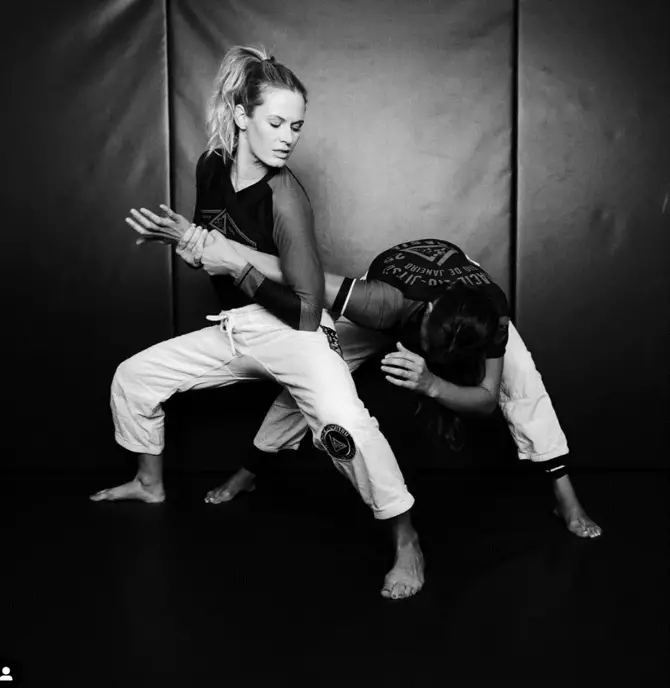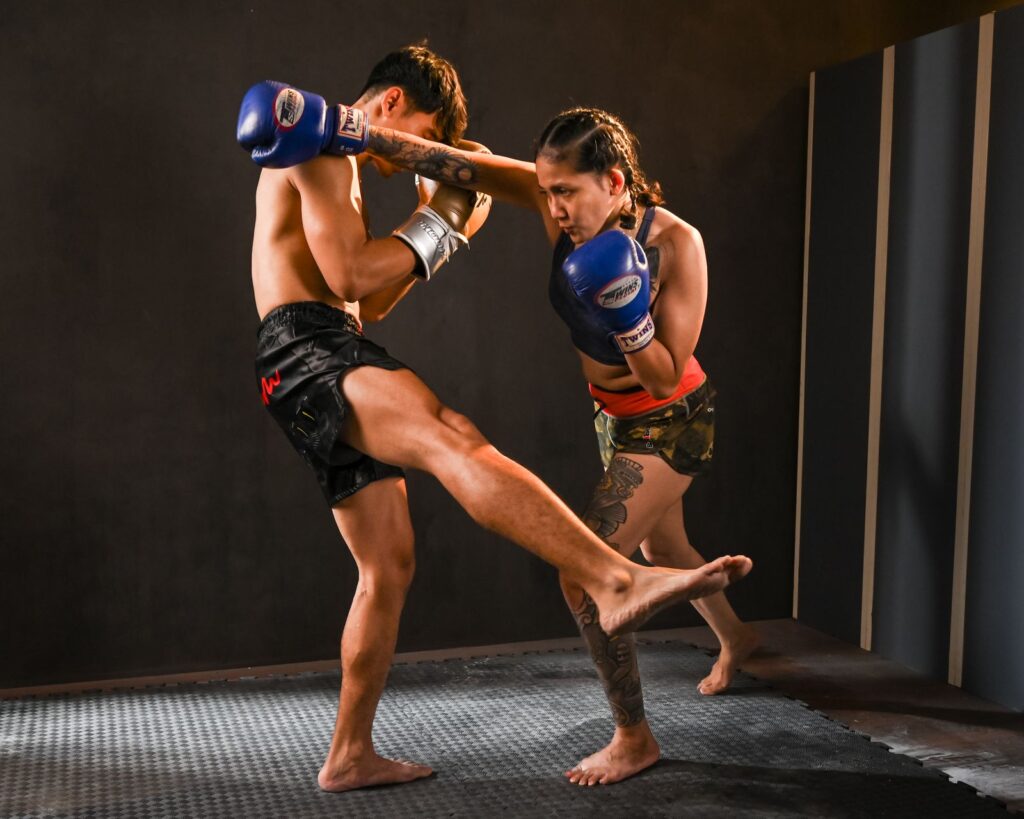
Quick answer: BJJ and Muay Thai are both serious combat sports, but they reward almost entirely different problems. Muay Thai is a standing striking art — punches, kicks, elbows and knees, plus clinch work — and matches are usually won by knockout or by judges scoring rounds. BJJ is a ground grappling art built on control, sweeps and submissions, and matches are usually won by submission or positional points. If you want striking at range and a strong stand-up game, Muay Thai is the usual fit. If you want ground control, submissions and comfort on the mat, BJJ is. For MMA, most fighters build a base in one and patch the gaps with the other, so treating it as a strict either/or misses the point.
Last updated: November 11, 2026 (Pacific). Sources checked November 11, 2026.
This guide is educational and not medical advice. Training carries real injury risk in both arts. If you have an injury, condition, or concerns about head contact, speak with a qualified healthcare professional and your coach before starting or changing any training.
The reason people stack BJJ vs Muay Thai so often is that the two arts sit on opposite sides of the standing-versus-ground divide. They feel different on day one, get judged differently in competition, and usually produce different injury patterns. This guide is built as a decision aid: the fair comparison is not which art is “better” but which one matches your goal, gym access, and appetite for contact. Reality varies by school, coach and division, so the words usually and often do real work here.
Free every Tuesday
The Grappler Brief
The week’s biggest stories from BJJ, judo, wrestling, and submission grappling—curated for people who train.
Sent out weekly.Opt out anytime.
BJJ vs Muay Thai at a glance
| Question | Muay Thai | BJJ |
|---|---|---|
| Art family | Striking, with a clinch phase | Grappling, mostly on the ground |
| Where the exchange happens | Standing (boxing range, kicking range, clinch) | Usually on the mat (guard, top positions, back) |
| Win condition | Knockout, TKO, or judges’ decision | Submission, or points and advantages under the event’s rules |
| Scoring logic | 10-point-must per round; judges reward damage, aggression, dominance | Positional points (IBJJF-style: e.g., guard pass, sweep, mount, back) plus advantages |
| Typical class content | Skip rope, shadowboxing, pads, heavy bag, clinch drills, sparring | Warm-up, technique, drilling, positional rounds, live rolling |
| Main conditioning demand | Explosive output, shin and core conditioning, work capacity | Isometric control, grip endurance, breathing under pressure |
| Common beginner hurdle | Getting comfortable taking full contact at various intensities | Learning the positional map and not panicking on the bottom |
| Best-known transferable skill | Striking range, timing, clinch offense/defense | Ground survival, positional control, submissions |
BJJ vs Muay Thai: the core difference
The core difference is range and rules. Muay Thai is built on standing striking: fists, elbows, knees and shins, plus a clinch where fighters trade knees and sweeps. BJJ is built on the ground: guard, passes, sweeps, top control and submissions, with takedowns as the bridge from standing rather than the main event.
Those rules create different habits. A Muay Thai fighter learns distance management, timing, power generation and how to read incoming strikes. A BJJ athlete learns to control the body, escape bad positions, and finish submissions from anywhere. That split shows up the moment each group starts the other sport: a striker who pulls guard often has no idea what happens once the exchange hits the mat, and a grappler without takedown experience may struggle to close distance safely against leg kicks.
What each art teaches
Muay Thai: striking range and the clinch
Muay Thai is often called the art of eight limbs because scoring techniques use fists, elbows, knees and legs. In practice this means training the long distance (kicks and teeps), the mid-range (punches and checking kicks), and the clinch, where knees and sweeps do the damage.
Training is usually heavy on repetition: skipping rope, shadowboxing, Thai pads, the heavy bag, clinch drills and sparring in rounds. The IFMA amateur-rules document sets seniors at three three-minute rounds in international amateur competition, while professional WBC MuayThai championship bouts are five three-minute rounds. Gyms differ, but the round-based rhythm — short bursts, rest, repeat — is consistent across the sport.
The clinch is where Muay Thai is most different from boxing and most like a wrestling problem: fighters lock up behind the opponent’s neck, fight for the plum (the double-collar tie), and throw knees and sweeps. Judo- and wrestling-style throws are prohibited under both the rules referenced here; sweeps and dumps from the clinch are part of the game. This is real contact, which is exactly why beginners need a school that controls sparring intensity.
BJJ: ground positions and submissions
BJJ is organized around positions and submissions. Beginners spend months learning where they are and how to survive: closing the guard, escaping mount and side control, and recognizing submission dangers. The philosophy is that you can win from the bottom as well as the top, and that a smaller grappler can control a larger one with technique, leverage and good timing.
A typical BJJ class has a technique portion, drilling, then positional or open rolling. Takedowns exist but are a smaller slice of most hobbyist class time than in the movies. Competition rules are not universal: IBJJF-style points, legal techniques, and divisions vary by organization, belt, age, and gi/no-gi format. Our IBJJF rules guide and BJJ points system walk through the common baseline and where it changes.
One trait that surprises many newcomers: in BJJ, being on your back is not failure. The guard is an attacking position. That is the opposite of most striking sports and even of wrestling, and it is a large part of why the positional thinking feels so foreign at first.
How training feels
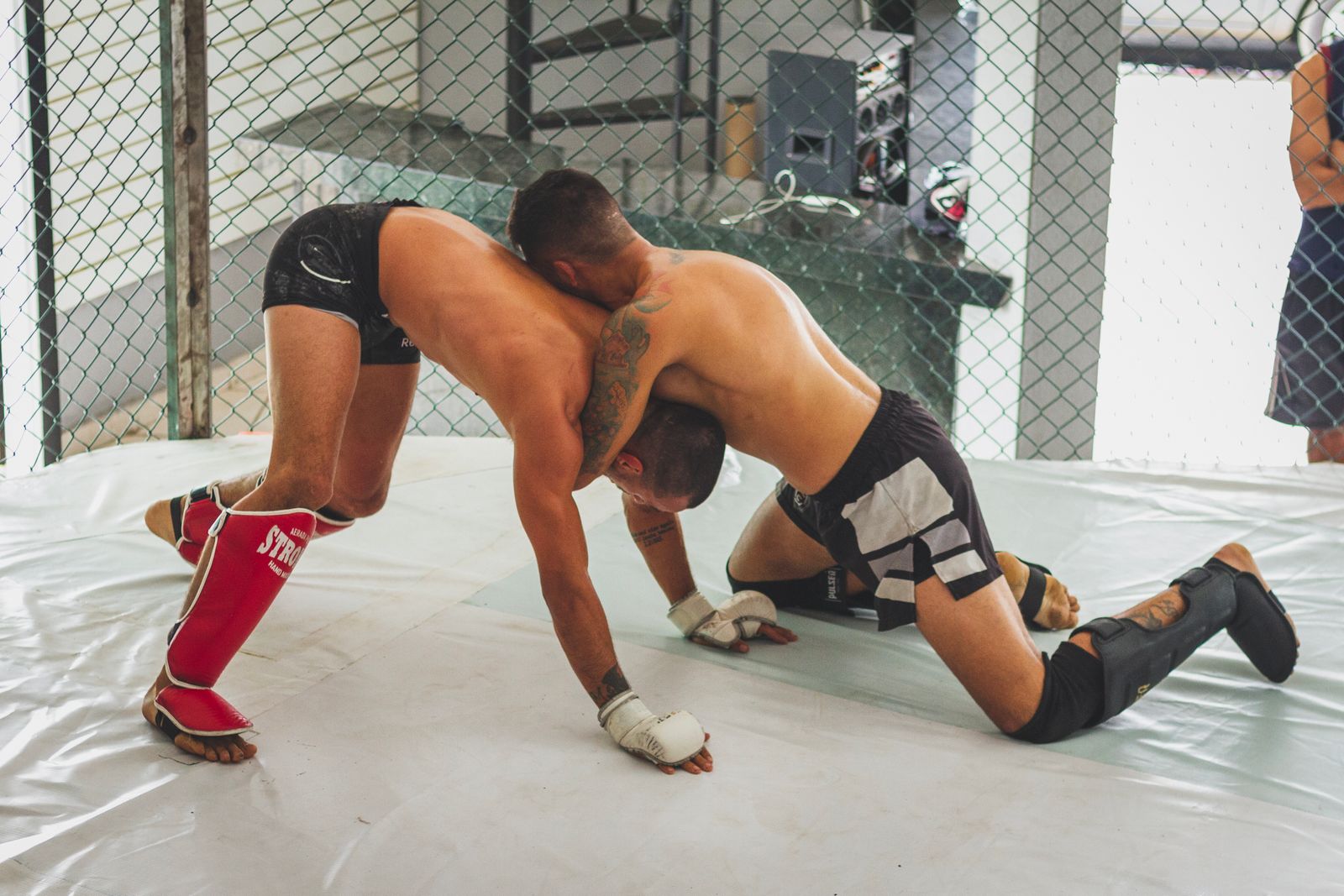
A Muay Thai class usually runs on a timer: rounds of pads, bag and sparring with short breaks. Expect your legs and shoulders to feel full after the first session, and expect shin conditioning to be a gradual process — always under a coach’s guidance and never forced to the point of injury. Head contact is part of the sport; good gyms stage sparring intensity, and beginners usually work with protective gear and lighter rounds before anything hard.
A BJJ class is slower to start and faster to feel technical. Rolling is genuinely hard cardio, but the effort is different: it rewards calm breathing, levering, and patience rather than explosive output. BJJ has a real culture around tap-fast and let-go-fast, and a good school will match you with responsible partners early.
Strikers who hate getting hit will usually find Muay Thai harder; grapplers who hate being crushed on top will usually find BJJ harder. Progress is more about consistency than talent.
Rules and competition differences
| Rule area | Muay Thai | BJJ |
|---|---|---|
| Strikes | Core of the sport (punches, kicks, elbows, knees) | Not part of sport BJJ |
| Clinching | Central; knees, sweeps and dumps from the clinch | Leads to takedowns, guards and grips; clinch is a means, not the main event |
| Throws and takedowns | Judo/wrestling-style throws are fouls; sweeps allowed | Allowed and scored (e.g., takedowns and sweeps worth points under common IBJJF-style scoring) |
| Ground phase | No prolonged ground fighting; the fight resumes standing | Central; matches are decided on the ground |
| Submissions | None | Chokes and joint locks; legality varies by belt, age, and format |
| Round structure | Usually 3×3-minute amateur (senior) or 5×3-minute professional (male), with rest | No rounds in most formats; a single regulation match continues until submission or time is up |
| How a winner is decided | KO/TKO, judges’ decision, retirement, RSC, disqualification | Submission, points/advantages, referee decision, or disqualification |
Under the IFMA amateur rules checked for this guide, head strikes are prohibited for the youngest juniors, and protective gear is standard. The WBC MuayThai professional rules permit head strikes and set championship distance at five rounds for most professional male bouts. BJJ rules have the opposite center of gravity: no striking at all, and the entire contest depends on the ground.
BJJ rule details change meaningfully by belt and format. For example, foot locks and reaping restrictions are not the same at white belt as they are at brown or black, and gi versus no-gi changes the grip game. Our gi vs no-gi guide covers that split, and the IBJJF rules guide lists what to check before competing. In both sports, the rulebook matters less than the event page you registered for — tournaments can clarify or override the baseline.
Which is better for beginners?
There is no universal winner, and any article that says “BJJ is easier” or “Muay Thai is gentler” is overselling a specific gym’s culture. Roughly, though:
- Choose Muay Thai first if you want to learn to fight standing, you enjoy pad work and technique repetition, and you are comfortable with the reality of full-contact training done safely. The conditioning demand is real but rewarding.
- Choose BJJ first if you like puzzles and position-based problem solving, you want ground survival and submission skills, and you prefer an environment where beginner training usually involves less impact to the head.
- Choose the school, not the art, if one gym near you has great coaches and a safe sparring culture and the other does not. For most adult beginners, coaching quality and schedule fit predict whether you will stay more than the art label does.
Neither art expects you to be athletic on day one: BJJ rewards the patient beginner, Muay Thai the one willing to work rounds. Both have beginner-friendly curriculums, so the honest answer is “try both for a month and pick the class you look forward to.” Our BJJ-for-beginners guide explains the BJJ side of that onboarding in detail.
Which is better for self-defense?
This is the question that most tempts writers into a definitive answer, and it deserves more honesty than that. Muay Thai gives you striking range, the clinch, and tools to manage someone standing up. BJJ gives you ground control and submissions if the fight reaches the mat. That sounds complementary, and it is — but sport rules are not the same as a real-world encounter.
The practical caveats are identical to GrapplerHQ’s position in our BJJ vs wrestling comparison: strikes change everything, weapons and multiple attackers are not trained in most sport curriculums, hard surfaces matter, and legal consequences exist. A realistic self-defense toolkit usually includes escape, situational awareness, and knowing when fighting is the wrong answer — not just one sport’s techniques.
If you forced an answer, Muay Thai helps more for threats that stay standing and at distance, and BJJ helps more if the confrontation goes to the ground. Most serious self-defense-minded athletes train at least a little of both, because a person who can hurt you at distance one second can be on top of you the next.
Which is better for MMA?
For MMA, the question is not which single art is better — it is which gap you should fill. Muay Thai is one of the standard striking bases because it covers range, clinch and stand-up self-defense; BJJ is one of the standard ground bases because surviving, sweeping and submitting on the mat is central to the sport. Modern MMA training blends striking, wrestling, and ground work, and top matchups are usually decided by transitions between those phases.
If you are choosing your first base before MMA, the better starter depends on your weaknesses. A grappler usually needs striking defense and comfort getting hit; a striker usually needs ground survival and submission defense. Either base is legitimate, and the fastest path is usually to train the base that annoys you more rather than the one that feels natural.
For more on the striking-versus-grappling structure inside a weekly plan, our BJJ and striking split guide lays out schedule options by goal.
Can you train both?
Yes, and a lot of people do. The practical constraints are time, recovery, and coaching quality, not any rule that the arts conflict. Two or three sessions of each a week is workable for many hobbyists; the main mistake is stacking hard sparring the night before a hard rolling session. Because the arts use different energy systems and body parts, some athletes recover better by alternating than by doubling down on one art.
If the goal is genuine well-roundedness (MMA, self-defense breadth, or just curiosity), training both is usually the strongest answer. Start with whichever you enjoy more so you will actually go, then add the second with a lighter schedule. Cross-training comparisons like our catch wrestling vs BJJ guide show the same pattern on the grappling side: adjacent arts fill each other’s gaps rather than cancel out.
Injuries and safety
Both sports carry real injury risk, and neither is safer in the absolute; risk profiles differ, and much depends on school culture, partner selection and effort level. Notes from the research actually checked:
| What the source studied | Headline finding |
|---|---|
| US emergency-department martial-arts injuries, 2009–2019 (NEISS) | Strains/sprains were the most common diagnosis; lower extremities were injured more than upper; the knee was the single most common location. |
| BJJ, judo and MMA emergency-department injuries, 2008–2015 (NEISS) | Strains and sprains were the most common BJJ diagnosis, and the majority of BJJ injuries occurred during non-competitive training. |
| Striker training survey (Muay Thai/K-1/kickboxing), Switzerland | Most respondents reported at least one training injury; the leg was the most commonly injured area in training, and head injuries were the most common in competition. |
- Muay Thai: the distinctive risk is head contact and cuts from elbows and knees in competition. In training, leg injuries and shin/cut niggles are the typical complaints. Reducing risk means controlled sparring, good gear, and honest communication with your coach about your level.
- BJJ: the distinctive risks are joint and finger injuries, neck and disc complaints, and the occasional serious submission injury. Most beginners’ injuries happen in training rather than competition, and a responsible partner culture keeps them manageable.
- For both: warm up properly, tap early (in BJJ) or pull off pressure (in striking sparring), and treat “toughing it out” as a red flag rather than a virtue. If an injury persists or a concern involves the head or neck, see a professional before returning to hard training.
Which one should I pick? A quick decision table
| Your main goal | Usually start with | Why |
|---|---|---|
| Stand-up striking, kickboxing, or pure fitness with striking flavor | Muay Thai | It develops range, timing and clinch under full-contact rules |
| Ground game, submissions, or comfort on the mat | BJJ | It develops positional control and submissions from the ground |
| MMA as a first base | Either, based on your weakness | Strikers usually need ground survival; grapplers usually need standing defense |
| Self-defense breadth | Both (start with the one you’ll attend) | Striking covers range; grappling covers the ground |
| General health and staying consistent | The class you enjoy | Consistency beats an optimal art on paper |
BJJ vs Muay Thai FAQs
Is Muay Thai or BJJ better for self-defense?
It depends on the scenario. For a threat that stays standing and at distance, Muay Thai helps more. If the situation reaches the ground, BJJ helps more. Neither teaches weapons, multiple-attacker or escape skills, and the practical answer for most people is to train both at least a little, or to treat self-defense as its own skill.
Can you train BJJ and Muay Thai in the same week?
Yes. Two sessions of each is a common hobbyist split. The main risk is scheduling hard striking sparring and hard rolling too close together and letting fatigue cause sloppy technique or injury.
Which is harder, Muay Thai or BJJ?
They are hard in different ways. Muay Thai demands conditioning and comfort taking contact; BJJ demands positional thinking, grip and breathing under sustained pressure. Which feels harder usually depends on personal comfort level.
Is Muay Thai just kickboxing?
No. Muay Thai adds the clinch, elbows, and significant knee work, and its professional rules use a judging philosophy that rewards damage, aggression and dominance per round. Kickboxing rulesets restrict or remove elbows and often the full clinch.
Do you need Muay Thai for BJJ?
No, sport BJJ does not include striking. For MMA or self-defense breadth, adding a striking art is useful, but it is not required for pure BJJ competition and training.
Bottom line
Muay Thai and BJJ solve different halves of the combat-sports problem: standing, full-contact striking with a clinch, versus ground control and submissions. Pick Muay Thai for stand-up range and clinch, BJJ for the ground and submissions, and train both if the goal is MMA, self-defense breadth, or simply a well-rounded body. The most reliable predictor of progress in either art is not which one is “better” — it is which gym you will actually walk into, with coaching you trust and partners who respect limits.
Sources
- IFMA amateur rules — Rules for International Competition or Tournaments (footer: Updated March 2016) — amateur Muay Thai rounds, scoring, gear, junior head-strike prohibitions and fouls; PDF inspected November 11, 2026.
- WBC MuayThai championship rules and regulations — professional Muay Thai rounds, ten-point-must scoring, clinch and foul rules; checked November 11, 2026.
- International Federation of Muaythai Associations — IOC-recognized amateur Muay Thai governance (context for amateur rules; see the rule PDF above).
- Bickley RJ, et al. An epidemiological study of martial arts injuries in patients presenting to US emergency rooms. Injury. 2023;54(12):111089. (PMID 37867023)
- Stephenson C, Rossheim ME. Brazilian Jiu Jitsu, Judo, and Mixed Martial Arts Injuries Presenting to United States Emergency Departments, 2008–2015. J Prim Prev. 2018;39(5):421-435. (PMID 30043324)
- Robbiani AI, Filippi A. From Fitness to Fight: Associations between training motivation and injury prevalence in Muay Thai, K-1 and Kickboxing. Swiss Dent J. 2025;135(2):62-71. (PMID 40662680)
- GrapplerHQ internal resources linked in the guide: BJJ points system, IBJJF rules guide, gi vs no-gi, BJJ for beginners, BJJ vs wrestling, catch wrestling vs BJJ, and BJJ and striking training split.