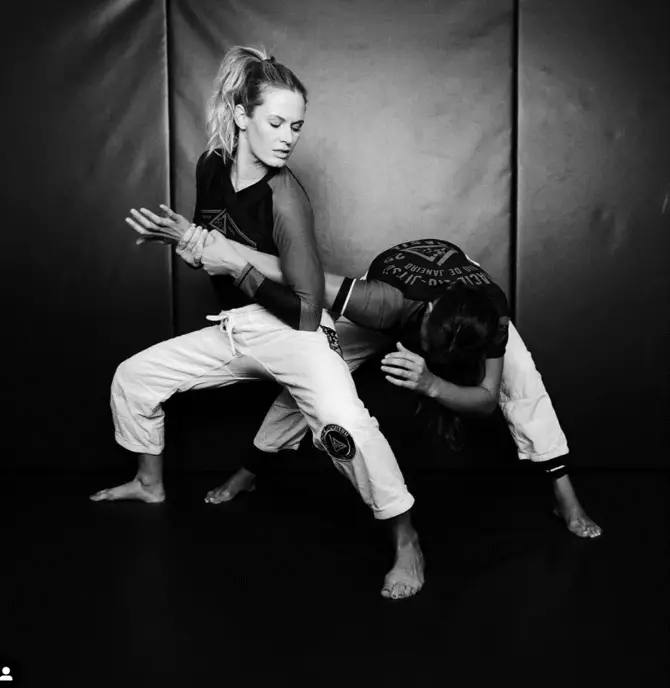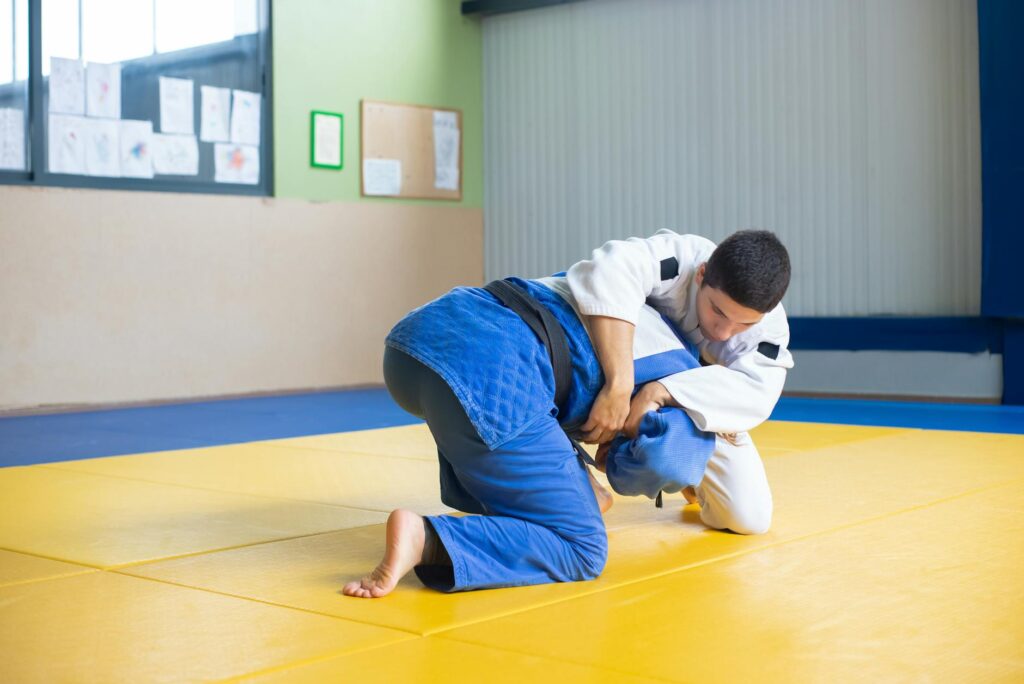
Quick answer: start your BJJ gi size with your height and weight, then adjust for body type, brand fit, and shrinkage. Most adult men land between A1 and A3. Many adult women can use either standard A sizing or women-specific F/W sizing, depending on the brand. If you are between two sizes, choose the smaller size for a tighter competition-style fit and the larger size for comfort, broad shoulders, or extra room after washing.
A BJJ gi size chart is a starting point, not a final answer. Gi brands cut their jackets, pants, sleeves, and lapels differently. Gold BJJ, Sanabul, Fuji, Hayabusa, 93Brand, Atos, and other brands may use similar labels while fitting different bodies. Use the tables below to find your likely size range, then check the exact brand chart before you buy.
| If you need… | Start here | Adjust if… |
|---|---|---|
| First adult men’s gi | A1, A2, or A3 based on height and weight | Use L for tall/lean builds or H when a brand offers husky/stocky cuts |
| Women’s gi | F/W sizing if the brand offers it | Standard A sizing can still work if the measurements fit better |
| Kids’ gi | Use the brand’s child/youth chart | Do not rely on adult A sizing for children |
| Competition gi | A fitted size with legal sleeve and pant length | Check the event rules before competing |
| Training-only gi | A comfortable size with room to move | A slightly roomier fit is fine if grips and sleeves are not excessive |
BJJ gi size chart for adult men
Adult men’s BJJ gi sizes usually run from A0 to A5, with A1, A2, and A3 covering many beginners. Some brands add L sizes for tall and lean athletes, H sizes for shorter or stockier athletes, and in-between sizes such as A1L, A2H, or A3L.
| Size | Typical height range | Typical weight range | Best starting point for |
|---|---|---|---|
| A0 | 5’0″ to 5’4″ / 152 to 163 cm | 100 to 140 lb / 45 to 64 kg | Smaller, lighter adult men |
| A1 | 5’4″ to 5’7″ / 163 to 170 cm | 130 to 160 lb / 59 to 73 kg | Shorter or lean adult men |
| A1L | 5’7″ to 5’10” / 170 to 178 cm | 130 to 160 lb / 59 to 73 kg | Tall, lean A1 builds |
| A2 | 5’7″ to 5’11” / 170 to 180 cm | 155 to 185 lb / 70 to 84 kg | Common medium adult build |
| A2L | 5’9″ to 6’1″ / 175 to 185 cm | 155 to 185 lb / 70 to 84 kg | Tall, lean A2 builds |
| A2H | 5’6″ to 5’10” / 168 to 178 cm | 185 to 220 lb / 84 to 100 kg | Shorter, stockier A2 builds |
| A3 | 5’10” to 6’2″ / 178 to 188 cm | 180 to 220 lb / 82 to 100 kg | Larger adult men |
| A3L | 6’0″ to 6’4″ / 183 to 193 cm | 180 to 220 lb / 82 to 100 kg | Tall A3 builds |
| A4 | 6’1″ to 6’4″ / 185 to 193 cm | 215 to 255 lb / 98 to 116 kg | Big and tall adult men |
| A5 | 6’2″+ / 188+ cm | 250+ lb / 113+ kg | Very large adult men |
These ranges are intentionally broad. If your weight points to A3 but your height points to A2, you are probably an A2H, A3, or a brand-specific in-between size. If your height points to A3 but your weight points to A2, look for A2L or a slimmer A3 cut.
Free every Tuesday
The Grappler Brief
The week’s biggest stories from BJJ, judo, wrestling, and submission grappling—curated for people who train.
Sent out weekly.Opt out anytime.
BJJ gi size chart for adult women
Women’s BJJ gi sizing varies more by brand. Some companies use F sizing, some use W sizing, and some recommend the same A sizes used for men. Women-specific cuts often change the jacket shape, sleeve length, hip room, and pant fit.
| Size | Typical height range | Typical weight range | Fit note |
|---|---|---|---|
| F0 / W0 | 4’10” to 5’1″ / 147 to 155 cm | 95 to 120 lb / 43 to 54 kg | Smallest adult women’s range |
| F1 / W1 | 5’1″ to 5’4″ / 155 to 163 cm | 115 to 145 lb / 52 to 66 kg | Common smaller women’s range |
| F2 / W2 | 5’3″ to 5’7″ / 160 to 170 cm | 140 to 170 lb / 64 to 77 kg | Common medium women’s range |
| F3 / W3 | 5’6″ to 5’10” / 168 to 178 cm | 165 to 195 lb / 75 to 88 kg | Taller or stronger builds |
| F4 / W4 | 5’9″+ / 175+ cm | 190+ lb / 86+ kg | Largest common women’s range |
If a women’s gi feels too narrow in the shoulders or too short in the sleeves, compare the nearest A size before buying. If a standard A-size gi feels boxy or too long in the pants, a women-specific cut may fit better.
Kids’ BJJ gi sizes
Kids’ gi sizing is not standardized enough for one universal chart. Brands may use M, C, Y, K, or numeric youth sizes. For children, use the brand’s exact height and weight chart, then leave a little room for growth without buying a gi so large that the sleeves, pants, or skirt become a grip problem.
| Child sizing rule | Why it matters |
|---|---|
| Start with height first | Sleeves and pants that are far too long can interfere with training. |
| Use current weight, not goal weight | A gi that is too baggy gives training partners extra grips. |
| Allow modest growth room | Kids grow quickly, but an oversized gi is frustrating on the mat. |
| Check the return policy | You may need to exchange after trying the jacket and pants together. |
How to measure yourself for a BJJ gi
Before choosing a gi, measure your body and compare it to the brand chart. Do not rely only on your T-shirt or jeans size.
- Height: stand barefoot against a wall.
- Weight: use your current walking weight or expected competition weight.
- Chest and shoulders: important if you have a broad upper body.
- Sleeve reach: compare shoulder-to-wrist length if you often have sleeve issues.
- Waist and inseam: important for pants fit, especially if you are between sizes.
How should a BJJ gi fit?
A BJJ gi should feel close enough that your training partner does not have excessive fabric to grip, but loose enough that you can squat, bridge, frame, grip, and pummel without feeling restricted. The jacket should close comfortably over the torso. The sleeves should not feel like short cuffs after normal washing. The pants should stay tied during rounds and should not drag under your heels.
| Area | Good fit | Too small | Too large |
|---|---|---|---|
| Jacket body | Closes without pulling hard | Lapels barely overlap | Loose fabric bunches around the belt |
| Sleeves | Reach near the wrist after washing | Forearms exposed too much | Cover the hands or feel baggy |
| Pants | Stay up and allow squats | Restrict hips or knees | Drag, bunch, or create extra grips |
| Shoulders | Room to frame and reach | Pulls across the back | Jacket rotates or slides excessively |
For competition, fit rules are stricter than normal class training. The IBJJF rules page is the best official starting point before an IBJJF event. Local tournaments may use their own uniform checks, so always confirm with the organizer.
What to do if you are between sizes
Between-size decisions are where most gi sizing mistakes happen. Use your build and use case to choose.
| Your situation | Better choice | Reason |
|---|---|---|
| Tall and lean | Look for L sizing | It adds length without too much extra width. |
| Short and stocky | Look for H sizing or size up carefully | You need torso and shoulder room without extreme sleeve length. |
| Broad shoulders | Size up or choose a roomier brand | A tight jacket limits frames and grips. |
| Competition-focused | Choose the most fitted legal size | Less extra fabric means fewer easy grips. |
| Training comfort | Choose the more comfortable size | You will wear it often, wash it often, and move in it under pressure. |
| Unsure about shrinkage | Avoid the smallest possible size | Hot washing or drying can make a borderline gi too small. |
Do BJJ gis shrink?
Yes, many BJJ gis shrink, especially cotton gis washed warm or dried with heat. Pre-shrunk gis usually shrink less, but “pre-shrunk” does not mean “will never shrink.” If the gi already fits perfectly or slightly small, wash cold and hang dry. If it is a little large, controlled warm washing or short dryer cycles may help, but shrinking is hard to reverse.
If you need a dedicated shrinking process, use GrapplerHQ’s guide to how to shrink a gi. The safer move is still buying the right size first.
BJJ gi vs judo gi sizing
A judo gi is usually cut roomier than a BJJ gi because judo uses different gripping, throwing, and uniform conventions. A BJJ gi is usually slimmer, especially through the sleeves and body, because BJJ athletes spend more time defending grips and working on the ground. You can often wear a judo gi for casual BJJ class if your coach allows it, but it may not be ideal for BJJ competition.
For the full comparison, read GrapplerHQ’s judo gi vs BJJ gi guide. If you are choosing between the arts themselves, the updated Judo vs Jiu Jitsu comparison explains the training differences.
Brand sizing differences
Two A2 gis can fit differently. One brand may cut the jacket slim and the pants long. Another may use a roomier jacket with shorter sleeves. Product-led competitors often publish charts for only their own gi line, which is helpful for that brand but less useful when you are comparing across brands. That is why this page should be treated as a neutral sizing guide, not a replacement for the manufacturer’s chart.
- Slim cuts can feel great for competition but tight in the shoulders.
- Roomy cuts can feel comfortable but give opponents more fabric to grip.
- Lightweight gis may feel easier in hot rooms but can fit differently after washing.
- Heavy gis may feel durable but can be warmer and stiffer.
Quick recommendations by body type
| Body type | What to look for | What to avoid |
|---|---|---|
| Lean and tall | L sizes, longer sleeves and pants | Sizing up so much the body becomes baggy |
| Stocky or muscular | H sizes or roomier jacket cuts | Jackets that pull across the shoulders |
| Shorter and lighter | A0/A1 or smaller F/W sizes | Pants that drag or sleeves that cover the hands |
| Broad shoulders | Room in the back and chest | Slim cuts without checking shoulder mobility |
| Competition focused | Fitted but legal sleeves, pants, and jacket | Over-shrinking a gi into illegal or uncomfortable territory |
What beginners should buy first
Beginners should buy a durable, legal, basic white, blue, or black gi in the size that matches their current body. Do not overthink weave types or premium details for your first gi. You need something that fits, survives regular washing, and lets you train comfortably.
If you are brand new to training, pair this sizing guide with GrapplerHQ’s beginner BJJ techniques and concepts guide. Fit matters, but mat time matters more.
If you are buying a competition gi, also check GrapplerHQ’s BJJ weight classes guide so you understand how gi weigh-ins and division limits affect tournament planning.
If you are buying a gi for competition, fit is only part of the decision. GrapplerHQ’s IBJJF gi rules guide explains legal colors, measurements, belt rules, patches, and common inspection issues.
FAQWhat size BJJ gi should I get?
Use your height and weight to find the closest size range, then adjust for body type. Most adult men start between A1 and A3. Women should compare women-specific F/W sizing with standard A sizing when both are available.
Is A2 the most common BJJ gi size?
A2 is one of the most common adult men’s BJJ gi sizes because it covers many medium builds. It is not automatically the right size, though. Shorter, lighter athletes may need A1, while larger athletes may need A3 or an in-between cut.
Should a BJJ gi be tight or loose?
A BJJ gi should be fitted, not tight. You want enough room to move, frame, squat, and grip, but not so much extra fabric that your opponent gets easy grips.
Do BJJ gis shrink after washing?
Many BJJ gis shrink, especially with warm water or dryer heat. Pre-shrunk gis usually shrink less, but they can still change size. Wash cold and hang dry if you want to preserve the fit.
Can I use a judo gi for BJJ?
You can often use a judo gi for casual BJJ training if your coach allows it, but it may be too roomy for BJJ competition. For tournaments, check the exact uniform rules before competing.
What if I am between A2 and A3?
If you are between A2 and A3, choose based on your build. Tall and lean athletes should look for A2L. Shorter, stockier athletes may prefer A2H or a roomier A3. If the gi may shrink, avoid starting with a size that is already barely big enough.