Quick answer: there are three main competitive wrestling styles. Folkstyle (also called collegiate or scholastic) is the American style used in US high schools and colleges, and it rewards control and riding the opponent on the mat. Freestyle is an Olympic style that allows attacks on both the upper body and the legs and rewards big exposure moves. Greco-Roman is the other Olympic style and bans all holds below the waist, so it is fought entirely with upper-body throws. Freestyle and Greco-Roman are run internationally by United World Wrestling; folkstyle is run by the NCAA and NFHS. Beyond these three, “wrestling” also covers folk and traditional styles worldwide, sumo, and pro-wrestling entertainment.
Last updated: July 26, 2026. This guide explains the three main competitive wrestling styles — folkstyle, freestyle and Greco-Roman — how their rules and scoring differ, and where each is practised, plus a note on the other forms of wrestling around the world.
The three main wrestling styles compared
The quickest way to tell the styles apart is by three questions: who governs it, are leg attacks allowed, and what does the scoring reward.
| Folkstyle | Freestyle | Greco-Roman | |
|---|---|---|---|
| Also called | Collegiate, scholastic | — | — |
| Governed by | NCAA & NFHS (USA) | United World Wrestling | United World Wrestling |
| Where | US high schools & colleges | Olympics & worldwide | Olympics & worldwide |
| Leg attacks | Allowed | Allowed | Banned (no holds below waist) |
| Scoring emphasis | Control & riding time | Exposure & big moves | Upper-body throws |
| Units | Pounds | Kilograms | Kilograms |
| Women’s division | Yes (growing) | Yes | No (men only) |
Folkstyle wrestling
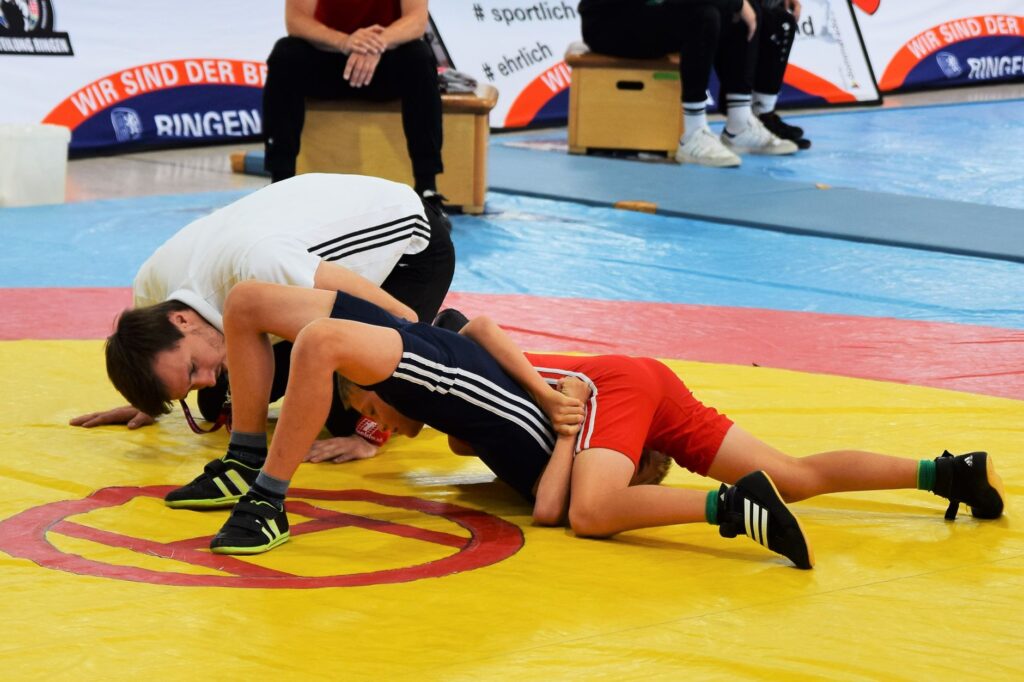
Folkstyle — known as collegiate wrestling at university and scholastic wrestling in high school — is the American style, and the one most US wrestlers grow up in. Its defining feature is an emphasis on control: after a takedown the match continues on the mat, where the top wrestler tries to ride and turn the opponent while the bottom wrestler works to escape or reverse.
Free every Tuesday
The Grappler Brief
The week’s biggest stories from BJJ, judo, wrestling, and submission grappling—curated for people who train.
Sent out weekly.Opt out anytime.
That focus on control shapes the scoring. Points come from takedowns, escapes, reversals and near-fall (turning the opponent toward their back), and time spent riding can matter. It is a grinding, positional style that rewards relentless top pressure, which is why folkstyle wrestlers so often transfer well to Brazilian jiu-jitsu and MMA.
Freestyle wrestling
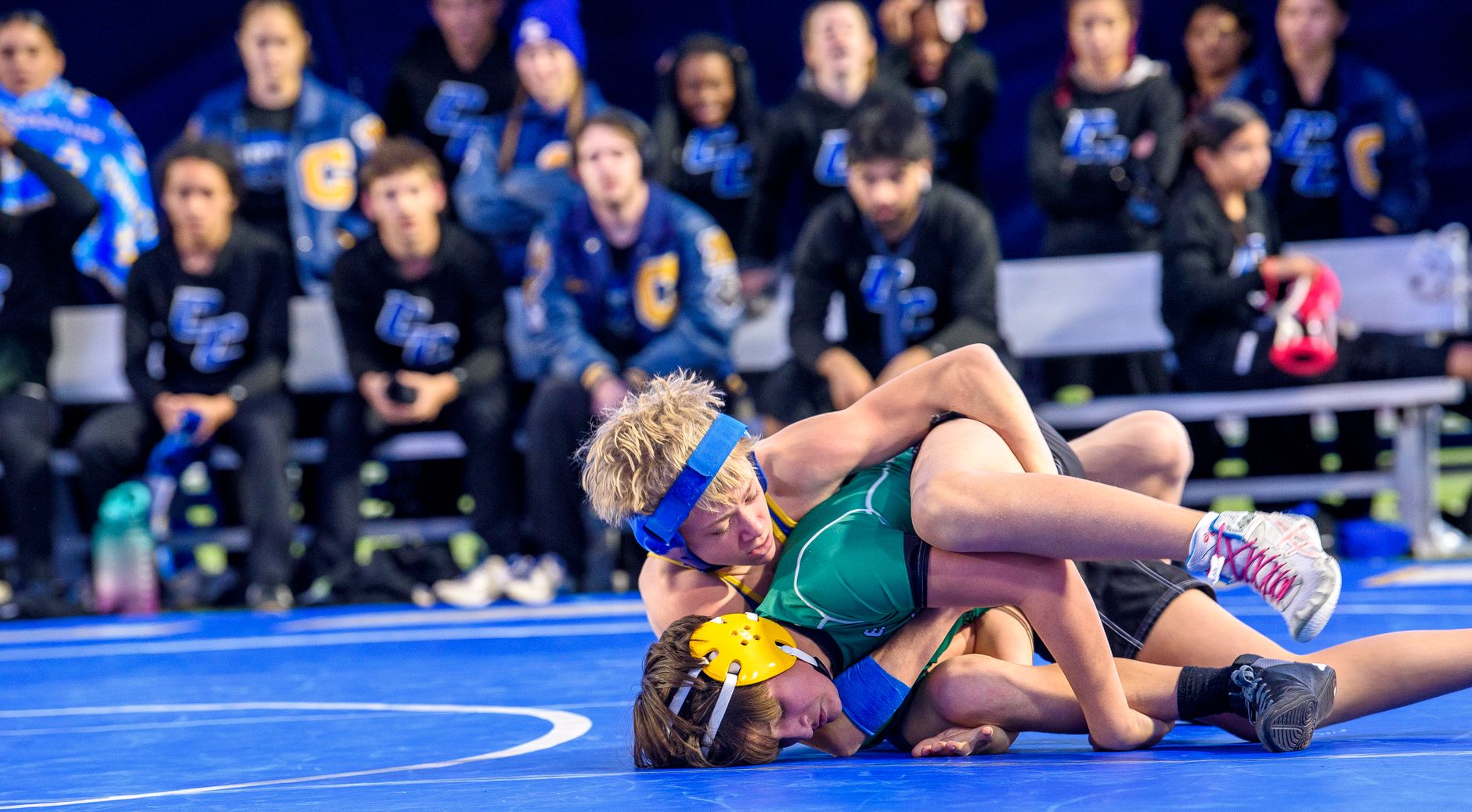
Freestyle is one of the two Olympic wrestling styles and the most widely practised internationally. Like folkstyle, it allows attacks on both the upper body and the legs, so the double-leg and single-leg are central. The difference is what it rewards: freestyle scoring prizes exposure — putting the opponent’s back to the mat, even briefly — so matches are faster and more throw-oriented than folkstyle, with less emphasis on grinding control.
There is no riding time in freestyle, and a wrestler who exposes the opponent’s back racks up points quickly. The gut wrench, from the par-terre (mat) position, is a signature scoring move.
Greco-Roman wrestling
Greco-Roman is the other Olympic style, and its one great rule sets it apart from everything else: no holds below the waist. You cannot attack the legs, and you cannot use your own legs to trip or hook. Everything happens above the belt.
That restriction makes Greco-Roman the most throw-heavy style in wrestling. With leg attacks off the table, wrestlers fight for upper-body control and finish with high-amplitude throws — the suplex and the gut wrench define the style. Greco-Roman is contested by men only at the Olympics and has no women’s division.
Other types of wrestling
The three competitive styles above are only part of the picture. Around the world, “wrestling” covers a wide range of forms:
- Folk and traditional styles — nearly every culture has one, from Turkish oil wrestling and Indian kushti to Mongolian bökh, Icelandic glima and Senegalese laamb.
- Sumo — the Japanese style, where you win by forcing the opponent out of the ring or to touch the ground with anything but the soles of the feet.
- Beach wrestling — a stand-up UWW discipline contested on sand, often used as an entry point to freestyle and Greco-Roman.
- Professional wrestling — the scripted entertainment form (WWE and others), which is a performance rather than a competitive sport.
When people search for “types of wrestling” they usually mean the three competitive styles, but the traditional and cultural forms are the sport’s deepest roots.
Which wrestling style is best for BJJ and MMA?
For grapplers and fighters, folkstyle and freestyle transfer best because both teach leg-attack takedowns — the double-leg and single-leg — which are the backbone of takedowns in Brazilian jiu-jitsu and MMA. Folkstyle’s emphasis on top control is especially useful for holding position after the takedown. Greco-Roman builds tremendous upper-body strength and throwing ability, but its no-legs rule makes it the least directly transferable of the three.
See our guides to wrestling moves and wrestling weight classes, the wrestling rules guide, and our comparison of judo vs wrestling for how wrestling stacks up against the other grappling arts.
Frequently asked questions
What are the three main types of wrestling?
Folkstyle (collegiate/scholastic), freestyle and Greco-Roman. Folkstyle is the American high school and college style; freestyle and Greco-Roman are the two Olympic styles run by United World Wrestling.
What is the difference between freestyle and Greco-Roman?
Freestyle allows attacks on the legs; Greco-Roman bans all holds below the waist, so it is fought entirely with upper-body throws. Both are Olympic styles scored on exposure, but Greco-Roman is far more throw-heavy because leg attacks are illegal.
What is the difference between folkstyle and freestyle?
Folkstyle (American scholastic/collegiate) rewards control and riding the opponent on the mat; freestyle (international/Olympic) rewards exposure and big moves with no riding time. Folkstyle uses pounds, freestyle uses kilograms.
Is collegiate wrestling the same as folkstyle?
Yes. Collegiate wrestling is the college version of folkstyle, and scholastic wrestling is the high school version — they are the same American style, distinct from the international freestyle and Greco-Roman.
Which wrestling styles are in the Olympics?
Freestyle and Greco-Roman. Men compete in both; women compete in freestyle only. Folkstyle is not an Olympic style — it is specific to American high schools and colleges.
Sources
- United World Wrestling (freestyle and Greco-Roman)
- NFHS: high school wrestling (folkstyle)
- Wikipedia: Wrestling (styles overview)
All three of these styles trace back to catch wrestling (catch-as-catch-can), the English style that allowed both leg attacks and joint locks. Freestyle is essentially catch with the submissions legislated out — which is why catch survived outside the Olympics as a submission art.