Quick answer: wrestling moves fall into five families, organised by position. Takedowns (single-leg, double-leg, high crotch, ankle pick) bring a standing opponent to the mat. Escapes and reversals (stand-up, switch, granby roll) get you out from underneath or flip top control. Rides and breakdowns (near-wrist ride, spiral ride, leg ride) hold and flatten an opponent on top. Pinning combinations (half nelson, cradle, guillotine) turn them toward their back for near-fall points or a pin. In freestyle and Greco-Roman, big throws like the gut wrench, suplex and headlock add exposure points. The double-leg and single-leg are the two most common takedowns in the sport.
Last updated: July 26, 2026. This guide breaks down the main wrestling moves by position — takedowns, escapes, reversals, rides, pinning combinations and throws — with the key techniques in each. Names follow American folkstyle usage, with freestyle and Greco-Roman throws noted where they differ. Moves must be learned on the mat with a coach; this is a reference, not an instructional.
The five families of wrestling moves
Wrestling is scored by position, so its moves are grouped by where you are: on your feet, on top, or on the bottom. Almost every technique belongs to one of these five families.
| Family | Position | Goal | Examples |
|---|---|---|---|
| Takedowns | Neutral (standing) | Take the opponent down and gain control | Double-leg, single-leg, high crotch, ankle pick |
| Escapes & reversals | Bottom | Get free, or reverse to the top | Stand-up, switch, granby roll, sit-out |
| Rides & breakdowns | Top | Hold the opponent down and flatten them | Near-wrist ride, spiral ride, leg ride, tight waist |
| Pinning combinations | Top | Turn the opponent toward their back | Half nelson, cradle, guillotine, arm bar |
| Throws | Neutral or par terre | Score exposure points (freestyle/Greco) | Gut wrench, suplex, headlock, lateral drop |
Wrestling takedowns
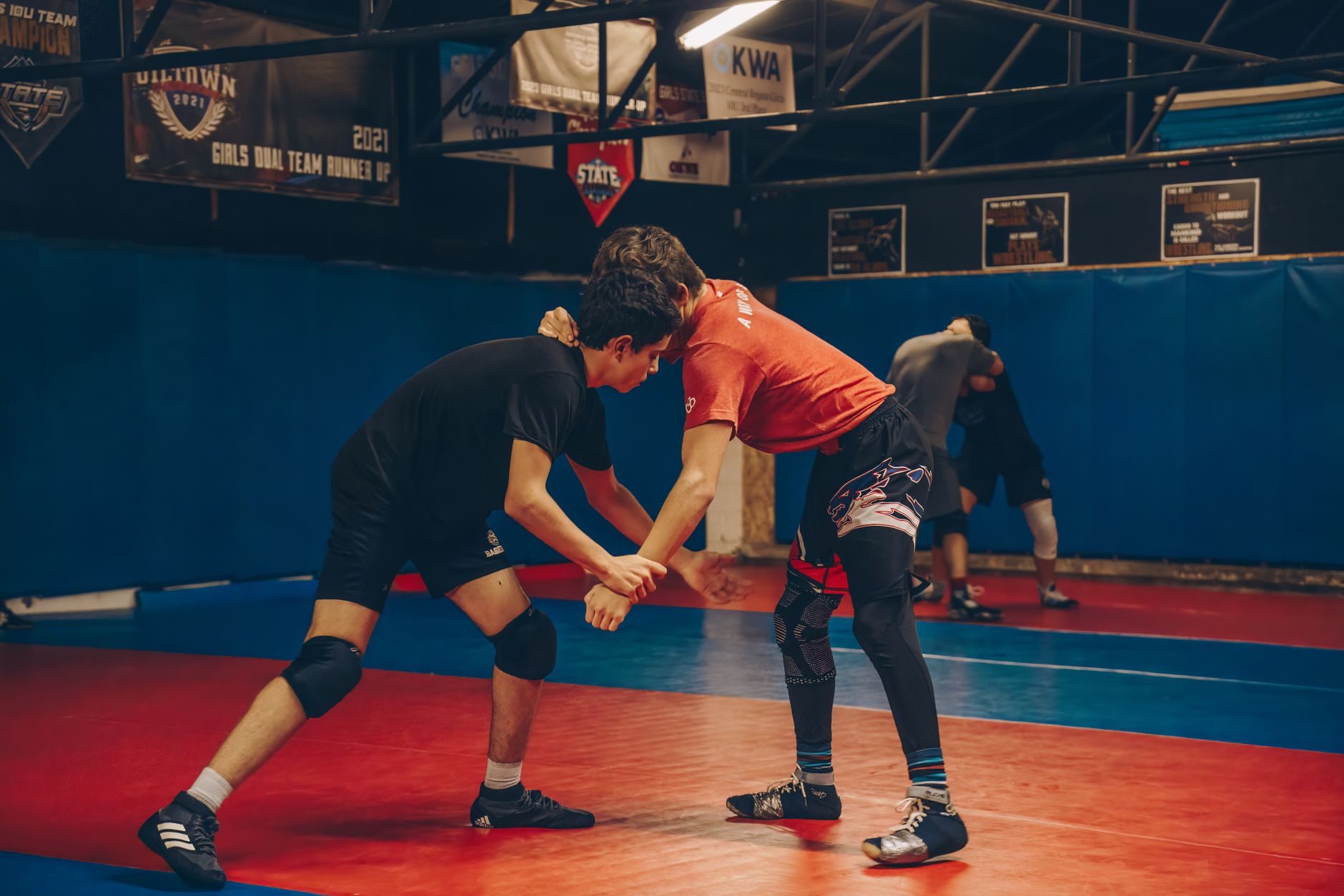
Takedowns start every match and score the most consistently. The leg attacks are the foundation of American wrestling.
Free every Tuesday
The Grappler Brief
The week’s biggest stories from BJJ, judo, wrestling, and submission grappling—curated for people who train.
Sent out weekly.Opt out anytime.
- Double-leg — shoot in on both legs, drive through and finish. The most common takedown in wrestling.
- Single-leg — attack one leg, elevate it, and finish by running the pipe, sweeping the far leg, or tripping.
- High crotch — a single-leg variation that penetrates deep between the legs, often converted to a double.
- Ankle pick — snap the head down and pick the ankle with the hand; a low-risk, high-percentage attack.
- Duck under — from a tie-up, duck beneath the opponent’s arm to take the back.
- Arm drag — pull the opponent’s arm across their body to open the back or a leg.
- Fireman’s carry — a throw-style takedown that loads the opponent across the shoulders; a staple in Greco and folkstyle.
Escapes and reversals
From the bottom, you either escape to neutral for one point or reverse to the top for two.
- Stand-up — the most common escape: get to your feet, break the opponent’s grip, and turn to face them.
- Switch — a reversal that spins around the opponent’s arm to come out on top.
- Granby roll — a shoulder roll that reverses position or escapes a ride.
- Sit-out — sit through to face the opponent and create a scramble.
- Hip heist — the footwork that lets you re-face an opponent after a sit-out or stand-up.
Rides and breakdowns
On top, a ride keeps the opponent down and sets up a turn. Breakdowns flatten them from their base first.
- Tight waist and near-wrist ride — control the waist and a wrist to break the opponent flat.
- Spiral ride — pressure around the body to spin and turn the opponent.
- Leg ride — hook a leg in to control the hips and open turning attacks like the Turk.
- Chicken wing — trap an arm behind the back to break the opponent down and turn them.
Pinning combinations
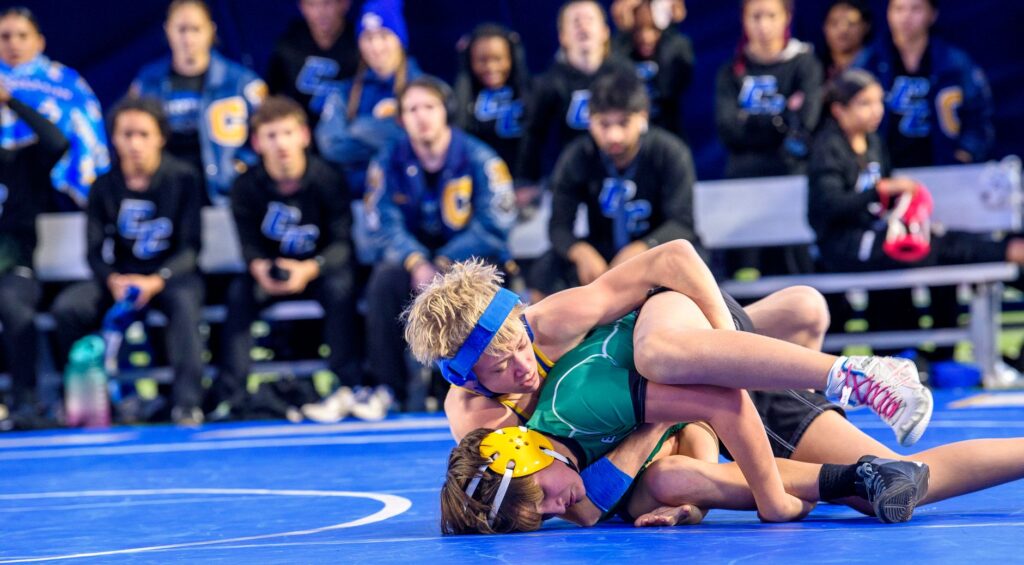
Pinning combinations turn the opponent toward their back for near-fall (back) points, or for the pin that ends the match.
- Half nelson — the classic turning move: an arm under the opponent’s arm and behind the head, levering them over.
- Cradle — lock the head and a leg together to fold the opponent onto their back. Near-side and cross-face cradles are staples.
- Guillotine — a leg-and-arm turn from a leg ride.
- Arm bar — control the arm to pry the opponent onto their shoulders (not the submission of the same name).
- Tilt (Turk) — a hip-and-leg tilt that exposes the back for quick points, common in freestyle.
Throws in freestyle and Greco-Roman
The international styles reward big-amplitude throws with exposure points, so their signature moves look different from folkstyle grinding.
- Gut wrench — from par terre (on the mat), lock the midsection and roll the opponent through for repeated exposure. The bread-and-butter Greco score.
- Suplex — arch backward to throw the opponent overhead — the sport’s highest-amplitude, biggest-scoring move.
- Headlock and hip toss — trap the head and turn the hip in to throw.
- Lateral drop and arm spin — sacrifice-style throws that convert an opponent’s forward pressure into a big turn.
Greco-Roman bans all holds below the waist, so its wrestlers rely almost entirely on upper-body throws — which is why the suplex and gut wrench define the style.
Wrestling moves in BJJ and MMA
Wrestling’s takedowns are the most transferable moves in grappling. The double-leg and single-leg are the backbone of takedowns in Brazilian jiu-jitsu and MMA, where a wrestler’s ability to dictate where the fight happens is a decisive edge. The main adjustment outside folkstyle is defending submissions on the finish — a concern wrestling itself does not have.
See our individual technique guides to the double-leg, single-leg, ankle pick and body-lock takedowns, and our comparison of judo vs wrestling. For more, see our wrestling weight classes, wrestling rules and types of wrestling guides.
Frequently asked questions
What is the most common wrestling takedown?
The double-leg, followed by the single-leg. Both are leg attacks that shoot in on the opponent’s legs to drive them to the mat, and together they account for the majority of takedowns in folkstyle, freestyle and MMA.
What are the five types of wrestling moves?
Takedowns (from standing), escapes and reversals (from the bottom), rides and breakdowns (from the top), pinning combinations (to turn the opponent to their back), and throws (big-amplitude scores used in freestyle and Greco-Roman).
What is a half nelson in wrestling?
A pinning move where you thread an arm under the opponent’s arm and behind their head, then lever them over onto their back. It is the first turning technique most beginners learn and one of the most reliable ways to score a pin.
What is the hardest wrestling move?
The suplex is the highest-risk, highest-reward move — arching backward to throw an opponent overhead. It scores the most in freestyle and Greco-Roman but leaves you exposed if it fails, so it demands the most timing and strength.
Are wrestling moves useful for BJJ and MMA?
Very. Wrestling takedowns — especially the double-leg and single-leg — are the most transferable grappling skills, letting a fighter control where the match takes place. Wrestlers consistently succeed in both BJJ and MMA on the strength of their takedowns and top control.