Quick answer: The hip escape — usually just called shrimping — is the ground movement where you post a foot and the opposite hand, then drive your hips backward and away to create space between you and whoever’s on top. It’s not a finished escape or a recovered guard on its own; it’s the raw movement that almost every escape and guard-recovery route in BJJ is built out of.
This guide is educational. Drill with qualified coaching, apply pressure gradually, tap early, and release immediately when a partner taps or cannot communicate clearly.
| Detail | Hip Escape summary |
|---|---|
| Technique family | Fundamental movement |
| Common context | Elbow escape from mount, side control bottom, back escape, guard recovery |
| IBJJF scoring | Not scored directly; it’s the movement behind escapes and recoveries that do affect scoring |
| First control priority | Post the far foot and hand before the hips move at all |
What is the hip escape in BJJ?
The hip escape is the movement of turning onto one shoulder, posting the same-side foot and the opposite hand, and pushing your hips backward and away to open a gap between yourself and the person on top. Most people learn it under the name “shrimping” because of the sideways, crawling shape the movement makes. It’s one of the first things taught in BJJ, and for good reason — nearly every escape from mount, side control, or back control depends on this exact movement at some point.
On its own, a hip escape doesn’t finish anything. It creates space; what you do with that space — insert a knee, recover guard, clear a hook — is a separate decision. Confusing “I shrimped” with “I escaped” is one of the more common beginner misunderstandings.
Free every Tuesday
The Grappler Brief
The week’s biggest stories from BJJ, judo, wrestling, and submission grappling—curated for people who train.
Sent out weekly.Opt out anytime.
How the hip escape movement actually works
- Connect the foot to the floor before driving the hips. Without a planted foot to push off, the movement has nothing to generate power from and just wastes energy.
- Turn onto a shoulder rather than sliding flat on your back. A flat shrimp barely moves the hips at all; turning to the side is what actually creates the angle and the space.
- Keep a frame up as the space opens. An arm or knee between you and the opponent stops them from simply following the movement and closing the gap again immediately.
- Return the knee inside before the opponent can close the distance. The escape isn’t complete until something — a knee, a foot, a frame — occupies the space you just created.
Where the hip escape shows up
The movement itself doesn’t change much across positions — what changes is the target you’re escaping toward.
- Mount elbow escape. Shrimping toward the trapped knee, combined with framing on the hip, is the core movement that lets a bottom player replace half or full guard.
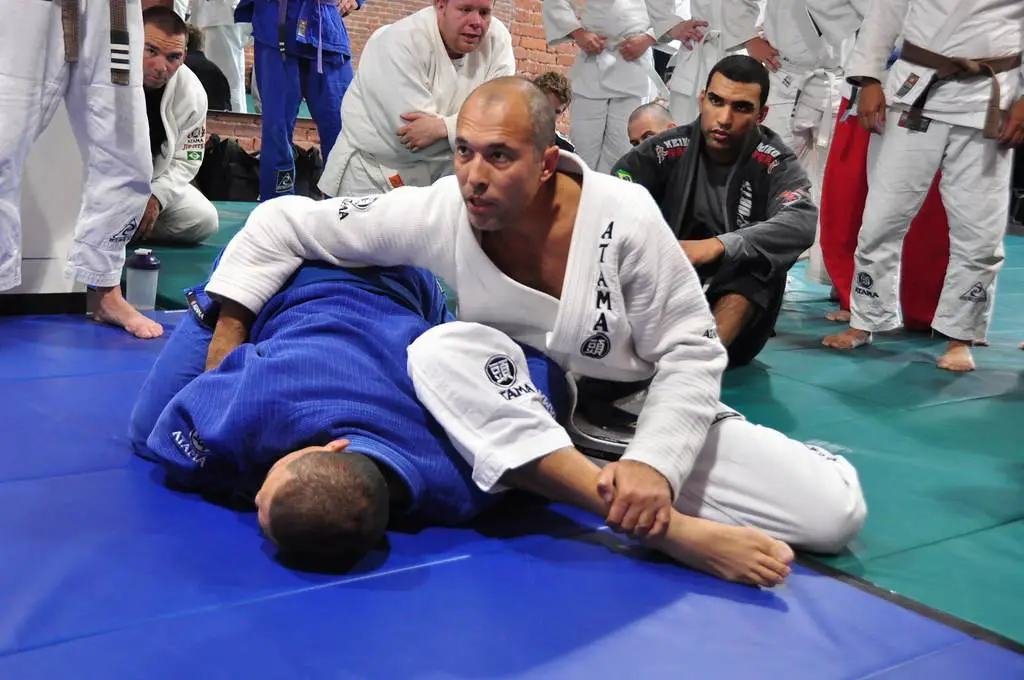
- Side control bottom. A frame on the near hip plus a hip escape away from the pressure is usually the first real step toward guard recovery.
- Back escape. Shrimping to clear a hook or turn into the opponent is a component of most back-escape sequences, though back escapes typically add hand-fighting for the choking arm on top of the hip movement.
- Open-guard retention. Even with guard already established, shrimping is how you reset angle and distance when a passer starts to work around your legs.
Common mistakes
| Mistake | Why it fails | Better cue |
|---|---|---|
| Moving the hips before planting the foot | Without a post, the movement has no power source and barely creates any space | Set the foot and posting hand first, then drive |
| Shrimping flat on the back | A flat shrimp barely changes the angle between you and the top player | Turn onto the shoulder so the hip actually clears sideways |
| Shrimping without a frame | The opponent just follows the movement and closes the gap right back down | Keep a forearm or knee between the bodies as the space opens |
| Treating one shrimp as a finished escape | Space alone doesn’t recover guard or clear a hook by itself | Connect the movement to a knee, a frame, or a hook — every time |
How top players shut down the hip escape
Good top control is built to take away the exact space a hip escape is trying to create.
- Apply directional pressure rather than dead weight. Training partners who just lie heavy make it hard to learn the timing; pressure that follows the escape teaches the real skill.
- Follow the hips as they move, don’t chase the shoulders. A top player who tracks hip movement closes the gap almost as fast as it opens.
- Change angle instead of chasing straight in. Chasing directly behind a shrimping opponent is slower than cutting the angle they’re moving toward.
- Stop the knee before it returns inside. The hip escape only matters if the space gets used; blocking the knee’s return neutralizes the whole movement.
Is the hip escape legal in BJJ?
Yes — it’s a fundamental, unrestricted movement used throughout every ruleset and belt level, gi and no-gi alike.
It doesn’t score directly. Its value shows up in what it enables: preventing a guard pass, recovering position, or setting up an escape that does carry competitive weight.
Details differ by organization and division — confirm the current rulebook for the event you’re actually entering via the BJJ rules and scoring guide or the event page itself.
Safety and training notes
- Don’t shrimp or bridge through the neck. Keep pressure off the cervical spine; the movement should come from the hips and the posted foot, not from twisting through the head or neck.
- Keep the planted knee aligned with the foot. Twisting the knee out of line while driving off it is a common, avoidable strain, especially at higher volume.
- Watch for lower-back fatigue on high-rep drilling days. Repetitive shrimping drills are useful but easy to overdo; back off if lower-back discomfort builds beyond normal training soreness.
Stop if a partner reports unusual pain, numbness, or joint discomfort beyond normal positional pressure. This article does not diagnose injuries; seek qualified medical care for concerning or persistent symptoms.
Examples to study
- Beginner-focused breakdowns of the mount and side-control elbow escape. These usually isolate the hip escape from the rest of the sequence, which is the clearest way to see the movement on its own.
- Hip escape combined with a bridge from mount. Watch how the two movements alternate rather than happen at once — bridge to create a reaction, shrimp to use the space it opens.
Pause footage at the exact moment the foot plants, before any hip movement starts — a strong post is usually what separates a hip escape that actually creates space from one that just wastes motion.
Related GrapplerHQ guides
- Guard recovery — how this movement fits into the broader recovery decision
- Mount escape
- Side control escape
- Back escape
Sources and further reading
- Hip Escapes – Brazilian Jiu Jitsu.
- IBJJF Books and Videos — current rules materials.
- ADCC Rules and Regulations.
- Injury prevalence among BJJ practitioners — PubMed.
FAQ
Is hip escape the same as shrimping?
Yes, they’re the same movement — “shrimping” is just the common gym name for the hip escape, based on the sideways crawling shape it makes.
What’s the difference between hip escape and guard recovery?
Hip escape is one specific movement: posting a foot and hand, then driving the hips away to create space. Guard recovery is the broader skill of actually getting back to guard, which often uses hip escape but also relies on framing, timing, and sometimes inversion.
Why can’t I create space when I shrimp?
The most common cause is a missing or weak foot post — without something solid to drive off, the hips can’t generate real movement. Check that the foot is planted and the knee is bent before pushing.
Is the hip escape safe to drill at high volume?
Generally yes, but keep the movement out of the neck and watch for lower-back fatigue on days with a lot of repetition. Ease off if discomfort goes beyond normal training soreness.
Bottom line
The hip escape is the engine, not the destination — it creates space, and everything useful happens in what you do with that space next. If your escapes keep stalling right after the shrimp, the movement probably isn’t the problem; you’re likely not connecting it to a frame or a knee fast enough before the gap closes again.