Quick answer: Guard recovery is the decision-making skill of getting your legs back between you and your opponent after they’ve started to pass or pin you — reading which window is open, then choosing the right tool (a reinserted knee, a hip escape, an inversion) to get there. It’s less about one technique and more about timing: most guard recovery fails not because the movement was wrong, but because it started after the window had already closed.
This guide is educational. Drill with qualified coaching, apply pressure gradually, tap early, and release immediately when a partner taps or cannot communicate clearly.
| Detail | Guard Recovery summary |
|---|---|
| Technique family | Escape / guard retention concept |
| Common context | Mid-pass scrambles, side control, north-south, and knee-on-belly |
| IBJJF scoring | No points directly; a recovered guard prevents the pass points that would otherwise follow |
| First control priority | Frame before the hips move — recovery without a frame just resets into the same pin |
What is guard recovery in BJJ?
Guard recovery is the umbrella term for getting a leg (or both) back between you and a top player who is passing, pinning, or has already landed in side control, mount, north-south, or knee-on-belly. It’s less a single move than a decision problem: the top player is always mid-transition somewhere, and recovery works by attacking the moment their control is incomplete rather than fighting their strongest position head-on.
The actual movement you use to recover — reinserting a knee shield, shrimping the hips out, inverting underneath — changes by position and by what the top player is doing. What doesn’t change is the sequence: protect the immediate threat first, build a frame, then move.
Free every Tuesday
The Grappler Brief
The week’s biggest stories from BJJ, judo, wrestling, and submission grappling—curated for people who train.
Sent out weekly.Opt out anytime.
How the guard recovery sequence works
- Protect the immediate threat before trying to move. Elbows tight, chin protected, near-side knee defended — recovery attempted while still exposed to a submission or fully pinned rarely goes anywhere.
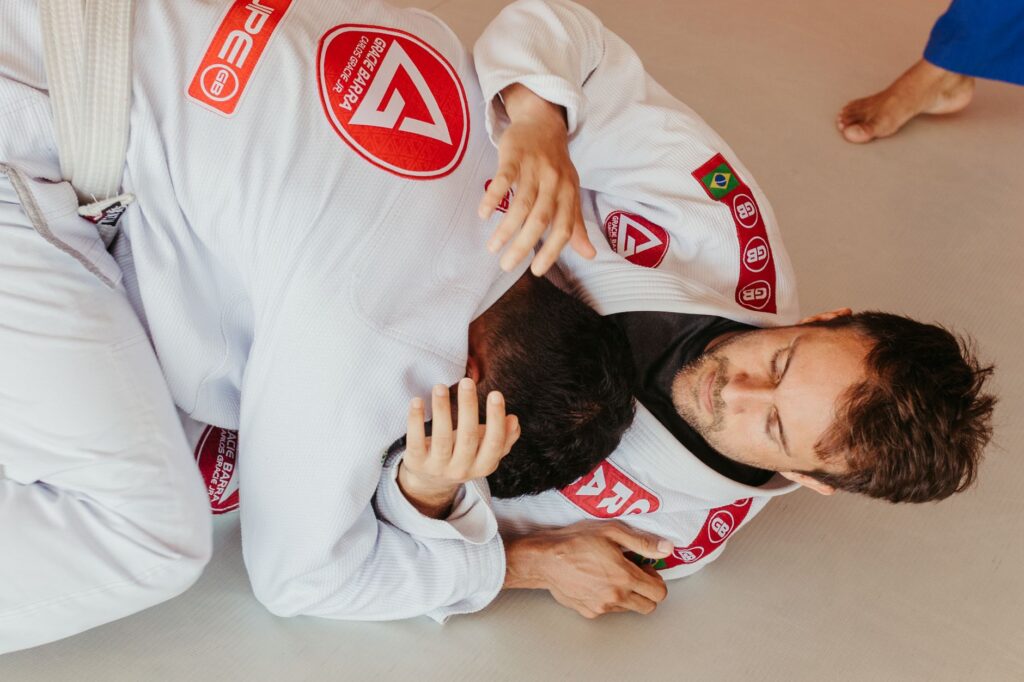
- Build a frame before the hips move. A forearm on the hip, a knee shield, an underhook — something has to be between you and the top player’s weight before you commit to movement, or you’ll just get flattened again.
- Read the transition, not the position. The top player’s control is weakest the instant they move — stepping to mount, switching their hips, resettling grips. That’s the window, not a moment of stillness.
- Recover the nearest knee before chasing full guard. A half-recovered guard (one knee back in, a knee shield established) is a real position worth stabilizing before pushing for more.
Common starting scenarios and recovery routes
The right recovery tool depends heavily on where you actually are.
- Late-stage guard pass with one knee still free. This is the easiest window — reinsert the free knee as a shield before the second knee clears, often before the pass is even complete.
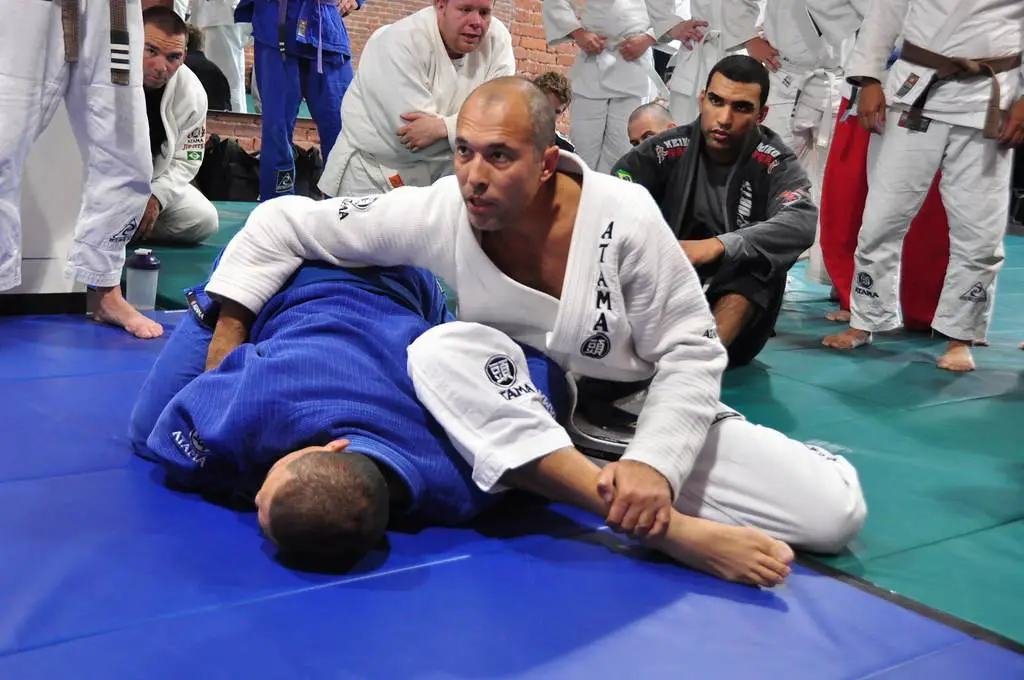
- Bottom side control after building a frame. A cross-face and forearm frame create just enough space to shrimp the hips out and recover a knee; this is where the fundamental hip-escape movement does most of its work.
- Bottom of north-south or knee-on-belly. Both positions are inherently less stable for the top player, so a well-timed frame plus hip movement recovers guard more often than people expect.
- Mid-scramble before the top player has stabilized anything. The fastest recoveries happen here — before consolidation, not after.
Common mistakes
| Mistake | Why it fails | Better cue |
|---|---|---|
| Moving the hips before building a frame | Movement without structure just hands the top player another control point | Frame first — the movement means nothing without something between you and their weight |
| Waiting until the pass is fully finished | Late recovery costs far more energy and rarely works against good top control | Recover the moment a knee or frame is still available, not after it’s gone |
| Chasing full guard directly | Skipping the half-recovered step often means losing the little space you did create | Stabilize a knee shield or half guard first, then work toward full guard |
| Treating every position the same way | The recovery tool that works from side control often doesn’t fit north-south or mount | Match the recovery route — frame, hip escape, inversion — to the actual position |
How top players shut down guard recovery
Good top control is built specifically to close the windows guard recovery depends on.
- Control the hips before consolidating anything else. A top player who pins the far hip removes most recovery options before they can even start.
- Clear frames early rather than fighting through them. Letting a frame sit gives the bottom player time to find the hip-escape window; clearing it immediately denies that.
- Move with the bottom player’s hips as a single unit. Chasing the shoulders while ignoring hip movement is how a lot of otherwise-secure top position gets given back.
- Stabilize past the legs before attacking. Rushing a submission before guard is fully passed is one of the most common ways top players hand a recovery right back.
Is guard recovery legal in BJJ?
Yes — recovering guard is a fundamental, unrestricted skill at every belt level and ruleset.
The one caution is inversion-based recovery, which briefly exposes the neck and spine to weight; it’s legal everywhere but carries more physical risk than frame-and-hip-escape recovery, especially for beginners or against a much heavier opponent.
Details differ by organization and division — confirm the current rulebook for the event you’re actually entering via the BJJ rules and scoring guide or the event page itself.
Safety and training notes
- Don’t invert when the neck or spine is already carrying weight. Wait for a genuinely clear window rather than forcing an inversion under pressure.
- Keep the knees aligned during recovery drilling. Twisting a knee against a partner’s resistance while trying to reinsert it is a common, avoidable strain.
- Use progressive resistance with newer partners. Recovery drilling works best when the top player provides honest but scalable pressure rather than dead weight or maximum force.
Stop if a partner reports unusual pain, numbness, or joint discomfort beyond normal positional pressure. This article does not diagnose injuries; seek qualified medical care for concerning or persistent symptoms.
Examples to study
- Elbow-knee recovery from bottom side control in competition footage. Watch for the exact moment the top player’s crossface loosens — that’s usually when the recovery actually starts, not when it visibly finishes.
- Granby-style recovery from north-south or knee-on-belly. Note how it’s only used when the neck and shoulders are genuinely free of weight, not as a first response to every pin.
Pause footage right at the frame, before the hip movement even begins — the frame is usually where the recovery is actually won or lost, well before the visible scramble.
Related GrapplerHQ guides
- Hip escape (shrimping) — the core movement behind most guard-recovery routes
- Mount escape
- Side control escape
- Back escape
Sources and further reading
- 7 Guard Recovery Fundamentals You Should Know In BJJ.
- IBJJF Books and Videos — current rules materials.
- ADCC Rules and Regulations.
- Injury prevalence among BJJ practitioners — PubMed.
FAQ
What’s the difference between guard recovery and hip escape?
Guard recovery is the broader decision-making skill of getting back to guard from any bottom position, using whichever tool the situation calls for. Hip escape (shrimping) is one specific movement — often the main tool guard recovery relies on, but not the only one; framing, reinserting a knee, and inverting all count as recovery too.
When should you start trying to recover guard?
As early as possible — ideally while the top player is still mid-pass and a knee or frame is still available. Waiting until the pass is fully finished makes recovery dramatically harder.
What stops guard recovery most often?
A top player who controls the hips and clears frames early, before the bottom player can create the space needed to move.
Is inverting to recover guard safe?
It’s legal, but it briefly loads the neck and spine, so it carries more risk than frame-and-hip-escape recovery. Use it only when there’s a genuinely clear window, not under active pressure.
Bottom line
Guard recovery isn’t one move you drill until it’s fast — it’s a habit of noticing the window the moment it opens. The frame comes before the movement, and the movement comes before the pass finishes, not after. If you keep getting passed clean, it’s rarely because your hip escape is too slow; it’s because the frame that was supposed to buy you the window never went in.