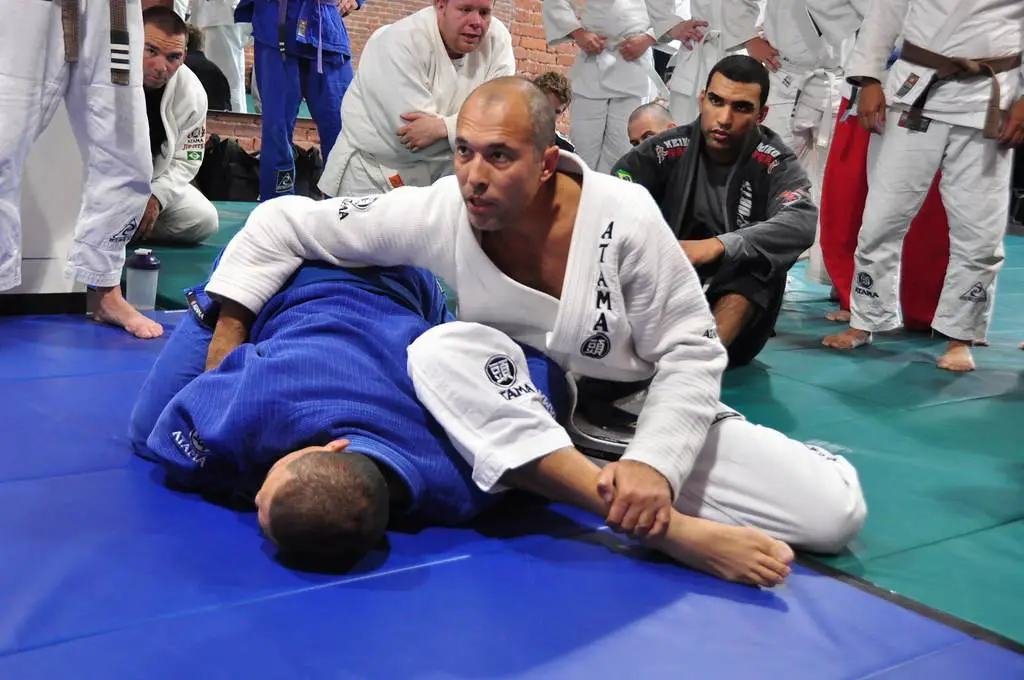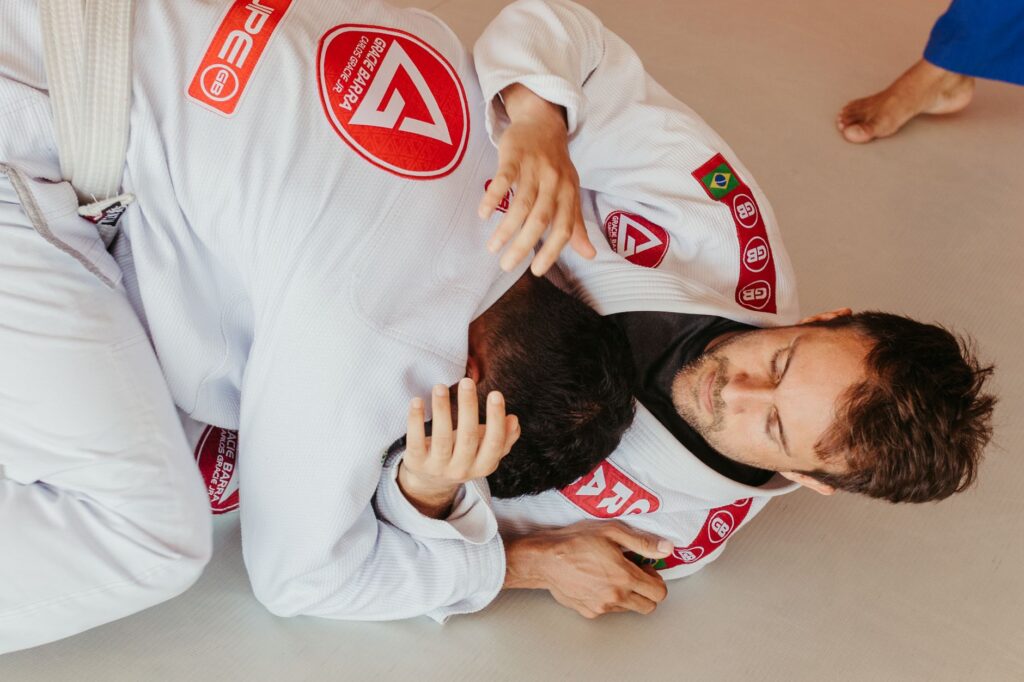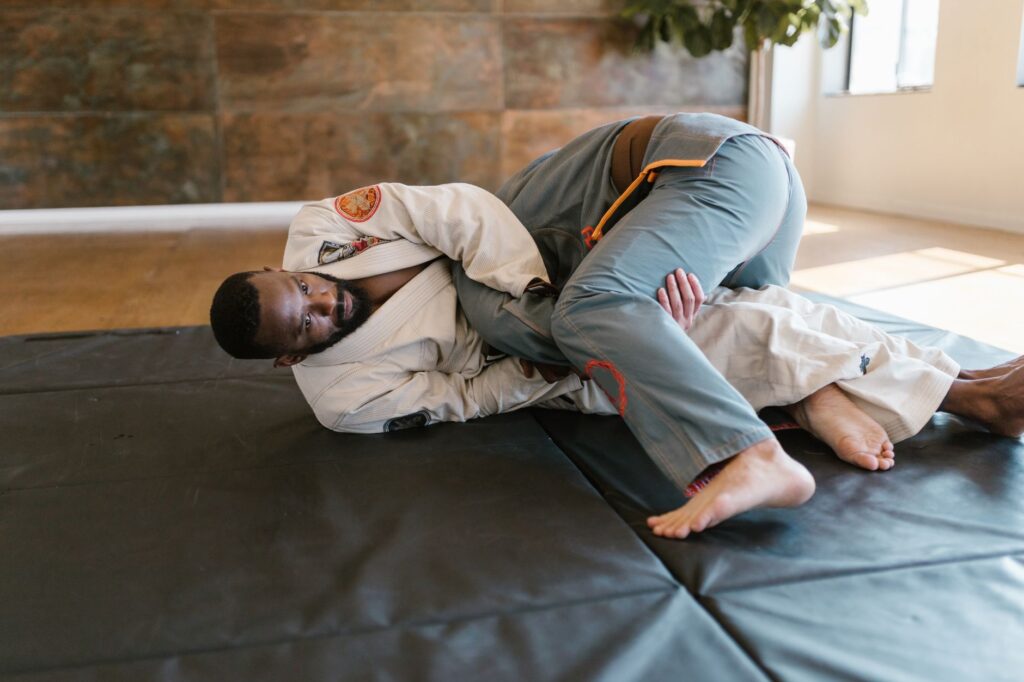
Quick answer: Side control is the pin you get after passing the guard: chest on chest, your body perpendicular to theirs, their near shoulder and hip flattened. It scores no points by itself under IBJJF-style rules — the 3 points come from the guard pass that got you there — but it is where most submissions in beginner and intermediate BJJ actually start. Control the head and the near elbow, and everything else follows.
This guide is educational. Drill with qualified coaching, apply pressure gradually, tap early, and release immediately when a partner taps or cannot communicate clearly.
| Detail | Side control summary |
|---|---|
| Technique family | Top pin / control position |
| Main variations | Classic (crossface + underhook), kesa gatame, north-south, knee-on-belly adjacent |
| IBJJF scoring | 0 points itself; the pass into it scores 3 |
| First defensive priority | Frames on the crossface arm and hip before the pin settles |
What is side control in BJJ?
Side control (also called side mount or 100 kilos) is a perpendicular top pin where the passer’s chest presses the opponent’s chest, with the opponent’s legs cleared out of the way. It is usually the first position you reach after a successful guard pass, and the first place beginners feel truly stuck when they are on the bottom.
The position is a family rather than a single shape. The classic version uses a crossface (forearm under the opponent’s jaw, turning their head away) and a far-side underhook. Kesa gatame (scarf hold) sits through with the hip, judo-style. North-south rotates over the head entirely. Skilled top players circle between these shapes as the defender turns, which is why chasing one static “correct” side control never quite works.
Free every Tuesday
The Grappler Brief
The week’s biggest stories from BJJ, judo, wrestling, and submission grappling—curated for people who train.
Sent out weekly.Opt out anytime.
How side control actually works
- Turn their face away from you. Where the head points, the body follows. The crossface exists so the defender cannot turn into you and rebuild frames.
- Win the near elbow. If their near elbow is trapped above your crossface arm or blocked by your hip, their escapes lose their engine. If it wedges back inside, the escape has already started.
- Pressure comes from the legs, not the arms. Drive from the toes and drop the hips low; a heavy side control is a leg-drive skill.
- Block the near hip. A knee or hand at their near hip stops the shrimp that recovers guard. Elbow-and-knee together is the standard seal.
Common entries into side control
- Any completed guard pass — knee slide, over-under, torreando — lands here by default. Settle chest-to-chest before doing anything else; passes are lost in the first second of celebration.
- Off a takedown that puts the opponent flat, especially when their guard never forms.
- From a scramble or failed submission — a defended armbar or triangle often ends with the top player re-establishing side control.
- From knee-on-belly, dropping back down when the defender pushes the knee.
What to attack from side control
The staple attacks all start from the same controls. With the far arm isolated, the americana and kimura appear on the near and far side. When the defender turns away, the D’Arce and anaconda attack the exposed neck-and-arm frame. When they turn in and push, the arm triangle sets up chest-to-chest. Rotating to north-south opens the north-south choke that Marcelo Garcia turned into a career-long signature. And when nothing is there, transitioning to mount or knee-on-belly scores and restarts the attacking cycle.
Common mistakes
| Mistake | Why it fails | Better cue |
|---|---|---|
| Hugging the head with both arms | No control of hips or elbows; the defender shrimps out underneath | Crossface plus underhook or hip block — control both ends |
| Staying square and static | The defender times the bridge and builds frames against a fixed shape | Circle between crossface, kesa, and north-south as they turn |
| Floating too high on the chest | Space appears at the hips; guard recovery follows | Hips low, weight through their sternum, drive from the toes |
| Diving on far-side submissions early | You give back the underhook and the position with it | Kill the near elbow first, attack second |
How opponents escape side control
- Frame-and-shrimp guard recovery: forearm across the neck, other hand at the hip, bridge, shrimp, and slide the near knee inside. The standard escape everyone learns first — and it still works at black belt when timed off the pin settling.
- Underhook and turn to knees: when the top player’s far arm lifts, the defender swims the underhook and comes up to a wrestling dogfight.
- Bridge-through reversal (mainly against kesa): trapping the top player’s back-side arm and bridging over it.
- Timing beats strength in all of them — escapes launched the moment the pass finishes, before the pin settles, succeed far more often than escapes from a fully set pin.
How side control is scored in competition
This surprises people: under the IBJJF-style points system, side control itself scores nothing. The 3 points belong to the guard pass that arrives there, and they require roughly 3 seconds of stabilized control. Advancing from side control to knee-on-belly adds 2, and to mount adds 4 — which is why competitors treat side control as a toll booth rather than a destination. ADCC similarly rewards the pass and the advance rather than the pin itself. Rules differ by event and division; verify with the BJJ rules and scoring guide and the event’s own materials.
Safety and training notes
- The crossface is a control, not a can-opener. Turning a partner’s head is fine; cranking the neck or jaw in drilling is not.
- Watch knee-ride pressure on smaller partners. Full body weight through a knee on the sternum or floating ribs can injure; scale it.
- Kesa gatame rib pressure adds up. If a partner taps to pressure, release like it was any other tap.
Stop if a partner reports unusual pain, numbness, or trouble breathing beyond normal positional discomfort. This article does not diagnose injuries; seek qualified medical care for concerning or persistent symptoms.
Examples to study
- Bernardo Faria’s pressure passing into side control. The over-under pass arrives with the pin already half-set — study how the shoulder pressure starts before the legs are even cleared.
- Marcelo Garcia’s north-south choke entries. The rotation from side control to north-south looks like giving up control until you notice the head never gets free.
Related GrapplerHQ guides
Sources and further reading
- IBJJF Books and Videos — current rules materials
- ADCC Rules and Regulations
- Injury prevalence among BJJ practitioners — PubMed
FAQ
Does side control score points in BJJ?
Not by itself under IBJJF-style rules. The guard pass into side control scores 3 points; advancing to knee-on-belly (2) or mount (4) scores again. Always check the specific event’s rules.
Why is side control called 100 kilos?
The Portuguese nickname (“cem quilos”) describes how the position should feel from the bottom — like a hundred kilograms parked on your chest, however much the top player actually weighs.
What is the first escape to learn from side control?
The frame-and-shrimp guard recovery: frame the neck and hip, bridge to make space, shrimp, and bring the near knee inside. It teaches the frames and hip movement every other escape builds on.
Is kesa gatame legal in BJJ?
Yes — scarf hold is a legal and common control in BJJ, though unlike judo there is no pin-based win. You still need points or a submission, and modified kesa with an underhook is generally preferred to avoid giving up the back.
Bottom line
Side control is the sport’s toll booth: it pays nothing by itself, but everything valuable — mount, knee-on-belly, most of the submission catalogue — passes through it. From the top, win the head and the near elbow before you attack anything. From the bottom, frame early, because a settled pin is ten times the problem a settling one is.