Quick answer: A shoulder-control position and submission in which the legs entangle an arm while the hips rotate to control the shoulder line. Learn Omoplata through its control points, entries, finishing alignment, and defensive window before pressure is fully connected.
This guide is educational. Practice under qualified coaching, apply pressure gradually, tap early, and release immediately when a partner taps or cannot communicate clearly.
| Detail | Omoplata summary |
|---|---|
| Technique family | joint-lock |
| Common context | Closed guard when an elbow separates from the ribs; Collar-sleeve guard after redirecting the posting arm |
| First defensive priority | Posture before the hips rotate fully around the trapped arm |
| Rules note | Legality varies by organization, age, belt, division, and the exact finishing pressure. |
What is Omoplata?
A shoulder-control position and submission in which the legs entangle an arm while the hips rotate to control the shoulder line. It belongs to the broader guard submissions family, so it makes more sense when learned beside the controls and reactions that create it.
The name of a submission does not tell the whole story. Grip depth, shoulder alignment, hip angle, posture, and the defender's trapped limbs determine whether the position is stable, loose, or turning into unsafe pressure. Treat the attack as a chain of controls rather than a single finishing motion.
Free every Tuesday
The Grappler Brief
The week’s biggest stories from BJJ, judo, wrestling, and submission grappling—curated for people who train.
Sent out weekly.Opt out anytime.
How Omoplata works
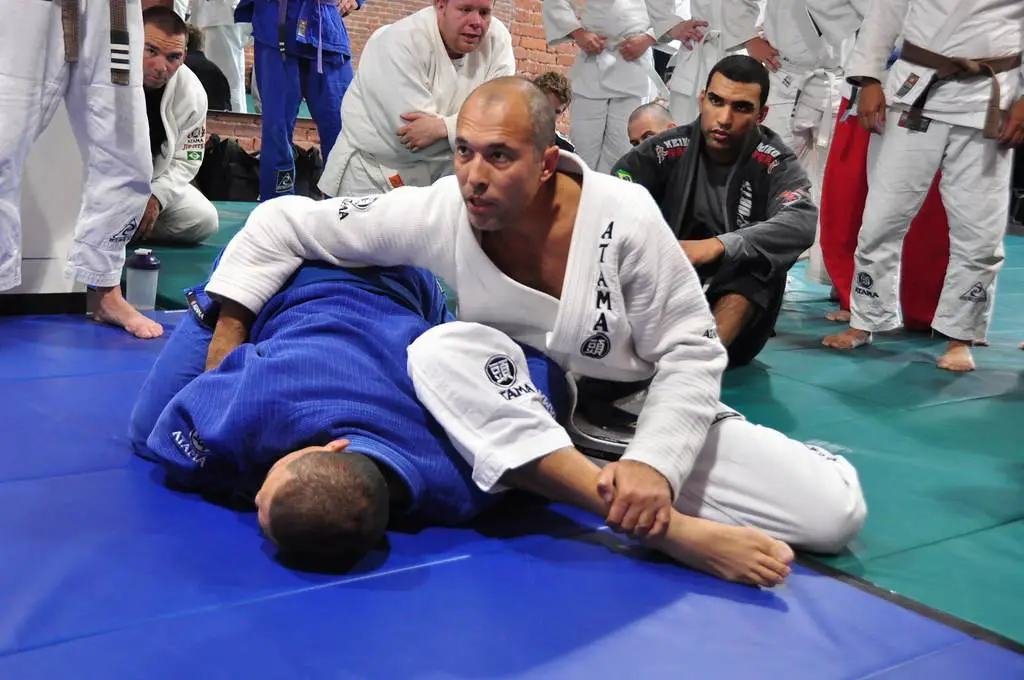
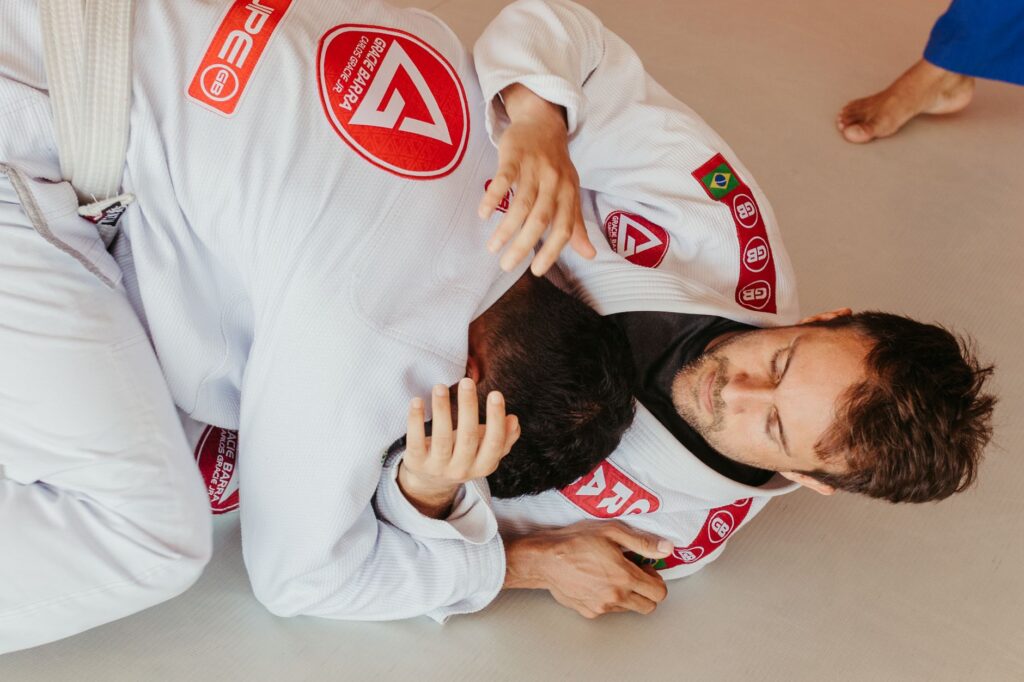
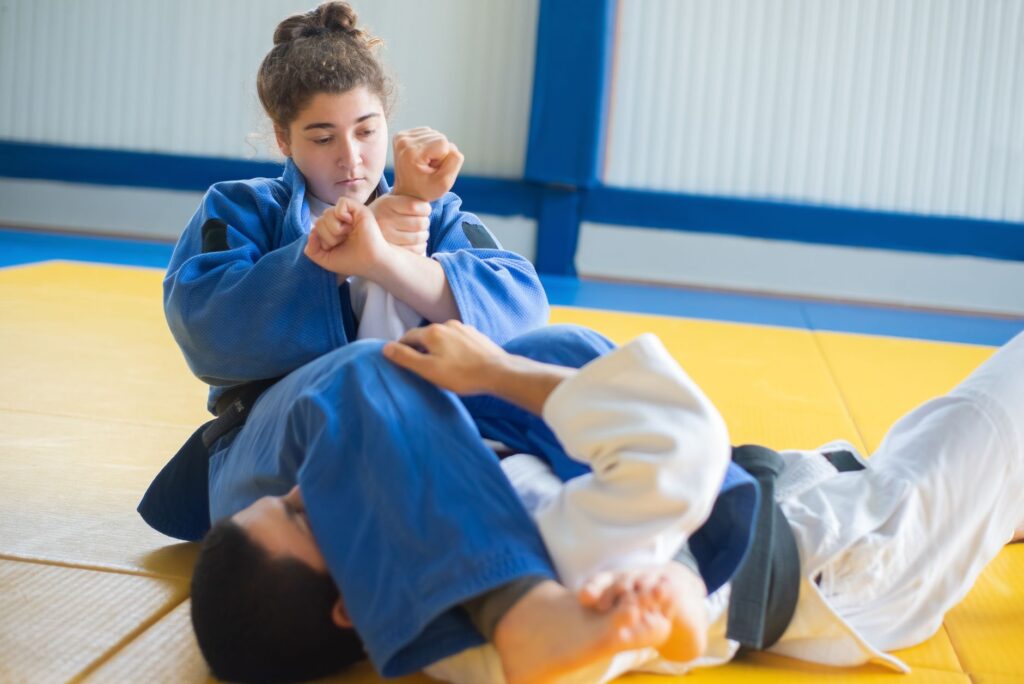
- Trap the opponent's upper arm above the elbow with the legs. This is the first connection to verify before adding pressure.
- Rotate the hips so the opponent's hand and shoulder cannot follow freely. If this connection is loose, extra squeezing usually wastes energy and reduces control.
- Control posture and the far hip before sitting up for the finish. Make the adjustment while maintaining base instead of racing to the finish.
- Flatten the opponent gradually while keeping the trapped shoulder aligned. Ask a coach to check this detail from more than one angle.
Common entries and position changes
Entries are best understood as positional opportunities. The goal is not to force the submission from anywhere; it is to recognize when posture, an elbow, a shoulder, or the neck line has become available.
- Closed guard when an elbow separates from the ribs. Stabilize the preceding position before advancing.
- Collar-sleeve guard after redirecting the posting arm. Watch the defender's posture and elbow line rather than memorizing a rigid sequence.
- Triangle attack when the opponent retracts the head. Expect the defender to change direction and keep a safe base during the transition.
- Scramble transition from a failed armbar or hip-bump attack. Use this pathway during positional drilling before adding open sparring resistance.
Common mistakes
| Mistake | Why it fails | Better cue |
|---|---|---|
| Attacking before control | The defender can restore posture or alignment. | Trap the opponent's upper arm above the elbow with the legs |
| Using strength before angle | Pressure leaks through open space. | Rotate the hips so the opponent's hand and shoulder cannot follow freely |
| Ignoring the escape direction | The attack creates a scramble instead of control. | Posture before the hips rotate fully around the trapped arm |
| Finishing too quickly | Partner safety drops and mechanics become harder to evaluate. | Increase pressure slowly and release on the tap. |
How to defend Omoplata
Early defense protects alignment and removes the control that makes the finish possible. Late defense is less reliable and can add injury risk, especially when the neck or knee is already isolated.
- Posture before the hips rotate fully around the trapped arm. This works best before the attacker consolidates the next control.
- Roll only when space and coaching make the direction safe. Protect the neck or joint while creating space; do not trade safety for movement.
- Keep the trapped elbow connected and follow the attacker's hip rotation. Coordinate hand fighting with hip and shoulder position.
- Tap before shoulder rotation reaches a painful end range. If the finishing structure is already secure, tapping is the correct decision.
Is Omoplata legal in competition?
Shoulder locks are generally permitted for adult divisions, with restrictions varying by age and ruleset.
The omoplata may also score as a sweep or lead to a dominant position depending on the sequence.
Rules change. Check the governing body’s current materials and the event page instead of relying on a general article at weigh-in or mat-side.
Safety and training notes
- Rotate the shoulder slowly and never bounce into the finish. Build a shared pace and clear tapping protocol before starting.
- Give training partners room to roll when the escape path is safe. The attacker is responsible for giving the defender time to submit.
- Stop immediately for sharp shoulder, elbow, or neck pain. Treat unusual discomfort as a reason to stop and reset.
Stop if a partner reports unusual pain, numbness, dizziness, weakness, or difficulty swallowing or speaking. This article does not diagnose injuries; seek qualified medical care for concerning or persistent symptoms.
Examples to study
- Clark Gracie's competition omoplata system. Look for the control that appears immediately before this moment.
- Andris Brunovskis' use of omoplata control and follow-up positions. Note the ruleset and whether strikes, points, or boundaries affect the choice.
Use footage to study the setup and control before the finish. Pause at the moment posture breaks or the trapped limb crosses the centerline; that decision point is usually more transferable than the final squeeze.
Related GrapplerHQ guides
Sources and further reading
- IJF Ude-garami technique reference.
- Grapplearts Omoplata Quickstart.
- IBJJF Books and Videos — current rules materials.
- Injury prevalence among BJJ practitioners — PubMed.
FAQ
What is Omoplata?
A shoulder-control position and submission in which the legs entangle an arm while the hips rotate to control the shoulder line.
Is Omoplata legal in BJJ?
Shoulder locks are generally permitted for adult divisions, with restrictions varying by age and ruleset. The omoplata may also score as a sweep or lead to a dominant position depending on the sequence.
Is Omoplata safe to practice?
Rotate the shoulder slowly and never bounce into the finish. Give training partners room to roll when the escape path is safe. Stop immediately for sharp shoulder, elbow, or neck pain.
What is the first defense to Omoplata?
Posture before the hips rotate fully around the trapped arm.