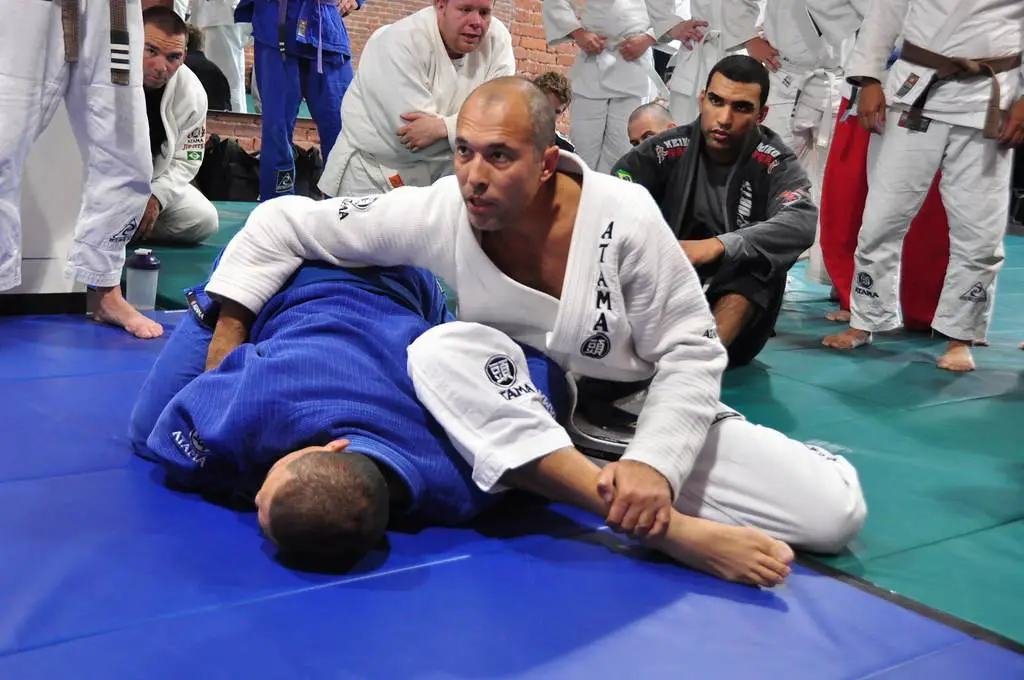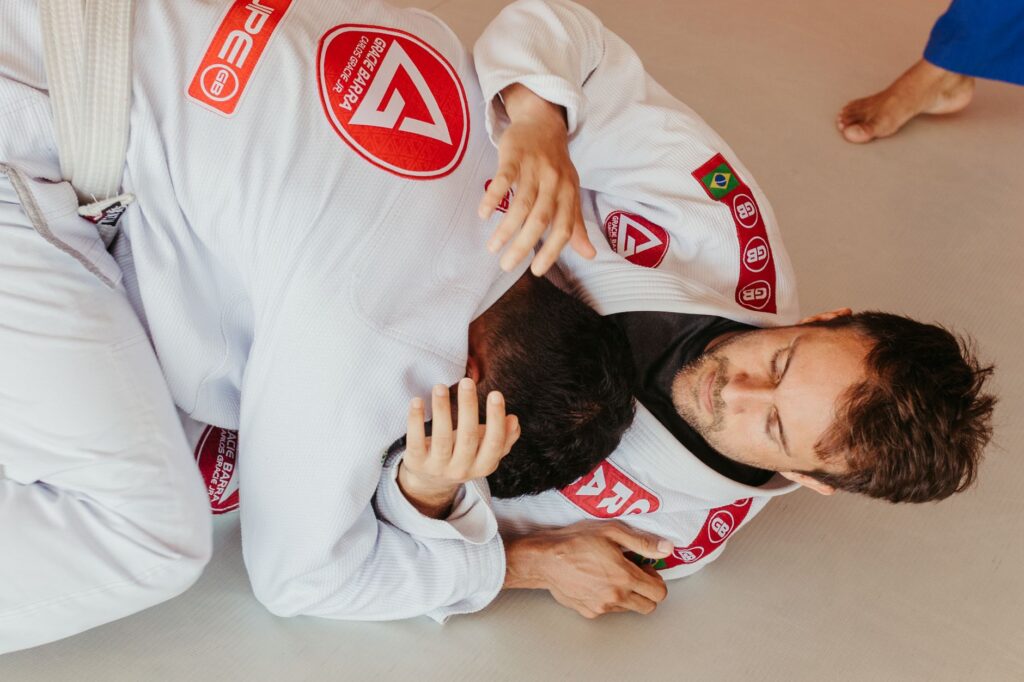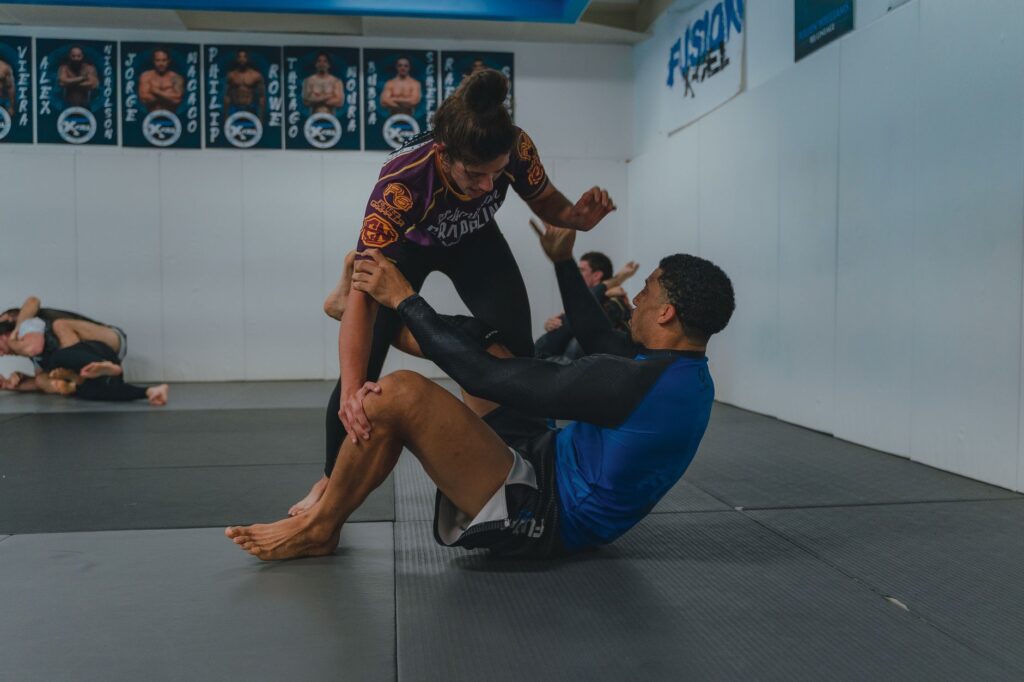
Quick answer: A seated guard built around inside leg position, upper-body connections, and butterfly hooks that elevate or redirect an opponent's base. Learn Butterfly Guard as a connected system of distance, grips, angles, transitions, and recovery—not as a frozen pose.
This guide is educational. Drill with qualified coaching, preserve safe joint alignment, use progressive resistance, and stop when a partner loses a stable base.
| Detail | Butterfly Guard summary |
|---|---|
| Technique family | guard |
| Common context | Seated open guard against a kneeling passer; Half-butterfly after inserting the inside hook |
| First defensive priority | Keep elbows and knees connected to deny deep underhooks |
| Rules note | Legality varies by organization, age, belt, division, and the exact finishing pressure. |
What is Butterfly Guard?
A seated guard built around inside leg position, upper-body connections, and butterfly hooks that elevate or redirect an opponent's base. It belongs to the broader guards family, so it makes more sense when learned beside the controls and reactions that create it.
A guard works only while its connections manage distance and the opponent's base. Grips, hooks, frames, hip angle, and timing determine whether the position creates a sweep or attack—or collapses into a pass.
Free every Tuesday
The Grappler Brief
The week’s biggest stories from BJJ, judo, wrestling, and submission grappling—curated for people who train.
Sent out weekly.Opt out anytime.
How Butterfly Guard works
- Win inside position with the knees and feet before chasing upper-body grips. This is the first connection to verify before adding pressure.
- Connect an underhook, overhook, collar tie, or two-on-one to the hook on the same side. If this connection is loose, extra squeezing usually wastes energy and reduces control.
- Move the opponent's weight onto a light post before elevating. Make the adjustment while maintaining base instead of racing to the finish.
- Follow the sweep through to top position rather than admiring the lift. Ask a coach to check this detail from more than one angle.
Common entries and position changes
Entries are best understood as positional opportunities. The goal is not to force the submission from anywhere; it is to recognize when posture, an elbow, a shoulder, or the neck line has become available.
- Seated open guard against a kneeling passer. Stabilize the preceding position before advancing.
- Half-butterfly after inserting the inside hook. Watch the defender's posture and elbow line rather than memorizing a rigid sequence.
- Closed guard opening into seated guard. Expect the defender to change direction and keep a safe base during the transition.
- Wrestle-up exchange after creating distance. Use this pathway during positional drilling before adding open sparring resistance.
Common mistakes
| Mistake | Why it fails | Better cue |
|---|---|---|
| Using the guard before establishing connections | The passer can change distance without resistance. | Win inside position with the knees and feet before chasing upper-body grips |
| Staying square under pressure | The guard loses angle and useful frames. | Connect an underhook, overhook, collar tie, or two-on-one to the hook on the same side |
| Chasing attacks without managing base | The opponent can step around the legs. | Keep elbows and knees connected to deny deep underhooks |
| Holding a failing configuration | Late recovery exposes the pass. | Transition to another guard while knee-elbow connection still exists. |
How opponents pass or counter Butterfly Guard
Passing starts by removing the connection that controls distance or base. The passer should clear grips and hooks in a safe order; the guard player should transition before every frame is gone.
- Keep elbows and knees connected to deny deep underhooks. This works best before the attacker consolidates the next control.
- Widen the base before the hook loads your weight. Protect the neck or joint while creating space; do not trade safety for movement.
- Pummel for inside position instead of pushing straight forward. Coordinate hand fighting with hip and shoulder position.
- Backstep or circle only after clearing the controlling upper-body grip. If the finishing structure is already secure, tapping is the correct decision.
How Butterfly Guard is scored in competition
Butterfly guard itself is legal across common grappling rulesets.
Sweeps and top-position stabilization determine scoring; exact criteria vary by organization.
Rules change. Check the governing body’s current materials and the event page instead of relying on a general article at weigh-in or mat-side.
Safety and training notes
- Do not load a partner's knee sideways while elevating. Build a shared pace and clear tapping protocol before starting.
- Keep head position controlled during forward pressure. The attacker is responsible for giving the defender time to submit.
- Use progressive resistance when drilling elevation and backstep reactions. Treat unusual discomfort as a reason to stop and reset.
Stop if a partner reports unusual pain, numbness, dizziness, weakness, or difficulty swallowing or speaking. This article does not diagnose injuries; seek qualified medical care for concerning or persistent symptoms.
Examples to study
- Marcelo Garcia's seated butterfly and arm-drag system. Look for the control that appears immediately before this moment.
- Adam Wardzinski's butterfly sweeps in modern gi competition. Note the ruleset and whether strikes, points, or boundaries affect the choice.
Use footage to study the setup and control before the finish. Pause at the moment posture breaks or the trapped limb crosses the centerline; that decision point is usually more transferable than the final squeeze.
Related GrapplerHQ guides
Sources and further reading
- BJJ Heroes: Butterfly Guard.
- Digitsu: Understanding Butterfly Guard.
- IBJJF Books and Videos — current rules materials.
- Injury prevalence among BJJ practitioners — PubMed.
FAQ
What is Butterfly Guard?
A seated guard built around inside leg position, upper-body connections, and butterfly hooks that elevate or redirect an opponent's base.
Is Butterfly Guard legal in BJJ?
Butterfly guard itself is legal across common grappling rulesets. Sweeps and top-position stabilization determine scoring; exact criteria vary by organization.
What is Butterfly Guard used for?
Win inside position with the knees and feet before chasing upper-body grips. Connect an underhook, overhook, collar tie, or two-on-one to the hook on the same side.
What is the first counter to Butterfly Guard?
Keep elbows and knees connected to deny deep underhooks.