Quick answer: The double-leg takedown drops your level, drives a penetration step between the opponent’s feet, and captures both legs at once — then finishes by driving through, lifting, or turning the corner to put them on their back. It scores 2 points under IBJJF-style rules, but the deeper commitment means a mistimed shot gives up the guillotine or the sprawl more readily than a single-leg does.
This guide is educational. Drill on suitable mats with qualified coaching, learn breakfalls, control the descent, and avoid uncontrolled twisting or head impact.
| Detail | Double-Leg Takedown summary |
|---|---|
| Technique family | Wrestling-style takedown |
| Main finishes | Drive-through, lift and return, corner turn (blast double vs. knee-drop) |
| IBJJF scoring | 2 points once the takedown lands and control is established |
| First control priority | Head up and to the side, hips under you, on the penetration step |
What is the double-leg takedown?
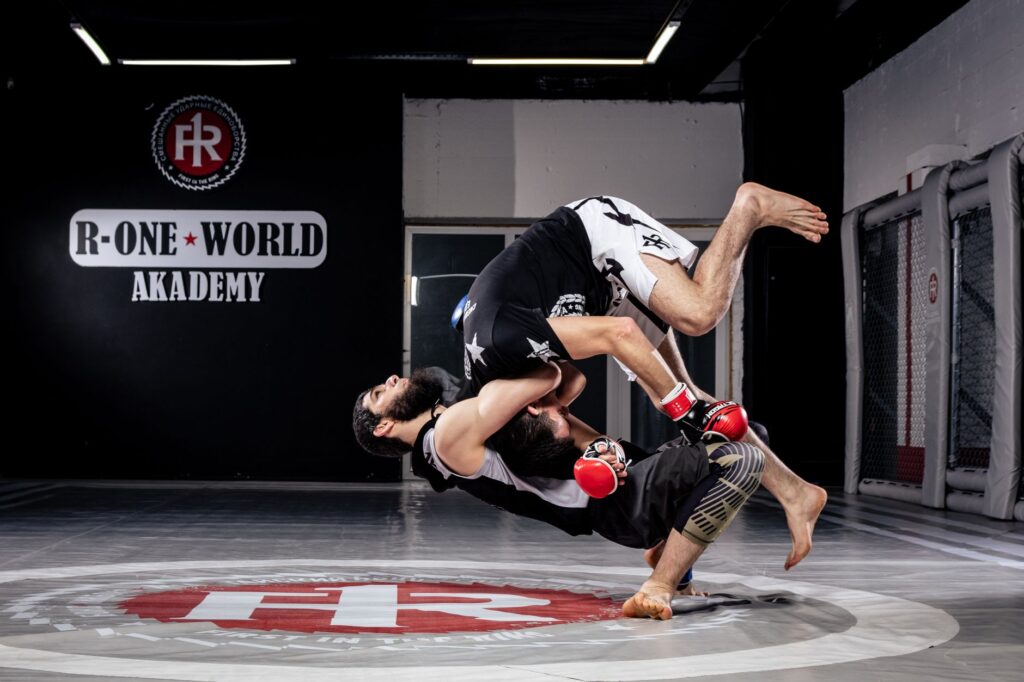
A double-leg changes levels, steps deep between the opponent’s feet, and wraps both legs at the knees or thighs before finishing them to the mat. It’s the archetypal wrestling shot, and it’s higher-reward than a single-leg — controlling both legs takes the opponent’s base away completely — but it’s also higher-risk, because getting there means committing your head and hips forward into range.
In BJJ specifically, that commitment is the whole conversation. A clean double is one of the most decisive ways to start a match on top; a stuffed double is one of the fastest ways to end up in a guillotine or giving up your back. The difference is almost always the penetration step and head position, not raw explosiveness.
Free every Tuesday
The Grappler Brief
The week’s biggest stories from BJJ, judo, wrestling, and submission grappling—curated for people who train.
Sent out weekly.Opt out anytime.
How the double-leg works
- Change levels before you step, not as you step. Dropping your hips first means you shoot from under the opponent’s center of gravity instead of diving down into it.
- Penetrate deep with the lead knee. A shallow shot leaves your hips behind your shoulders — that’s the posture that gets sprawled on and guillotined.
- Keep the head up and to one side. Head down and central buries you under a sprawl; head up and off-center keeps your posture and your neck out of danger.
- Finish by taking the base away, not just pushing. Drive through the corner, lift, or turn — shoving straight forward into a braced opponent stalls the takedown.
Common entries into the double-leg
A double works best when the opponent’s weight is already moving or their hands are occupied.
- Off a hand-fighting reaction. When the opponent reaches or postures up to fight grips, their hips come forward and the shot opens.
- As a reaction to a stuffed single-leg. When a single-leg gets defended, switching to the far leg for a double is a classic chain.
- Off a fake or level-change feint. Showing a high attack to raise the opponent’s posture sets up the low shot underneath it.
- From the clinch, into a body-lock or trip if the shot stalls. If the double doesn’t finish cleanly, staying attached and switching to a body-lock takedown is safer than backing straight out.
Common mistakes
| Mistake | Why it fails | Better cue |
|---|---|---|
| Diving in with the head down and central | Buries you under the sprawl and exposes the neck to the guillotine | Head up and to one side, posture intact |
| Shooting shallow | Hips stay behind the shoulders and the shot stalls | Penetrate deep with the lead knee, hips under you |
| Changing levels late, as you step | You dive down into the opponent instead of shooting from underneath | Drop the level first, then step |
| Pushing straight ahead to finish | A braced opponent just absorbs it | Take the base away — drive the corner, lift, or turn |
How to defend the double-leg
The double’s commitment is also its weakness — a well-timed sprawl punishes it hard.
- Sprawl the hips back and down. Driving your weight onto the attacker’s shoulders and kicking the legs back is the primary answer to a deep shot.
- Meet the shot with a crossface or front headlock. Getting the head controlled turns a defended double into your own offense.
- Watch the level change, not the feet. Reacting to the hips dropping buys the split-second the sprawl needs.
- Protect the neck if you counter with a guillotine. A guillotine off a stuffed double is high-percentage, but a sloppy one gives the position back — secure it before committing.
Is the double-leg legal in BJJ?
Yes — double-leg takedowns are broadly legal and score 2 points under IBJJF-style rules once control is established.
The restrictions are on how you finish: slamming a guarded opponent, lifting-and-dropping, and certain boundary actions are handled differently across rulesets, ages, and belt levels.
Details differ by organization and division — confirm the current rulebook for the event you’re actually entering via the BJJ rules and scoring guide or the event page itself.
Safety and training notes
- Learn the knee-drop double before the blast double. A controlled knee-slide finish is far kinder on both partners’ bodies than a lifting, driving finish, especially while learning.
- Control the opponent’s landing. A double that dumps a partner flat on their back can injure — steer the descent rather than crashing it.
- Mind your own head and neck on the entry. The penetration step puts your head near the opponent’s hips and knees; keep posture so a collision or a knee doesn’t catch you.
Stop if a partner reports unusual pain, numbness, or joint discomfort beyond normal positional pressure. This article does not diagnose injuries; seek qualified medical care for concerning or persistent symptoms.
Examples to study
- Knee-drop double-legs in no-gi competition. Watch how the level change happens before the step — the shot comes from underneath, not from a dive downward.
- Double-leg-to-body-lock chains when the shot stalls. Note how good takedown artists stay attached and switch attacks rather than disengaging and resetting.
Pause footage at the bottom of the penetration step, before the finish — whether the hips are under the shoulders at that instant usually predicts whether the double lands or gets stuffed.
Related GrapplerHQ guides
- Single-leg takedown
- Body-lock takedown
- Guillotine choke — the main counter to a bad shot
- BJJ rules and scoring
- Wrestling: styles, rules, and what it teaches grapplers
Sources and further reading
- Effective Double Leg Takedown for BJJ Beginners.
- IBJJF Books and Videos — current rules materials.
- ADCC Rules and Regulations.
- Injury prevalence among BJJ practitioners — PubMed.
FAQ
Is the double-leg or single-leg better for BJJ?
Single-legs are generally safer and more common in BJJ because they commit less and expose the neck less. Doubles are higher-reward when they land cleanly but riskier if stuffed. Most people learn a reliable single first.
Why do I keep getting guillotined on my double-leg?
Usually because the head goes down and central on the shot. Keeping the head up and to one side, with the hips under the shoulders, takes the neck out of the guillotine line.
Does a double-leg takedown score in BJJ?
Yes — 2 points under IBJJF-style rules once the takedown lands and control is established. Slam and boundary rules for the finish vary by ruleset.
What’s the safest double-leg to learn first?
The knee-drop double, where you finish by sliding a knee down and turning the corner, rather than the lifting blast double. It’s gentler on both partners and easier to control while learning.
Bottom line
The double-leg trades the single’s safety for the power of taking both legs and the whole base at once. That trade is only worth it if the penetration step is deep and the head stays up — otherwise you’ve just handed a good grappler your neck. Learn the knee-drop version first, and treat head position as a safety rule, not a stylistic preference.