Quick answer: Back control means being glued to your opponent’s back with both feet hooked inside their thighs and a seatbelt grip around their torso — the single most dominant position in grappling. It scores 4 points under IBJJF-style rules and feeds the rear naked choke, the highest-percentage finish in the sport. Our own study of UFC BJJ events found the rear naked choke was the most common submission across the first nine cards.
This guide is educational. Drill with qualified coaching, apply pressure gradually, tap early, and release immediately when a partner taps or cannot communicate clearly.
| Detail | Back control summary |
|---|---|
| Technique family | Dominant control position |
| Key components | Two hooks (or body triangle), seatbelt grip, chest-to-back connection |
| IBJJF scoring | 4 points with both hooks in; body triangle alone does not score |
| First defensive priority | Win the hand fight — two hands on the choking arm |
What is back control in BJJ?
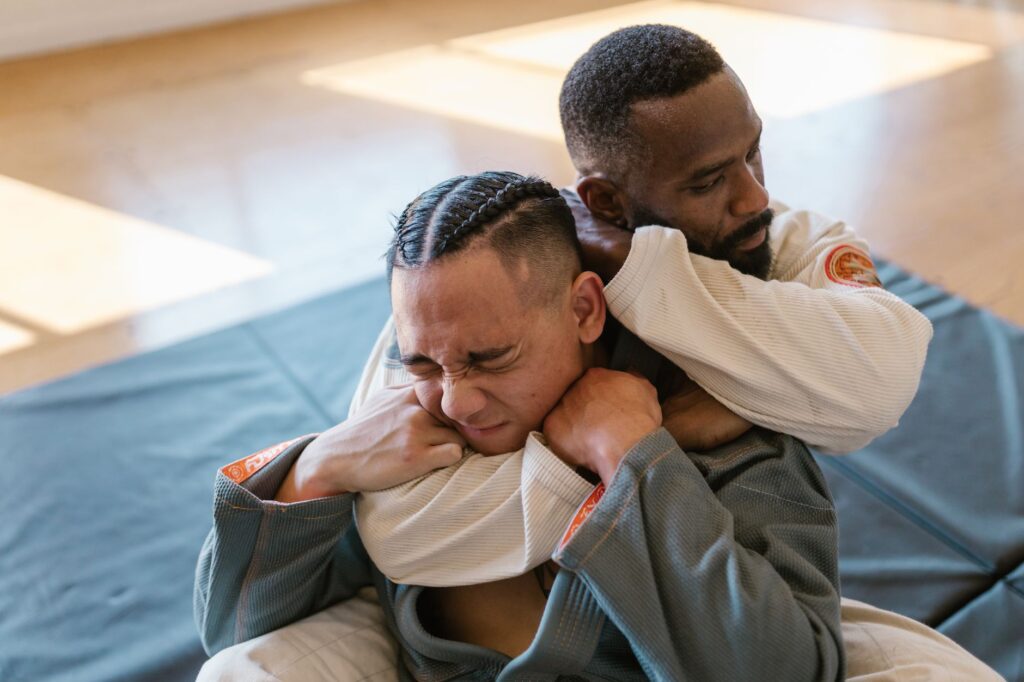
Back control (back mount, rear mount) is the position where you attach to an opponent’s back: chest to their spine, feet hooked inside their thighs, arms in a seatbelt — one over the shoulder, one under the armpit, hands connected at their chest. From here you can attack their neck while they cannot see your grips, reach your head, or use their legs against you. No other position in grappling offers that much attack with that little exposure.
The body triangle — one leg crossed over their waist, locked behind the other knee — trades the two hooks for a squeezing figure-four that many no-gi players prefer for retention. Worth knowing: under IBJJF rules the body triangle alone does not score the 4 points; the points require both hooks.
Free every Tuesday
The Grappler Brief
The week’s biggest stories from BJJ, judo, wrestling, and submission grappling—curated for people who train.
Sent out weekly.Opt out anytime.
How back control actually works
- The seatbelt matters more than the hooks. A strong chest connection with the seatbelt survives losing a hook; two perfect hooks with no upper-body connection do not survive the first shoulder turn.
- Stay behind the shoulders. The defender escapes by getting their shoulders past yours to the mat. Follow them like a backpack — your chest never leaves their back.
- Win the hand fight before the choke. The rear naked choke is decided at the hands: your choking hand versus their two defending hands. Trap one of their wrists and the math flips.
- Use the hooks to steer, not to hold weight. Crossing the ankles in front is both a rookie error (ankle-lock exposure) and structurally weak; hooks ride the thighs.
Common entries into back control
- From turtle: when opponents turtle to avoid a pass, the seatbelt-and-roll entry is the classic route in.
- From technical mount: when the mounted opponent turns away, the back is one knee-slide behind their head away — mount and back control trade with each other constantly.
- Arm-drags and wrestling ties: Marcelo Garcia built one of the greatest careers in grappling on the arm-drag to back take, from seated guard and standing alike.
- Chair-sit / leg-drag counters: modern no-gi players wrist-ride and chair-sit into the back when opponents turn away mid-pass.
What to attack from back control
The rear naked choke is the position’s headline attack and the most proven finish in grappling — in GrapplerHQ’s UFC BJJ study, it produced more finishes than any other submission across the promotion’s first nine events. In the gi, the bow and arrow choke is arguably even higher percentage, using the collar as a built-in handle. Armbars appear when the defender turtles their hands too well, and short chokes punish half-defended necks. The attacking rhythm is a loop: threaten the neck, take the arm the defense extends, return to the neck.
Common mistakes
| Mistake | Why it fails | Better cue |
|---|---|---|
| Crossing the ankles in front | Weak structure, and a straight ankle lock is sitting there | Hooks inside the thighs, or lock a body triangle |
| Chasing the choke with no hand fight | Two defending hands beat one choking arm every time | Strip or trap a wrist first, then feed the choke |
| Letting the shoulders slip | Once their shoulders hit the mat past yours, the escape is mostly done | Chest glued between their shoulder blades, always |
| Squeezing early and burning out | A half-set choke wastes the grip and warns the defender | Position first, squeeze once — when the forearm is truly under the chin |
How opponents escape back control
- Hand fighting first: two-on-one against the choking arm, chin tucked — not an escape by itself, but the survival layer every escape needs.
- Shoulder walk to the mat: the defender works their shoulders down toward the open side (the side of the seatbelt’s under-arm), aiming to put their back flat on the floor past the attacker’s chest.
- Hook stripping: pushing a hook off with a hand or opposite foot to kill the leg connection, then turning to face.
- The order matters: neck safe, then shoulders, then hooks. Defenders who chase hooks while their neck is exposed get choked mid-escape.
How back control is scored in competition
Under the IBJJF-style points system, back control scores 4 points when both hooks are in and the position is controlled for roughly 3 seconds. The body triangle, despite being a strong control, does not meet the hooks requirement on its own — a genuinely useful detail in close matches. ADCC also scores the back in its points period, and in MMA judging, back control with sustained threat is weighed as heavily as anything short of a finish. Rules shift between organizations; confirm with the BJJ rules and scoring guide and the current event materials.
Safety and training notes
- Chokes end fast. A well-set rear naked choke can put someone out in seconds; apply the squeeze progressively and release the instant a partner taps or goes quiet.
- No neck cranks in place of chokes. If the forearm is across the jaw or face instead of the neck in drilling, reset rather than pulling harder.
- Body triangle pressure on the ribs and diaphragm builds quietly; treat taps to pressure like taps to anything else.
Stop if a partner reports unusual pain, numbness, or trouble breathing beyond normal positional discomfort. This article does not diagnose injuries; seek qualified medical care for concerning or persistent symptoms.
Examples to study
- Marcelo Garcia’s arm-drag and seatbelt system. The defining modern back-take game: watch how the seatbelt arrives before the hooks, and how he rides turning opponents without ever losing chest connection.
- The rear naked choke data from UFC BJJ. GrapplerHQ’s own event study found the RNC leading all submissions — study how often finishes came from a trapped wrist rather than raw squeezing.
Related GrapplerHQ guides
Sources and further reading
- IBJJF Books and Videos — current rules materials
- ADCC Rules and Regulations
- Injury prevalence among BJJ practitioners — PubMed
FAQ
How many points is back control worth?
4 points under IBJJF-style rules, with both hooks inside the thighs and roughly 3 seconds of control. A body triangle alone does not score, even though it controls well.
Is the body triangle better than hooks?
For retention, often yes — it is much harder to strip. For points under IBJJF rules, no — it does not satisfy the hooks requirement. Many players ride the body triangle and switch to hooks when points matter.
What is the best submission from back control?
The rear naked choke in no-gi and the bow and arrow choke in the gi. GrapplerHQ’s UFC BJJ study found the RNC was the single most common finish across the promotion’s first nine events.
What is the first thing to do when someone takes your back?
Protect your neck: chin down, two hands controlling the choking arm. Only after the neck is safe do you work your shoulders to the mat and address the hooks.
Bottom line
Back control is the closest thing grappling has to a won position, but it is won by the seatbelt and the hand fight, not the hooks. Keep your chest glued between their shoulder blades, trap a wrist before you feed the choke, and the highest-percentage finish in the sport does the rest. Lose the shoulders, and no amount of leg squeezing gets the position back.