Quick answer: Rafael Mendes is a Brazilian BJJ black belt, six-time black-belt world champion, ADCC champion, and co-founder of Art of Jiu-Jitsu, known for featherweight dominance and a major influence on modern berimbolo and guard systems.
Rafael Mendes is a useful profile for understanding Six black-belt world titles, ADCC success, AOJ, berimbolo-era guard work, and coaching. The surrounding context includes Tainan Dalpra, Jessa Khan, and Cole Abate, which helps readers compare styles, eras, teams, and rule sets without reducing the athlete to a simple list of results.
Rafael Mendes quick facts
| Detail | Summary |
|---|---|
| Full name | Rafael Mendes Godoy |
| Nationality | Brazilian |
| Team/academy | Art of Jiu-Jitsu |
| Rank | BJJ black belt under Ramon Lemos |
| Known for | Six black-belt world titles, ADCC success, AOJ, berimbolo-era guard work, and coaching |
| Related academy | AOJ, founded with Guilherme Mendes and PM Tenore |
Who is Rafael Mendes?
Rafael Mendes became one of the defining featherweights of modern sport jiu-jitsu.
Public references list him as a six-time black-belt world champion and a founder of Art of Jiu-Jitsu.
Free every Tuesday
The Grappler Brief
The week’s biggest stories from BJJ, judo, wrestling, and submission grappling—curated for people who train.
Sent out weekly.Opt out anytime.
Career snapshot
His rivalry with Rubens ‘Cobrinha’ Charles and his success in both IBJJF and ADCC contexts made him a major technical reference point.
As a coach and AOJ founder, Mendes now connects directly to current athletes like Tainan Dalpra, Jessa Khan, and Cole Abate.
Why Rafael Mendes matters in grappling
Rafael Mendes is easier to understand when the results and style are read together. The short version is that Rafael Mendes is known for Six black-belt world titles, ADCC success, AOJ, berimbolo-era guard work, and coaching. That context helps readers place the athlete in the right rulesets, era, and technical conversation instead of treating the page like a bare biography.
The comparison points matter too. Looking at Rafael Mendes alongside Tainan Dalpra, Jessa Khan, Cole Abate, Kade Ruotolo, and Andre Galvao helps show which parts of the athlete’s game are common to an era or team, and which parts are more individual. That is especially useful for readers trying to understand why a style works, not just what medals or match results appear on a resume.
Rafael Mendes’s grappling style
Rafael Mendes’s style is best understood through the positions and habits that repeatedly show up in high-level matches. For a grappling fan, this is the part of the profile that turns a name and record into something useful to watch, compare, and learn from.
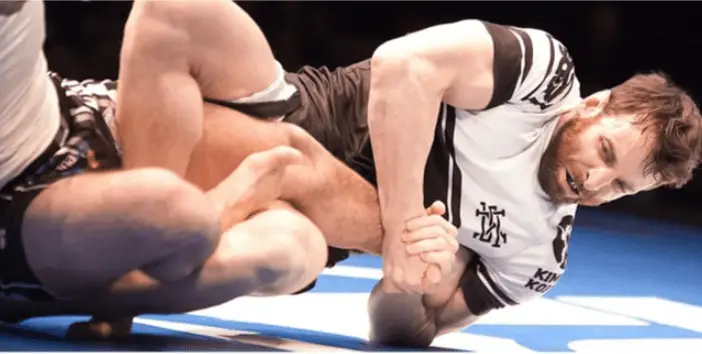
- Elite guard retention and inversion-based attacks.
- Berimbolo and back-take systems that shaped an era of lighter-weight BJJ.
- Sharp passing and positional control for featherweight competition.
- A technical system that later became part of AOJ’s athlete-development identity.
What to study in Rafael Mendes’s game
- Elite guard retention and inversion-based attacks. When studying Rafael Mendes, watch how guard choices create the next layer of offense: sweeps, back exposure, leg entries, or space to stand back up.
- Berimbolo and back-take systems that shaped an era of lighter-weight BJJ. Back attacks reward patience: the important details are hip position, hand fighting, and how the athlete keeps opponents from turning free.
- Sharp passing and positional control for featherweight competition. The key detail is not just pressure, but when the athlete changes angle, clears frames, and turns top position into scoring control or submission threats.
- A technical system that later became part of AOJ’s athlete-development identity. For study purposes, focus on how this habit connects positions instead of treating it as a single move.
Training takeaways
For everyday grapplers, the main lesson from Rafael Mendes’s profile is to connect technique to repeatable positions. A highlight finish is useful, but the higher-value study is how the athlete gets to the position, denies the opponent’s first escape, and keeps the match inside their preferred tempo.
Rafael Mendes’s career also shows why ruleset matters. Brazilian Jiu-Jitsu rewards different decisions depending on points, advantages, overtime, submission-only incentives, or professional event pacing. Reading the profile through that lens makes the technical sections more useful for training and match study.
The best way to use this profile is to pick one or two repeatable habits and look for them in match footage: first contact, preferred guard or passing lane, reaction to resistance, and the reset after a failed attack. That keeps the page practical for fans who want context and for grapplers who want ideas they can actually take back to training.
How Rafael Mendes compares with related grapplers
Rafael Mendes pairs naturally with Tainan Dalpra, Jessa Khan, Cole Abate, Kade Ruotolo, and Andre Galvao because those names create useful context around teams, divisions, rule sets, and technical choices. Comparing them helps readers see whether an athlete is winning with pressure, guard retention, passing, wrestling, leg attacks, back control, or a blend of several areas.
That comparison also keeps the page practical. Instead of treating grapplers as isolated biographies, it helps readers understand the matchups and stylistic contrasts that make BJJ and submission grappling easier to follow.
Related grapplers and pages
Rafael Mendes connects naturally to Tainan Dalpra, Jessa Khan, Cole Abate, Kade Ruotolo, and Andre Galvao. These profiles and guides are useful if you want to compare eras, teams, rule sets, or stylistic matchups across BJJ and submission grappling.
- /profiles/kade-ruotolo-grappler-profile/
- /profiles/andre-galvao-grappler-profile/
- /brazilian-jiu-jitsu/bjj-points-system/
- /brazilian-jiu-jitsu/bjj-belt-order/
- Browse all BJJ fighter profiles
Sources and further reading
FAQ
What is Rafael Mendes known for?
Rafael Mendes is known for featherweight BJJ dominance, six black-belt world titles, ADCC success, AOJ, and modern guard/back-take systems.
Did Rafael Mendes found AOJ?
Public references describe Rafael Mendes as a co-founder of Art of Jiu-Jitsu with Guilherme Mendes and PM Tenore.
Who gave Rafael Mendes his black belt?
Public references list Rafael Mendes as a black belt under Ramon Lemos.