Quick answer: Knee-on-belly (KOB) is a top control position where you drive one knee or shin across the opponent’s stomach while the other foot posts wide for base, keeping your hips high and heavy. It scores 2 points under IBJJF-style rules once stabilized, and its real value is mobility: it trades the locked-down control of side control for the freedom to move, attack, and chase the back.
This guide is educational. Drill with qualified coaching, apply pressure gradually, tap early, and release immediately when a partner taps or cannot communicate clearly.
| Detail | Knee-on-Belly summary |
|---|---|
| Technique family | Dominant top control position |
| Common context | Transition out of side control; a mobile pin that hunts submissions and the back |
| IBJJF scoring | 2 points once established and controlled |
| First control priority | Hips high and heavy over the knee, posture up — not sitting low |
What is knee-on-belly in BJJ?
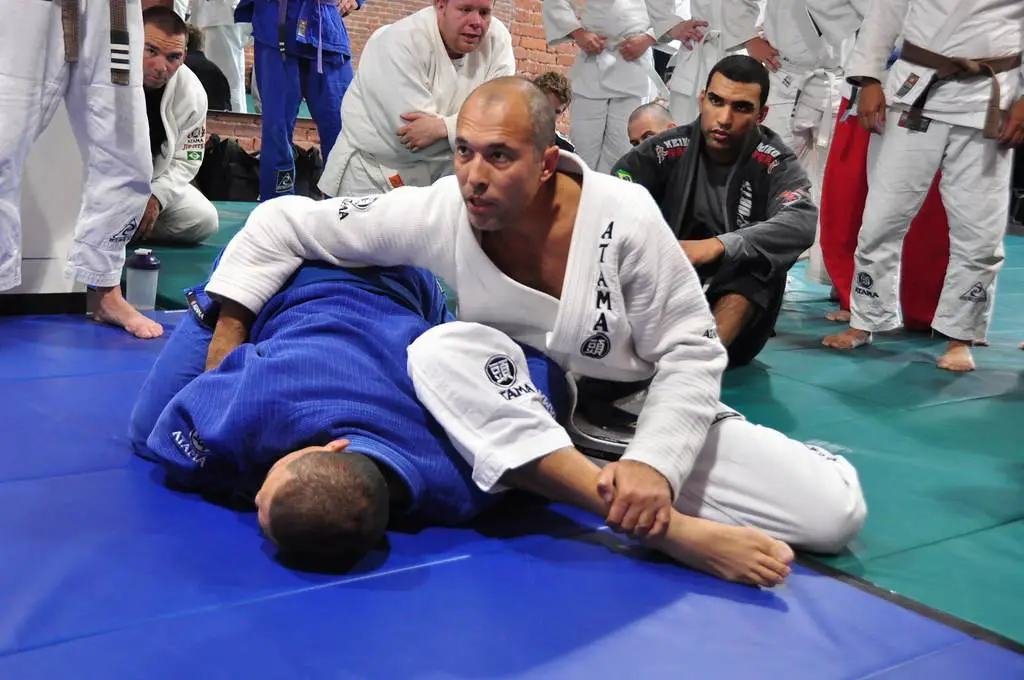
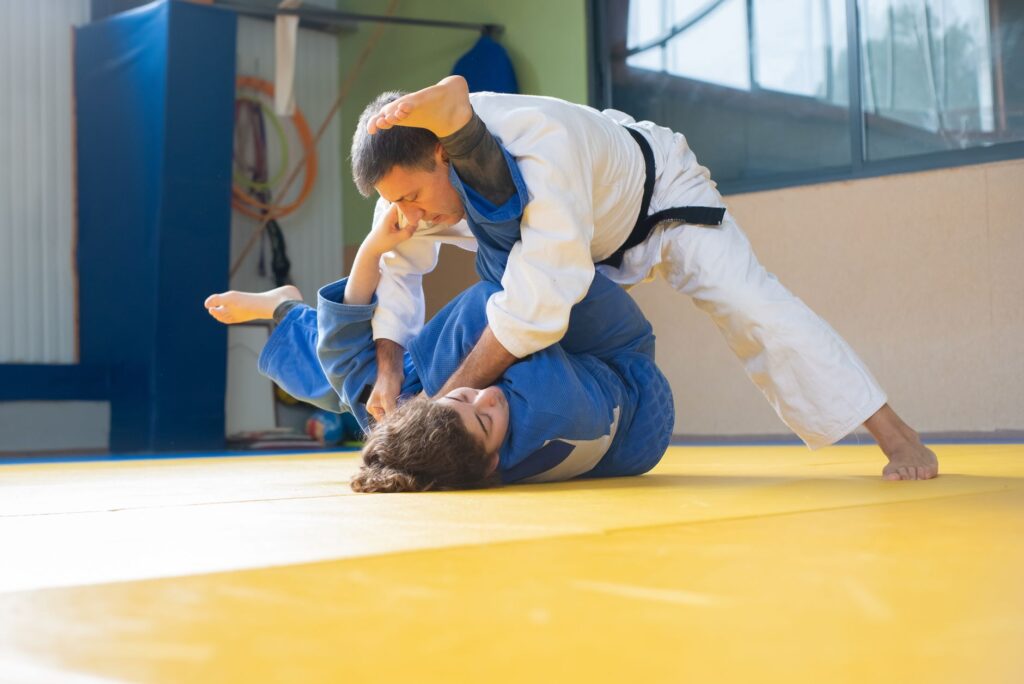
Knee-on-belly is a top pin where one knee or shin presses across the opponent’s midsection, the other leg posts out wide as a kickstand, and your posture stays tall with the hips stacked high over the driving knee. Unlike side control or mount, which pin the opponent flat and hold them there, KOB is deliberately mobile — it’s a position you pass through and attack from as much as one you sit in.
That mobility is the whole point. The high, heavy knee is uncomfortable enough that opponents want to move, and every time they move you have easy access to switch sides, spin to the back, or attack an arm. The tradeoff is that KOB is less locked-down than side control, so a fumbled KOB is easier to escape than a fumbled pin. It’s control through pressure and threat, not through smothering.
Free every Tuesday
The Grappler Brief
The week’s biggest stories from BJJ, judo, wrestling, and submission grappling—curated for people who train.
Sent out weekly.Opt out anytime.
How knee-on-belly control works
- Keep the hips high and heavy. The pressure comes from stacking your weight over the driving knee with posture up — sitting low or leaning back throws the control away.
- Post the base foot wide. The far leg is a kickstand; a narrow base gets bridged and rolled, a wide one keeps you stable while the opponent squirms.
- Control the far side, not just the belly. A collar-and-belt grip (gi) or a shoulder-and-hip frame (no-gi) stops the opponent from turning in and dumping the knee.
- Stay ready to move. KOB rewards riding the opponent’s reactions — when they push the knee, switch sides or spin rather than fighting to stay put.
Common entries and what to attack
KOB is almost always reached from another top position, and it’s a launchpad more than a destination.
- From side control. The most common entry — drive the near knee up onto the belly as you lift your hips, converting a static pin into a mobile, scoring position.
- Off a guard pass. Landing directly in KOB as you clear the legs immediately banks 2 points and keeps you moving.
- Into an armbar or collar choke. The high posture and free hands make KOB one of the best positions to attack the near arm or the collar; the threat of the submission also freezes the opponent for the score.
- Into the back. When the opponent turns away to escape the knee, they often feed you the back — a direct route to back control.
Common mistakes
| Mistake | Why it fails | Better cue |
|---|---|---|
| Sitting low with the hips down | Kills the pressure and makes the position easy to bridge out of | Stack the hips high and heavy over the knee, posture up |
| Posting the base foot too narrow | The opponent bridges and rolls you off | Kick the base leg out wide as a stable kickstand |
| Only controlling the belly | The opponent turns in and dumps the knee | Add a far-side grip or frame to stop the turn |
| Fighting to stay static when pushed | Throws away KOB’s biggest advantage — its mobility | Ride the reaction: switch sides or spin to the back |
How to escape knee-on-belly
KOB escapes work best early, before the top player settles the weight and grips — and they deserve their own detailed treatment in the knee-on-belly escape guide.
- Address the knee before anything else. Two hands on the driving knee, framing it off your stomach, buys the space everything else needs.
- Turn toward the knee, not away. Turning away feeds your back; turning in lets you recover guard as you frame the knee out.
- Bridge only with the frame already in. A bridge without controlling the knee just resets you flatter and more pinned.
- Move before the grips settle. Once a collar-and-belt grip is locked, the escape gets dramatically harder — early is easier.
Is knee-on-belly legal in BJJ, and does it score?
Yes — KOB is fully legal and scores 2 points under IBJJF-style rules once it’s established and controlled for the required moment.
One thing to watch: the knee driving into the torso can be uncomfortable, and rules around pressure and permitted contact can vary by age division and belt level, so ease off with newer or younger partners.
Details differ by organization and division — confirm the current rulebook for the event you’re actually entering via the BJJ rules and scoring guide or the event page itself.
Safety and training notes
- Control the pressure of the knee. Full-weight knee-on-belly is genuinely painful and can wind or bruise a partner; scale the pressure to who you’re training with, especially smaller athletes.
- Give armbar transitions time. Attacks from KOB to the arm can move fast — extend the elbow gradually so partners can tap in time.
- Don’t drop the knee onto a turning partner. Time the knee’s placement so it lands on the belly, not on the ribs or spine as they move.
Stop if a partner reports unusual pain, numbness, or trouble breathing beyond normal positional discomfort. This article does not diagnose injuries; seek qualified medical care for concerning or persistent symptoms.
Examples to study
- Knee-on-belly used as a passing waypoint in competition. Watch how the top player banks the 2 points and immediately threatens an attack rather than settling in place.
- KOB-to-back transitions off the opponent’s escape attempt. Note how turning away from the knee is exactly what hands over the back.
Pause footage at the instant the knee lands and the hips stack high — that posture, not the grip, is what makes the position both score and stay mobile.
Related GrapplerHQ guides
- Side control — the most common entry into KOB
- Knee-on-belly escape
- Mount position
- BJJ rules and scoring
Sources and further reading
- Simple Knee On Belly Escapes.
- IBJJF Books and Videos — current rules materials.
- ADCC Rules and Regulations.
- Injury prevalence among BJJ practitioners — PubMed.
FAQ
How many points is knee-on-belly worth in BJJ?
2 points under IBJJF-style rules, once it’s established and controlled. Scoring depends on control, not just touching the knee down — and details vary by organization, so check the event’s rulebook.
Why use knee-on-belly instead of side control?
Mobility. Side control locks the opponent down; KOB trades some of that control for the freedom to move, score points, attack the arm or collar, and chase the back when they react.
What’s the key to holding knee-on-belly?
Hips high and heavy over the driving knee with the base foot posted wide. Sitting low kills the pressure and makes you easy to bridge off.
What’s the first thing to do when caught in knee-on-belly?
Get two hands on the knee and frame it off your stomach before it settles, then turn toward the knee to recover guard. Escaping early, before the grips lock, is far easier than escaping late.
Bottom line
Knee-on-belly is control through pressure and movement rather than smothering. Keep the hips high, the base wide, and stay ready to switch or spin the moment the opponent reacts — the position is designed to punish their movement, not to sit still. If your KOB keeps getting bridged off, you’re almost certainly sitting too low; stack the hips up and let the knee do the work.