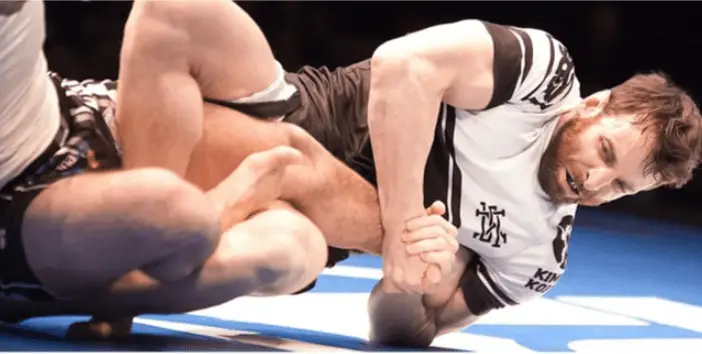
Quick answer: Gabi Pessanha is a Brazilian BJJ black belt and one of the most dominant modern women’s gi competitors, known for repeated IBJJF double-gold runs, heavyweight and absolute titles, and historic Grand Slam achievements.
Gabi Pessanha is a useful profile for understanding IBJJF heavyweight and absolute dominance, double-gold runs, and Grand Slam achievements. The surrounding context includes Gabi Garcia, Mayssa Bastos, and Bia Mesquita, which helps readers compare styles, eras, teams, and rule sets without reducing the athlete to a simple list of results.
Gabi Pessanha quick facts
| Detail | Summary |
|---|---|
| Full name | Gabrieli Pessanha |
| Nationality | Brazilian |
| Primary sport | Brazilian Jiu-Jitsu |
| Rank | BJJ black belt under Marcio de Deus |
| Known for | IBJJF heavyweight and absolute dominance, double-gold runs, and Grand Slam achievements |
| Recent context | Public 2026 Worlds coverage reported a sixth straight double-gold world run and 12 world titles |
Who is Gabi Pessanha?
Pessanha became the dominant force in modern women’s heavier gi divisions by repeatedly winning both weight and absolute brackets.
Public references describe multiple double Grand Slam seasons and a long run of major IBJJF success.
Free every Tuesday
The Grappler Brief
The week’s biggest stories from BJJ, judo, wrestling, and submission grappling—curated for people who train.
Sent out weekly.Opt out anytime.
Career snapshot
Recent 2026 Worlds coverage reported that she completed another double-gold run and reached 12 world titles.
Her career gives readers a current women’s gi reference point rather than only older legend coverage.
Why Gabi Pessanha matters in grappling
Gabi Pessanha is easier to understand when the results and style are read together. The short version is that Gabi Pessanha is known for IBJJF heavyweight and absolute dominance, double-gold runs, and Grand Slam achievements. That context helps readers place the athlete in the right rulesets, era, and technical conversation instead of treating the page like a bare biography.
The comparison points matter too. Looking at Gabi Pessanha alongside Gabi Garcia, Mayssa Bastos, Bia Mesquita, Mackenzie Dern, and Tainan Dalpra helps show which parts of the athlete’s game are common to an era or team, and which parts are more individual. That is especially useful for readers trying to understand why a style works, not just what medals or match results appear on a resume.
Gabi Pessanha’s grappling style
Gabi Pessanha’s style is best understood through the positions and habits that repeatedly show up in high-level matches. For a grappling fan, this is the part of the profile that turns a name and record into something useful to watch, compare, and learn from.
- Heavy top pressure and positional control in super-heavyweight divisions.
- Absolute-division confidence against a range of body types.
- Strong guard passing and pinning sequences.
- Consistency across long tournament seasons and major IBJJF events.
What to study in Gabi Pessanha’s game
- Heavy top pressure and positional control in super-heavyweight divisions. The key detail is not just pressure, but when the athlete changes angle, clears frames, and turns top position into scoring control or submission threats.
- Absolute-division confidence against a range of body types. For study purposes, focus on how this habit connects positions instead of treating it as a single move.
- Strong guard passing and pinning sequences. When studying Gabi Pessanha, watch how guard choices create the next layer of offense: sweeps, back exposure, leg entries, or space to stand back up.
- Consistency across long tournament seasons and major IBJJF events. For study purposes, focus on how this habit connects positions instead of treating it as a single move.
Training takeaways
For everyday grapplers, the main lesson from Gabi Pessanha’s profile is to connect technique to repeatable positions. A highlight finish is useful, but the higher-value study is how the athlete gets to the position, denies the opponent’s first escape, and keeps the match inside their preferred tempo.
Gabi Pessanha’s career also shows why ruleset matters. Brazilian Jiu-Jitsu rewards different decisions depending on points, advantages, overtime, submission-only incentives, or professional event pacing. Reading the profile through that lens makes the technical sections more useful for training and match study.
The best way to use this profile is to pick one or two repeatable habits and look for them in match footage: first contact, preferred guard or passing lane, reaction to resistance, and the reset after a failed attack. That keeps the page practical for fans who want context and for grapplers who want ideas they can actually take back to training.
How Gabi Pessanha compares with related grapplers
Gabi Pessanha pairs naturally with Gabi Garcia, Mayssa Bastos, Bia Mesquita, Mackenzie Dern, and Tainan Dalpra because those names create useful context around teams, divisions, rule sets, and technical choices. Comparing them helps readers see whether an athlete is winning with pressure, guard retention, passing, wrestling, leg attacks, back control, or a blend of several areas.
That comparison also keeps the page practical. Instead of treating grapplers as isolated biographies, it helps readers understand the matchups and stylistic contrasts that make BJJ and submission grappling easier to follow.
Related grapplers and pages
Gabi Pessanha connects naturally to Gabi Garcia, Mayssa Bastos, Bia Mesquita, Mackenzie Dern, and Tainan Dalpra. These profiles and guides are useful if you want to compare eras, teams, rule sets, or stylistic matchups across BJJ and submission grappling.
- /profiles/gabi-garcia-grappler-profile/
- /profiles/bia-mesquita-grappler-profile/
- /profiles/mackenzie-dern-grappler-profile/
- /brazilian-jiu-jitsu/bjj-weight-classes/
- Browse all BJJ fighter profiles
Sources and further reading
FAQ
What is Gabi Pessanha known for?
Gabi Pessanha is known for IBJJF heavyweight and absolute dominance, repeated double-gold world-title runs, and Grand Slam achievements.
Is Gabi Pessanha a heavyweight?
Pessanha is best known for heavier women’s divisions and absolute brackets in Brazilian Jiu-Jitsu.
How many world titles does Gabi Pessanha have?
Recent public coverage reported 12 world titles after another double-gold run in 2026, but final wording should be checked against official results before publication.