
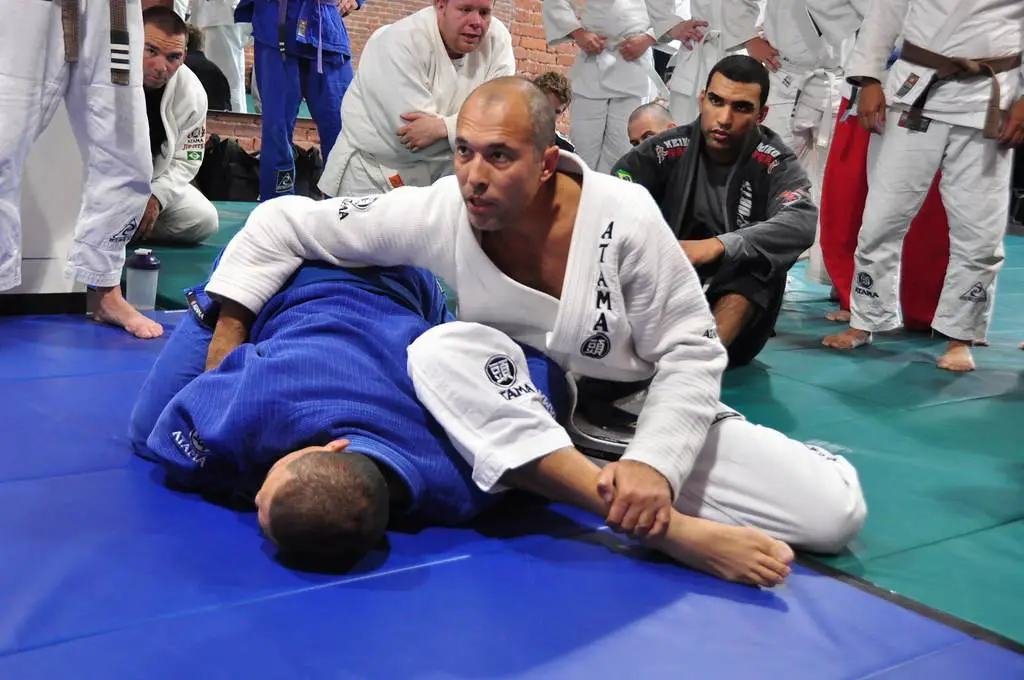
Last updated: January 2026
The omoplata is one of Brazilian Jiu-Jitsu’s most misunderstood submissions. To beginners it looks slow, awkward, or easy to escape. To experienced grapplers, it’s a positional submission system that blends shoulder locks, sweeps, back takes, and relentless top control. When done well, the omoplata isn’t just a submission — it’s a hub that forces predictable reactions.
Quick answer: The omoplata is a shoulder lock where you trap your opponent’s arm with your legs and rotate your body so their shoulder is internally rotated and pinned behind their back.
Big idea: Even when the submission doesn’t finish, the omoplata almost always leads to a sweep, back exposure, or dominant top position.
Table of Contents
- Introduction to the Omoplata
- History and Evolution
- How the Omoplata Works (Mechanics)
- High-Percentage Entries
- Finishing Mechanics
- Omoplata Chains (Sweeps, Back Takes, Submissions)
- Common Defenses and Counters
- Training Tips and Drills
- FAQs
Introduction to the Omoplata
The omoplata is a shoulder lock that attacks the glenohumeral joint by internally rotating the opponent’s arm behind their back. While it can finish as a submission, its real power lies in how reliably it breaks posture, disrupts base, and funnels opponents into bad decisions.
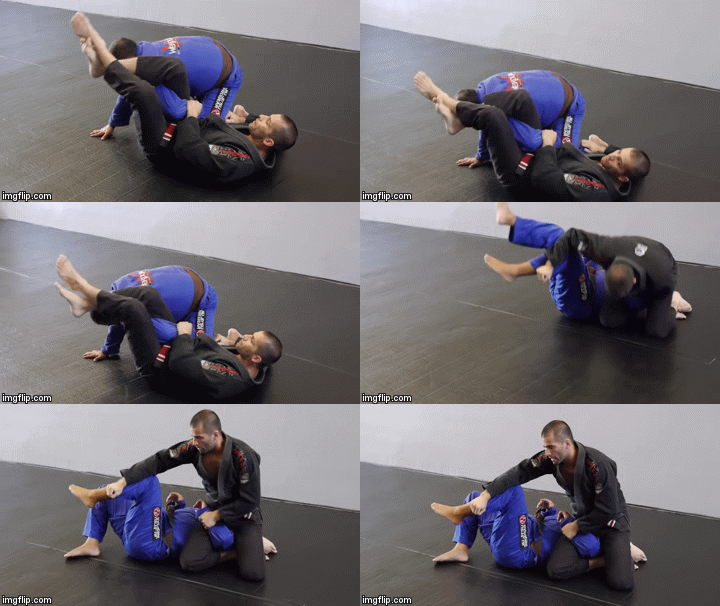
History and Evolution of the Omoplata
The term omoplata comes from Portuguese and refers to the scapula (shoulder blade). The mechanics of the technique have clear roots in Judo, where shoulder locks such as ude-garami variations already existed. However, Brazilian Jiu-Jitsu transformed the omoplata by integrating it into the guard game and turning it into a dynamic attacking system.
For decades, the omoplata was treated as a transitional position rather than a true submission. That perception changed dramatically in the 1990s, largely due to innovators like Nino Schembri, who demonstrated that the omoplata could reliably off-balance opponents, force predictable reactions, and chain into high-percentage finishes.
How the Omoplata Works (Mechanics)
The omoplata works by isolating the opponent’s arm and rotating your hips so their shoulder is forced into internal rotation. Unlike fast joint locks, the omoplata applies pressure gradually, which makes posture control and angle more important than explosive force.
- Arm isolation: The elbow must be separated from the body.
- Hip rotation: Your body turns roughly 180 degrees relative to the opponent.
- Shoulder pin: Your legs and hips prevent the opponent from rolling or posturing.
High-Percentage Omoplata Entries
Most successful omoplatas come from situations where your opponent is already defending something else.
From Closed Guard
- Break posture and control the targeted arm.
- Open your guard and shift your hips toward the isolated arm.
- Shoot your leg under the armpit and rotate your body.
- Sit up and secure the waist to prevent escapes.
From Triangle Defense
When opponents hide their arm to escape a triangle choke, they often expose themselves to the omoplata. This triangle-to-omoplata transition is one of the most reliable chains in BJJ.
Finishing the Omoplata
The most common reason omoplatas fail is loss of control — not lack of pressure. Before thinking about the shoulder lock, think about stopping the roll.
- Keep your knees pointed toward the opponent.
- Control the waist or belt line.
- Stay off your back — sitting up increases finishing pressure.
Omoplata Chains: Sweeps, Back Takes, and Submissions
Elite players rarely force the omoplata finish. Instead, they follow reactions:
- Opponent rolls forward: follow to top position.
- Opponent postures up: switch to sweep.
- Opponent hides the arm: transition to armbar or back take.
Common Defenses and Counters
Understanding defenses will make your attacks sharper.
- Forward roll: follow and secure top control.
- Posture and step over: maintain waist control and re-angle.
- Grip breaking: switch immediately to sweep or back take.
Training Tips and Drills
- Reaction drilling: start in omoplata and alternate between roll, posture, and stack defenses.
- Chain focus: omoplata → sweep → submission.
- Slow control reps: emphasize balance and posture over speed.
Frequently Asked Questions
Is the omoplata a submission or a position?
Both. It is a legitimate shoulder lock, but it also functions as a control position that leads to sweeps and back takes.
Why do people say the omoplata is hard to finish?
Because many people rush the shoulder lock instead of controlling posture and rotation first.
Does the omoplata work in no-gi?
Yes. You must rely more on hip positioning and body control rather than grips.
Conclusion
The omoplata rewards patience, control, and understanding of human movement. When you stop chasing it as a submission and start using it as a system, it becomes one of the most reliable tools in Brazilian Jiu-Jitsu — especially for players who value precision over brute force.