Starting Brazilian Jiu-Jitsu (BJJ) can be both thrilling and intimidating. This guide addresses common beginner questions such as attire, class structure, safety, and gym selection. BJJ is a skill-based martial art focused on technique over strength, making it accessible to all fitness levels. As of 2026, BJJ remains a popular choice for those seeking fitness, self-defense, and community.
Last updated: January 2026
Starting Brazilian Jiu-Jitsu (BJJ) is exciting — and also weirdly intimidating. You’re learning a new sport, a new language (what even is a “guard”?), and a new kind of cardio (the “why are my lungs on fire” variety).
This beginner’s FAQ is built to answer the questions people actually ask before their first class — what to wear, what happens in class, how to choose a gym, what rolling is, how not to get hurt, and how to make progress without burning out.
Quick note: You don’t need to be in shape, tough, or flexible to start BJJ.
You just need to show up. Everyone starts clueless. That’s normal.
Table of Contents
- What is BJJ?
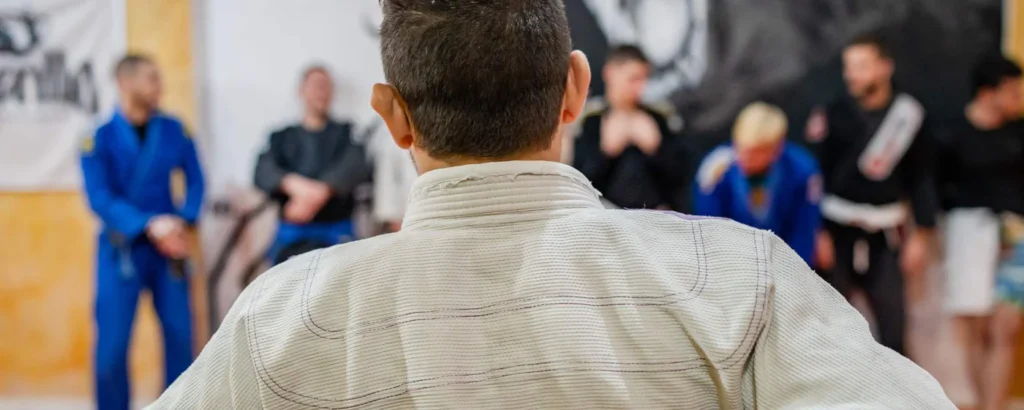
- What happens in a beginner class?
- What should I wear?
- What should I bring?
- What is rolling and do I have to do it?
- Will I get hurt?
- Do I need to be fit first?
- How often should beginners train?
- How much does BJJ cost?
- How do I choose a good BJJ gym?
- BJJ etiquette: the unwritten rules
- What are the basic positions?
- What submissions should I learn first?
- How long does it take to get “good”?
- Beginner FAQ
What Is Brazilian Jiu-Jitsu (BJJ)?
Brazilian Jiu-Jitsu is a grappling martial art focused on control and submissions. Instead of striking, you use leverage, positioning, and pressure to pin, sweep, and submit an opponent — often on the ground.
One of the reasons BJJ works so well for beginners is that it’s a skill sport. Technique matters a lot more than strength, and you can train realistically (with resistance) without needing to get punched in the face.
What Happens in a Beginner BJJ Class?
Most beginner classes follow a predictable structure. Knowing this helps calm the nerves.
- Warm-up (5–15 min): light movement, mobility, basic drills (shrimping, bridges, technical stand-ups)
- Technique (20–30 min): one or two techniques taught step-by-step
- Drilling (15–25 min): practice with a partner in a controlled way
- Rolling / sparring (optional): either positional rounds or full rounds, depending on the gym
Most gyms are used to beginners. You won’t be the first nervous person they’ve seen — not even this week.
What Should I Wear to My First BJJ Class?
Ask the gym what they teach that day: Gi or No-Gi. If you’re not sure, wear simple athletic gear and they’ll point you in the right direction.
If it’s a No-Gi class
- Rash guard or fitted athletic shirt (avoid loose shirts that ride up)
- Grappling shorts or athletic shorts without pockets
- Optional: spats/leggings under shorts
If it’s a Gi class
- A gi (some gyms lend/rent one for trials)
- Rash guard under the gi is a good idea (comfort + hygiene)
Don’t wear: jewelry, watches, belts, hoodies, anything with zippers, or hard plastic bits. And trim your nails. Your training partners will silently love you for it.
What Should I Bring to Class?
- Water bottle
- Flip flops/sandals (for walking off the mats)
- Towel (optional but useful)
- Change of shirt (you will be sweaty)
- Mouthguard (optional early on, recommended if you keep training)
If you wear contact lenses, consider bringing eyedrops. Accidental face pressure happens in grappling. It’s not personal — it’s physics.
What Is “Rolling” and Do I Have to Do It?
Rolling is controlled sparring where you try techniques against a resisting partner. It’s the “live testing” part of BJJ.
You usually do not have to roll on day one. Good gyms let beginners drill first, or roll lightly with experienced partners who keep things safe and controlled.
Will I Get Hurt Doing BJJ?
Any sport has injury risk, but BJJ is surprisingly safe when trained with good habits:
- Tap early and often. Tapping is how you learn safely.
- Choose safe partners. If someone goes full chaos-mode with beginners, avoid them.
- Communicate. Tell your partner you’re new and want a light round.
- Don’t fight through joint locks. Flexibility is not invincibility.
If you have prior injuries, tell the coach. A good gym will help you modify positions and still train.
Do I Need to Get in Shape Before Starting BJJ?
No. BJJ is how a lot of people get in shape. The first few weeks can feel cardio-heavy because beginners tend to tense up and hold their breath. That improves quickly.
How to not gas out immediately
- Breathe through your nose when possible
- Relax your shoulders and hands (death grips burn energy)
- Use frames instead of pushing (bones don’t get tired like muscles)
- Pause and think — BJJ rewards calm problem-solving
How Often Should Beginners Train?
Most beginners do best with 2–3 classes per week. That’s frequent enough to retain what you learn, and slow enough for your body to recover.
If you train 5–6 days a week immediately, you might improve fast… or you might burn out. Sustainable progress beats hero-mode.
How Much Does BJJ Cost?
Costs vary a lot by city and gym type, but plan for:
- Monthly membership (most gyms)
- Gi and/or rashguards (one-time, then more if you get addicted… which you will)
- Optional extras: private lessons, seminars, competition fees
Pro tip: try a few gyms first. The “best” gym is the one you’ll actually attend consistently.
How Do I Choose a Good BJJ Gym?
This matters. The right gym can make BJJ the best hobby you’ve ever had. The wrong gym can make you quit in a month.
Green flags
- Coach is engaged with beginners (not just their competitors)
- Clean mats and clean culture
- Students are welcoming and controlled in sparring
- Clear fundamentals program
- Safety is respected (tapping is normal, not mocked)
Red flags
- Dirty mats / no cleaning routine
- Beginners are “thrown in” with wild sparring immediately
- Injuries are treated like a badge of honor
- Coach ignores questions or belittles students
BJJ Etiquette: The Unwritten Rules
BJJ gyms have culture. It’s usually friendly — but it has norms. Here are the big ones:
- Be clean: wash your gear, shower, trim nails
- No shoes on the mat
- Tap early (especially to neck cranks and joint locks)
- Ask questions — but don’t coach your training partners mid-round
- Control matters: don’t spike people, don’t jump guard, don’t go full speed on day one
What Are the Basic Positions in BJJ?
If BJJ were chess, positions are the board. Beginners progress faster when they learn positional “landmarks.”
- Guard: you’re on bottom controlling distance (closed guard, open guard, half guard)
- Side control: top pin position
- Mount: sitting on your opponent’s torso (strong top position)
- Back control: strongest control position in BJJ
Your first goal isn’t submissions — it’s learning how to escape bad positions and hold good ones.
What Submissions Should Beginners Learn First?
Most gyms teach fundamentals first — and that’s the right approach. Common “first submissions” include:
- Rear-naked choke (from back control)
- Armbar (usually from mount or guard)
- Kimura (from guard or side control)
- Guillotine (often from front headlock)
Once you’re ready, you can explore classic attacks like the triangle choke and omoplata:
How Long Does It Take to Get “Good” at BJJ?
Define “good.” If you mean “I don’t feel lost,” that often happens within a few months. If you mean “I can control and submit trained people,” that’s longer — and depends on training frequency, coaching quality, and consistency.
The biggest beginner win is this: you stop panicking. You start seeing patterns. You can breathe. That’s real progress.
Beginner’s FAQ
Am I too old to start BJJ?
No. People start in their 30s, 40s, 50s and beyond. Train smart, recover well, and choose safe partners.
Do I have to compete?
No. Competing is optional. Many people train for fitness, self-defense, fun, or mental challenge.
Is BJJ good for self-defense?
Yes — especially for control and escaping bad situations. But self-defense training varies by gym, so ask what they emphasize.
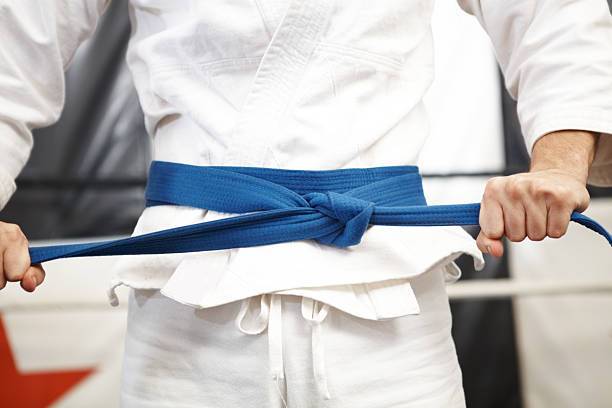
How do belts work in BJJ?
Belts represent skill, consistency, and mat time. Promotions aren’t “test-based” at most gyms — they’re earned through progress.
What should I do if I feel awkward or overwhelmed?
Keep showing up. Ask one question per class. Focus on survival and breathing. Nobody expects you to be good on day one.
What’s the #1 beginner tip?
Tap early, breathe, and train consistently. Your ego will want to sprint. Your progress wants you to jog.
Final Thoughts
BJJ is one of the few hobbies that improves your fitness, your confidence, and your ability to stay calm in chaos — all while giving you a built-in community.
Find a gym you trust. Start slow. Ask questions. And enjoy being a beginner — it’s the only time in BJJ where progress can happen every single week.