What is Pulling Guard in BJJ?
Pulling guard is a Brazilian Jiu-Jitsu (BJJ) technique where a practitioner voluntarily initiates a transition from a standing position to the ground by sitting or jumping into a “guard” position. Unlike a takedown, where the goal is to land on top, a guard puller intentionally chooses to be on the bottom to utilize their legs as primary weapons for sweeps and submissions.
In the world of grappling, few topics spark as much debate as the guard pull. While traditional martial arts emphasize the takedown, modern BJJ competition has evolved to favor the guard as a highly offensive position. For Grappler HQ readers, understanding when and how to pull guard—and the strategic implications of doing so—is essential for any well-rounded game.
Why Do BJJ Athletes Pull Guard?
While pulling guard might seem counterintuitive for self-defense (where staying on your feet is often preferred), it offers several strategic advantages in a sport Jiu-Jitsu context:
- Neutralizing Superior Wrestlers: If your opponent has an elite wrestling background, pulling guard “skips” the takedown battle, preventing them from scoring 2 points.
- Energy Conservation: Takedown battles are cardio-intensive. Pulling guard allows a practitioner to settle into a controlled environment immediately.
- The “Leg Lock” Entry: Modern “sub-only” and No-Gi formats often see practitioners pulling guard specifically to enter into leg entanglements like Ashi Garami.
- Leveraging Size Disparities: Smaller practitioners can use the leverage of their legs to control a much heavier opponent’s weight effectively.
| Pros of Pulling Guard | Cons of Pulling Guard |
|---|---|
| Dictates where the fight takes place | Concedes the top position (Gravity works against you) |
| Allows for immediate submission setups | Risks a “Guard Pass” if the pull is sloppy |
| Eliminates the risk of being thrown hard | Limited effectiveness in MMA or Self-Defense |
How to Pull Guard Safely: A Step-by-Step Guide
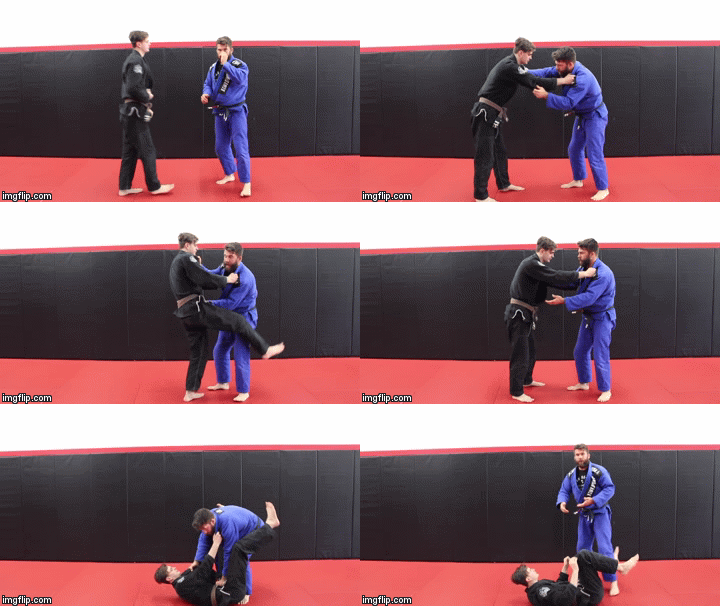
A “bad” guard pull is just a gift-wrapped takedown for your opponent. Follow these technical steps to ensure you maintain control:
- Establish Grips: Never pull guard without at least one solid grip (Lapel and Sleeve is the gold standard). Without a grip, you are simply “sitting down,” which can result in a penalty or an easy pass.
- Foot on the Hip: Place one foot on the opponent’s hip. This acts as a distance manager and prevents them from rushing past your legs as you drop.
- The Sit-Back: Instead of falling straight down, sit your hips back toward your heels. Think of it as a deep squat.
- Close the Guard: As your hips hit the mat, use your grips to pull the opponent into your space and lock your ankles behind their back (Closed Guard) or transition to an Open Guard variant.
Common Variations: Which Guard Should You Pull?
Successful guard pulling requires a “destination.” You aren’t just going to your back; you are going to a specific offensive system:
- Closed Guard: Best for beginners and those looking for high-percentage chokes (Cross Collar, Triangle).
- De La Riva: The premier choice for Gi competitors looking to sweep or take the back.
- Butterfly Guard: Excellent for immediate “sumi-gaeshi” sweeps or transitioning to leg locks in No-Gi.
- X-Guard / Single Leg X: Often reached via a “shin-to-shin” entry during the guard pull.
IBJJF Rules & Scoring for Guard Pulling
The International Brazilian Jiu-Jitsu Federation (IBJJF) has specific regulations to prevent stalling:
- The Grip Requirement: You MUST have a grip on your opponent before your butt touches the mat. Sitting down without a grip is considered “stalling” or “intentional lack of combativeness.”
- The 2-Point Takedown Rule: If your opponent has a grip on your legs and you pull guard, the referee may award them 2 points for a takedown if they were “initiating” the action.
- Jumping Guard: Be aware that “jumping guard” (leaving both feet at once to wrap the waist) is illegal for White Belts and restricted in many Youth divisions due to the risk of knee injuries.
Is Pulling Guard Viable in MMA?
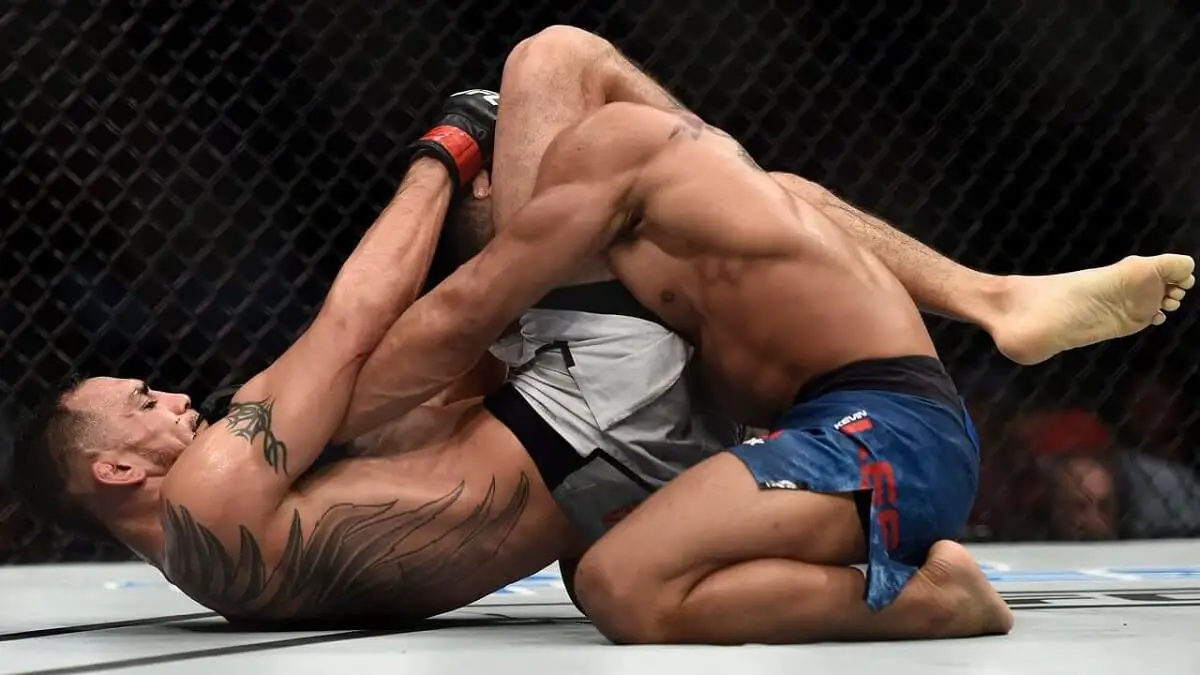
In Mixed Martial Arts, pulling guard is significantly riskier due to the presence of Ground and Pound. When you are on your back, you cannot move your hips as freely to avoid strikes. However, elite specialists like Brian Ortega or Charles Oliveira have used the guard to finish fights.
Frequently Asked Questions (FAQ)
Is pulling guard “cheating”?
No. While it is controversial among traditionalists, it is a legal and highly effective strategy within the IBJJF and ADCC rulesets.
Can you pull guard in a street fight?
It is generally discouraged. Concrete is unforgiving, and the person on top can use strikes or weapons more effectively. Takedowns or staying standing are preferred for self-defense.
What is a double guard pull?
This occurs when both competitors pull guard simultaneously. In IBJJF rules, if neither gets up within a certain timeframe, they may both receive a penalty, or one must concede the “top” position to start the action.