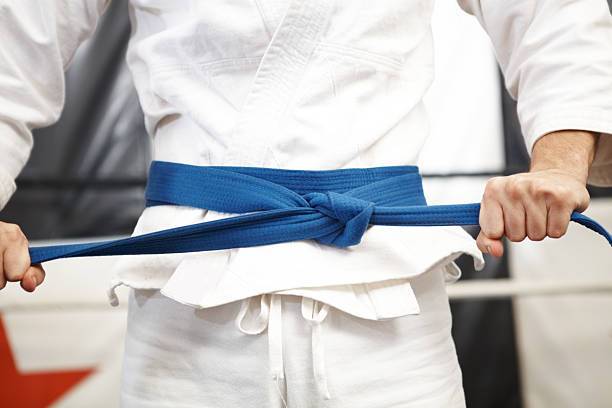
Becoming a black belt in Brazilian Jiu-Jitsu (BJJ) isn’t a sprint—it’s a lengthy, rewarding grind that requires years of consistent training, mental resilience, and technical refinement. Let’s break down why it takes so long and what the typical journey looks like.
Black Belt ETA Calculator (BJJ)
Estimate your remaining time to black belt based on training frequency, time off, and where you’re at today.
Average Timeline
Most practitioners reach black belt in 8–12 years of consistent training. This aligns with estimates from multiple reputable sources – Dragon Gym, Strong Heart Academy, VOW BJJ, LowkickMMA – and Wikipedia, which quotes around 10 years on average.
Belt-by-Belt Breakdown
- White → Blue: 1–2 years
- Blue → Purple: 2–4 years
- Purple → Brown: 1.5–3 years
- Brown → Black: 1–2 years
Factors That Affect Progression
- Training Frequency: More mat time = faster rank advances.
- Instructor Quality: Experienced coaching accelerates growth.
- Previous Athletic Background: Helps shorten the learning curve.
- Competition Experience: Builds skills faster and may influence promotions.
- Academy Standards & Ego: Some schools are stricter; Ryron Gracie warns ego often slows advancement more than technical ability.
Exceptional Cases
While most practitioners spend 10+ years on the journey, a few prodigies have reached black belt in dramatically less time:
- Caio Terra – Widely regarded as one of the fastest promotions ever, Terra was awarded his black belt in just three years of training. His technical mastery and competition success convinced his instructors he was ready despite the break from tradition.
- Micael Galvão – Considered a generational talent, Galvão earned his black belt at 17 years old, reaching it in under three years after blue belt. He had already been dominating international competitions in the juvenile and adult divisions.
- BJ Penn (another example you could include if you want variety) – Earned the nickname “The Prodigy” after receiving his black belt in about three and a half years and becoming the first American to win the Mundials at black belt in 2000.
👉 These cases are extremely rare and usually combine natural talent, obsessive training volume, and elite-level coaching. For 99.9% of practitioners, the journey is much longer.
IBJJF Minimum Time Requirements
If your academy follows IBJJF standards, there are official minimums:
- Blue: ~2 years
- Purple: ~18 months
- Brown: ~1 year
So even the fastest path typically requires 4–5 years minimum, more realistically 8+ for most.
Conclusion
For most people training a few times per week, expect 8–12 years to black belt. Highly dedicated, competitive practitioners might do it in 7–10 years. Rare phenoms have done it in under 3 years, but that’s the exception, not the rule. Embrace the journey—it’s what BJJ is all about.